












- WIADOMOŚCI
- ANALIZA
Deterrence by presence in the High North

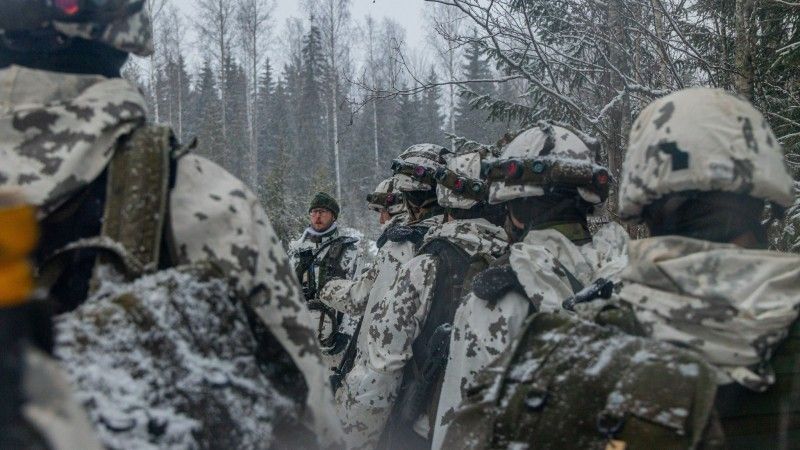
NATO’s northern flank is no longer a strategic afterthought. The creation of Forward Land Forces Finland shows that the Alliance is building a military architecture in the Arctic and the High North, while Finland and Sweden are quickly proving that their accession to NATO was not symbolic. Both countries are looking north because they understand that Russia’s pressure will not be limited to Ukraine, the Baltic states or the Black Sea.
On 6 June 2026, NATO formally activated Forward Land Forces Finland during a ceremony in Boden, Sweden. The force is the Alliance’s ninth multinational battlegroup and the first of its kind in the High North. The location matters. Boden is home to Sweden’s Norrbotten Regiment, one of the key units trained for operations in subarctic conditions, while the multinational staff element is being placed in Rovaniemi in Finnish Lapland. This is not a symbolic map adjustment. It is the closing of a major gap on NATO’s north-eastern flank.
The numbers explain the strategic logic. Finland shares a 1,340-kilometre border with Russia, the longest land border between Russia and any NATO member in Europe. Before Finland joined NATO in April 2023 and Sweden followed in March 2024, this space was outside the Alliance’s collective defence structure. Now it has become one of NATO’s most important operational theatres. From Finnish Lapland to the Barents Sea and the Kola Peninsula, the northern flank connects land defence, Arctic logistics, air surveillance, naval operations and nuclear deterrence.
The Kola Peninsula is the core of the problem. It hosts a major part of Russia’s strategic military infrastructure, including the Northern Fleet, nuclear submarines, missile systems, air assets and Arctic bases rebuilt since 2014. Moscow has treated the Arctic as a protected military zone for years. NATO is now responding by placing command structures, exercises and forward forces closer to the theatre where Russian power is concentrated. The message is not escalation. It is deterrence through presence, planning and the ability to reinforce quickly.
Sweden’s role is especially important. Stockholm became a NATO member only in March 2024, yet it is already acting as the framework nation for FLF Finland. That is a major political and military shift. Sweden moved from neutrality and non-alignment to direct responsibility for allied security in the High North in barely two years. Its initial contribution is around 600 soldiers, with the ability to expand to 1,200 personnel if the security situation requires it. The long-term ambition is to scale the force towards brigade level, around 3,000 to 5,000 soldiers.

This shows what Finland and Sweden bring to NATO. They are not passive new members waiting for protection from older allies. They are shaping NATO’s northern posture. Finland brings geography, mobilisation culture, territorial defence experience and deep knowledge of the Russian border. Sweden brings Arctic expertise, the Norrbotten Regiment, defence-industrial capacity and direct operational depth next to Finnish Lapland. Together, they turn the High North from a weak point into a structured theatre of deterrence.
The model is also different from NATO’s other forward land forces. In Poland, the Baltic states, Romania, Bulgaria, Slovakia and Hungary, the battlegroups are deployed directly in the host country. In the Finnish case, the core Swedish battlegroup is based in Sweden and can move rapidly into Finland. This works because Sweden and Finland share a land border. Reinforcement does not require crossing the Baltic Sea or negotiating complicated transit routes. It can move from Boden towards Rovaniemi across allied territory. In military terms, geography becomes speed.
The command structure confirms the seriousness of the shift. FLF Finland falls under NATO’s operational chain through SACEUR, Joint Force Command Norfolk and the Multi-Corps Land Component Command Northwest in Mikkeli, Finland. Finland has also become a hub for NATO command structures in only a short period, with Rovaniemi, Mikkeli and Riihimäki taking on roles connected to land forces, multinational command and digital integration. A country that was outside NATO three years ago is now becoming one of the pillars of allied defence planning in the north.

Exercises are already turning this concept into practice. Cold Response 26 gathered more than 32,000 soldiers from 14 allied nations in Norway and Finland. In Finland alone, around 7,500 troops took part, including 3,500 Finnish soldiers and 2,000 reservists. The exercise tested movement, logistics and operations in Arctic conditions, as well as the ability of Swedish forces to move from Boden towards Finland. Northern Star, held in May 2026 near Kajaani, only about 70 kilometres from the Russian border, brought together forces from seven NATO countries, including Finland, the United States, Poland, the United Kingdom, France, Italy and Hungary.
These figures matter because the northern theatre is unforgiving. Arctic defence is not only about soldiers and flags. It is about bridges, roads, fuel, ammunition, maintenance, winterised equipment, long distances, limited infrastructure and the ability to fight at temperatures reaching minus 20 degrees Celsius. A battlegroup that cannot move, refuel or repair itself in Lapland is not a deterrent. That is why the Rovaniemi staff element is not bureaucracy. It is the mechanism that should allow NATO to receive, organise, support and deploy reinforcements before a crisis becomes unmanageable.
Finland and Sweden are looking very hard at the Arctic, Lapland, the Barents region and the approaches to the Kola Peninsula because this is where Russian strategic assets, nuclear forces, air power and Arctic infrastructure are concentrated. For Helsinki and Stockholm, the High North is not a distant theatre. It is their immediate security environment and the place where they can bring NATO real expertise, geography and military value. This is why their accession changes the northern balance inside the Alliance: not because they joined NATO on paper, but because they bring operational knowledge of a region that many older allies treated for too long as peripheral.

China adds another layer. NATO commanders increasingly speak about Beijing’s growing interest in the Arctic, including sea routes, energy, minerals and logistical access. Russia provides the geography and military presence. China brings capital, technology and long-term strategic patience. For Finland and Sweden, this means that the north is not only a Russian problem. It is becoming part of the wider competition over access, resources, routes and influence. NATO cannot afford to treat the Arctic as a frozen periphery.
The timing is also relevant before the NATO summit in Ankara. FLF Finland reached initial operational capability before the summit and aims for full operational capability by 2030. That gives the Alliance a concrete example of adaptation. NATO decided at the Washington summit in 2024 to extend the forward land forces model to Finland. Less than two years later, the structure exists. In an Alliance often criticised for slow implementation, this is a visible result.
The challenge now is to move beyond declarations. France, the United Kingdom, Norway, Denmark, Iceland and Italy have signalled willingness to contribute to the development of the force. Those political commitments must become troops, equipment, specialist capabilities, funding and regular Arctic exercises. The difference between a credible northern posture and another NATO announcement will be measured in soldiers deployed, units trained, command procedures tested and equipment adapted to Arctic conditions.

But this northern turn must not narrow the strategic vision of Finland and Sweden. They also need to remember, and allies should keep reminding them, that the Baltic Sea remains equally important for NATO’s defence. The security of Poland, the Baltic states, Denmark, Germany and the Nordic countries is connected through the same maritime space, the same Russian pressure from Kaliningrad and the same need to protect sea lines, ports, energy infrastructure and military mobility. NATO needs Finland and Sweden in the High North, but it also needs them in the Baltic Sea. Their accession strengthens the Alliance only if both theatres are treated as one connected north-eastern flank, not as competing priorities.


