












- ANALIZA
- WIADOMOŚCI
Europe in the shadow of hybrid war. What does Russian systemic pressure look like?

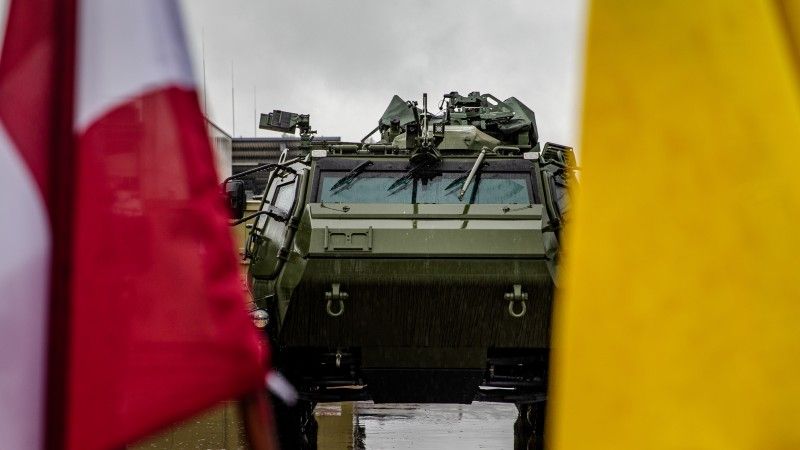
Photo. Aizsardzības ministrija/Flickr
According to Lasi.lv (Latvijas Mediji), citing the LETA news agency, the Latvian Constitution Protection Bureau – Satversmes aizsardzības birojs (SAB) assesses that „security risks generated by Russia for Europe and Latvia are increasing significantly,” while noting that at the current stage, Russia does not pose a direct military threat to Latvia.
According to ReKurZeme.lv, SAB bases this assessment on a long-term logic: the source of escalation is not only the war in Ukraine, but also a persistent shift in Russia’s perception of the West and the entrenchment of „below-the-threshold” pressure instruments.
According to SAB’s annual report published on 25 January, Russia is not „returning” to normal state-to-state competition but increasingly frames relations with the West as an existential conflict, in which aggressive, confrontational, and multi-channel actions are deemed permissible (military, informational, cyber, legal, and economic). SAB explicitly links the increase in risk to the growing prevalence of such thinking within Russian elites.

"Distorted Threat Perception" in the Kremlin as a Risk Generator
As SAB notes, a distorted threat perception persists around Vladimir Putin, reinforced by the isolation of Kremlin elites and the absence of internal critical voices – which increases the risk of miscalculations and escalatory actions. In practice, this means – according to the report – that if Russian elites „consume their own propaganda,” the likelihood grows that they will perceive NATO and EU defensive actions as preparations for attack, and compromise as a sign of weakness.
SAB connects this dynamic to the increasing aggressiveness of Russia’s posture toward Western states, including Latvia. In addition, the risk of a so-called perception spiral is rising. Russia may conclude that, since it is „already” in conflict with the West, the costs of hybrid operations are acceptable because they align with a purported global-ideological war. This, according to Lasi.lv, is precisely how SAB characterizes Russia’s perspective on the conflict.
Ukraine 2025–2026: "Long-Lasting War" as the New Normal
According to the SAB report, despite public discussions of possible peace talks, available information indicates Russia’s readiness to continue military operations at least through 2026. The state, its tactics, economy, and society are increasingly adapted to prolonged conflict. SAB describes the frontline situation as intense fighting without a strategic breakthrough in the short term – the probability of significant strategic changes in the coming months is assessed as very low.
From the perspective of European security, this is critical, as prolonged conflict:
- Maintains Russia's high motivation to exert pressure on the West to limit support for Ukraine,
- "Normalizes" hybrid operations as an instrument of indirect warfare,
- Forces European states to operate under continuous sabotage-cyber-informational pressure.
This phenomenon fits into a broader context, which – according to the European Union Institute for Security Studies (EUISS) – characterizes 2026 as a period of increasing conflictual and hybrid risks, in which Russia adopts an increasingly hardline posture toward Europe.
Militarization of Russia's economy
SAB assesses that Russia maintains short-term stability and resilience to sanctions at the expense of long-term prosperity. Rapid resource redistribution and uneven sectoral support create structural imbalances whose negative effects may manifest in the future. The key conclusion is: even if the war in Ukraine ends or is „frozen,” the militarization of the economy and the development of military capabilities may continue, as the political-economic system has already „shifted” to a wartime logic.
SAB additionally warns that any easing of sanctions would increase Russia’s capacity to sustain high levels of militarization without economic shocks. The implication for Europe is clear: even with a decrease in the intensity of fighting in Ukraine, Russia could remain a state with a high military sector footprint, capable of exerting military and hybrid pressure.
As emphasized by Ukrainska Pravda, SAB highlights that Russia will continue to constitute a significant military threat to European states and NATO, and the militarization of the economy will persist even after a potential cessation of the war.

Hybrid conflict as a "system," not an incident
Latvian Public Media (LSM), commenting on Russia’s actions, notes the rise of Russian sabotage plans and treats them as part of confrontation with the West rather than isolated incidents. SAB assesses that sabotage is attractive because it is relatively low-cost, difficult to attribute conclusively, and can generate a sense of chaos in Western societies without a formal state of war.
SAB also describes Russian influence operations as attempts to weaken Western unity in support of Ukraine and to prepare the ground for confrontation with NATO using informational and sabotage tools. In practice, these actions aim to achieve three effects: induce „war fatigue” (pressuring voters to limit aid), erode trust in democratic procedures, and sow societal divisions (reducing the state’s crisis responsiveness).
Simultaneously, Russian hackers and hacktivists demonstrate readiness to strike industrial control systems (OT/ICS) in Latvia and other Western states, posing tangible threats to critical infrastructure and public services – of a different magnitude than classic DDoS attacks, as they can disrupt energy, water, transport, or communications. Cyberpressure, including DDoS attacks, remains constant and is targeted at public institutions and service and infrastructure operators.
SAB also points to growing use of legal mechanisms in the international arena as a hybrid instrument (lawfare) aimed at discrediting Latvia and – in the longer term – pressuring changes in its policy toward Russia. For about a year and a half, the Russian Ministry of Foreign Affairs has signaled readiness to sue Baltic states, including Latvia, at the UN International Court of Justice, accusing them of violating the rights of Russian-speaking persons.
The mechanism of these actions is multi-layered and includes:
- Formal layer: legal dispute and "rights defense" narrative,
- Reputational layer: sowing doubt among partners and public opinion,
- Political layer: creating a pretext for diplomatic pressure,
- Information layer: using the lawsuit as propaganda fuel.
State response: From hybrid pressure to extreme contingency preparations
Rising hybrid pressure and escalating risk are reflected in changes to Latvian legal and organizational frameworks. The Latvian government supported a draft amendment to the Border Guard Act, expanding officers« powers in emergencies related to armed threats.
Under the amendments, border guards could – in extreme necessity – use explosives to repel armed or military invasions, armed or group attacks, or to liberate a facility occupied by armed individuals. Use of explosives would be permissible only if other measures prove insufficient, and unannounced action would be allowed solely under threats requiring immediate response.
The draft introduces the principles of necessity and proportionality, damage minimization, and provision of first aid and emergency services. Previously, the Border Guard had access to various types of weapons, but the law did not allow explosives in situations of sabotage or military invasion.
The amendment aims to close this gap, aligning the legal framework with realities in which – as SAB notes – the line between hybrid actions and open aggression can quickly blur. The draft must still be approved by the Latvian Saeima, but its preparation already signals that the state increasingly frames threats not only in terms of informational and sabotage pressure but also in the context of potential military scenarios.
Latvia as a target: Why SAB speaks of a "Pre-War Ukraine Parallel"
Russia’s perception of Latvia increasingly resembles its approach to Ukraine before the full-scale invasion – despite the absence of a direct military threat. SAB treats this as a warning regarding narrative and political trajectories, not as an imminent invasion forecast.
In practice, this implies that Russia may:
- Intensify delegitimizing narratives against the state ("discrimination," "Russophobia," "puppet state"),
- Build "justifications" in international law and human rights rhetoric,
- Test Latvia's and its allies' responses through hybrid incidents.
SAB summarizes this assessment: ”Although Russia does not pose a direct military threat, there are signs of potential long-term planning.”
Election and societal resilience
SAB Director Egils Zviedris emphasizes the importance of social cohesion and critical information literacy, particularly ahead of the upcoming autumn parliamentary elections. He warns against escalating influence operations. A „resilience strategy” involves the adversary attempting to carry out partial destabilization „through citizens” – via emotionally charged sharing of content, radicalization of disputes, and declining trust in institutions.
SAB explicitly highlights the risk of attempts to influence Latvia’s parliamentary elections: Russia may exploit information operations, disinformation, and other hybrid instruments to polarize society, undermine trust in institutions, and weaken citizen unity during the electoral period – potentially threatening the stability of the democratic process.
Beyond Russia: Belarus and China
SAB assesses that Belarus is increasingly integrated into the Russian war economy, and economic relations between Minsk and Moscow are undergoing systematic militarization. Belarusian enterprises increasingly redefine their activities toward production or services for the Russian military-industrial complex – making Minsk a key logistical and production hub for Russian military capabilities.
Simultaneously, SAB notes growing influence of the People’s Republic of China in Western states and international institutions. Beijing leverages economic investments, academic cooperation, and „soft power” tools to build long-term political and economic dependencies. Of particular concern are attempts to acquire sensitive knowledge, unauthorized technology transfer, and establishing contacts that enhance China’s economic and military potential at the expense of Western states.
In a broader strategic interpretation, SAB depicts a scenario in which Russia and China – though employing different methods – seek to weaken the international order based on rules. Russia acts more directly, confrontationally, and riskily; China operates more indirectly – through economic dependencies, institutional influence, and ostensibly neutral or beneficial cooperation channels, which over time may erode the sovereignty and security of Western states.
Key implications for Europe and Latvia – risk synthesis
The most significant implication is the increased risk of miscalculation on Russia’s part – resulting from entrenched, distorted threat perception among Kremlin elites (isolation + absence of internal criticism). The war in Ukraine may be protracted (at least until 2026), implying sustained hybrid pressure on states supporting Ukraine and further regional destabilization.
The militarization of Russia’s economy and military potential will not end with a potential „freezing” of the conflict – the military threat to Europe and NATO will remain high in the post-war period. Hybrid warfare is systemic: informational operations, cyberattacks, sabotage, and use of international law (lawfare) function together as a coherent pressure mechanism – with the role of legal instruments in the UN forum particularly increasing.
Accordingly – as emphasized by Egils Zviedris – state security must be directly linked to societal resilience. Citizen unity and critical information literacy, particularly during elections, become the crucial „line of defense” against influence operations and destabilization.
Strategic recommendations in response to Russian hybrid threats
In response to rising threats, SAB underscores the critical importance of strengthening deterrence and formulating clear and comprehensible strategic messaging. Since Russia operates under the logic of „the best defense is a good offense,” clearly defined response thresholds and readiness for rapid action should limit the scope for testing hybrid activities below the threshold of open war.
The OT/ICS cybersecurity domain should be treated as an absolute priority – not only in terms of technical nuisance but also due to the real threat to state functionality. SAB anticipates attempts to influence electoral processes in Latvia, necessitating preparation of electoral communications and anti-disinformation measures – including both technical safeguards and enhancement of societal resilience through media literacy, verification systems, and rapid debunking of false narratives.
Russia’s strategic objective remains the weakening of the West and fracturing of unity in support of Ukraine – thus building cohesion and solidarity within the EU and NATO is an essential condition for effectively countering Moscow’s pressure.
Finally, SAB forecasts increasingly frequent use of international mechanisms to discredit Latvia – requiring a realistic assessment of lawfare risks and deployment of legal, diplomatic, and communications resources to mitigate reputational impact and neutralize international pressure.


