


- WIADOMOŚCI
- ANALIZA
Mechanisms of effective military diplomacy

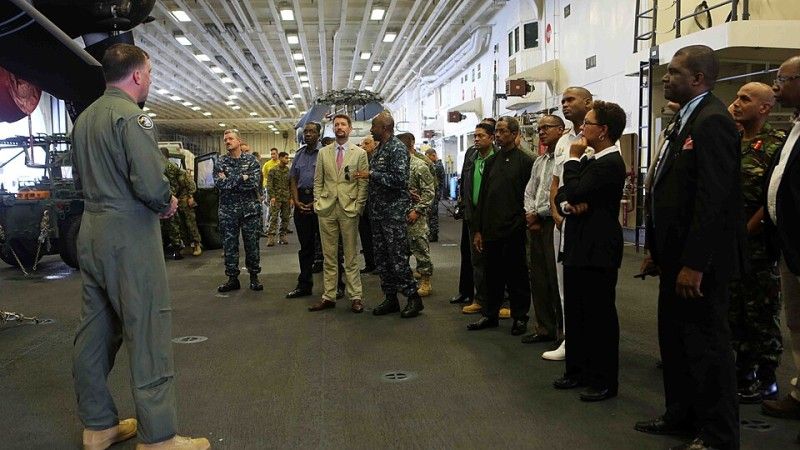
Military diplomacy is easiest to recognise through visits, ceremonies, exercises and signed agreements. The flags are in place, handshakes are photographed, and the press release announces success. All that remains is to establish what has actually changed.
Diplomacy is more than representation
It is possible to make dozens of visits and sign stacks of documents without improving a country’s security. It is also possible to carry out less visible work whose significance becomes apparent only during a crisis. The difference lies in the ability to turn contacts into tangible results.
Military diplomacy is an instrument of foreign and security policy. Its effectiveness depends on the quality of relationships, information, negotiations and institutional cooperation. Without clearly defined objectives, it remains an activity that looks good but does not necessarily change reality.
Trust as strategic capital
Personal relationships facilitate communication, access to decision-makers and the resolution of problems that official correspondence can take months to settle. Military representatives and defence attachés play a particularly important role. Their effectiveness requires not only military expertise but also an understanding of local circumstances and the ability to operate in a diplomatic environment.
Receptions, ceremonies and informal conversations are not automatically a waste of time. Their value depends on whether they help establish a partner’s position, constraints and opportunities for cooperation. Sometimes the most important outcome of a meeting is identifying whom to contact when the situation stops being social.
Trust, however, does not mean naivety. States pursue their own interests regardless of how good a relationship exists between their representatives. Personal familiarity can open doors, but it cannot replace competence or guarantee an agreement.
From observation to decision
The task of military representatives is not simply to collect information, but to provide decision-makers with reliable analysis. The number of reports produced says little about the quality of the work. Paper will accept anything, and an administrative system can efficiently process even a document that serves no useful purpose.
What matters is the reliability of sources, the currency of data, the soundness of conclusions and their usefulness to the intended recipient. A single event rarely provides enough evidence to assess a situation. Context, cross-checking sources and distinguishing facts from assumptions are essential.
One persistent problem is the information black hole: a report is sent and formally received, but what happens to it afterwards remains unknown. A lack of feedback does not necessarily mean the material has been ignored. Without feedback, however, it is difficult to assess its usefulness.
See also 
Information flows should therefore identify the recipient, the purpose of the analysis and the procedures for providing comments. Decision-makers need to know what has been confirmed, what remains uncertain and what consequences follow from the interpretation adopted. Sending a report does not mean solving a problem. It means only that the report has been sent.
Who is accountable for the collective outcome?
Military diplomacy requires cooperation between ministries, military structures and institutions responsible for foreign policy, the defence industry and strategic analysis. The problem arises when everyone participates in the process, but nobody is accountable for its outcome.
Who sets the priorities, approves the position, implements the agreements and resolves disputes? Political responsibility for defining the objective must be distinguished from institutional responsibility for coordination and operational responsibility for carrying out the tasks.

Representatives serving abroad should have access to appropriate communication channels and the ability to convey assessments based on their local knowledge. Excessive centralisation can deprive them of the capacity to respond to situations that were not anticipated in the plans.
Coordination does not mean multiplying consultations. An administration can establish who is supposed to sign a document. The harder task is identifying who is responsible for seeing the matter through to completion.
Shared interests do not mean identical interests
States can cooperate within NATO, the European Union or bilateral relationships while competing in other areas. A shared objective does not mean identical interests, just as agreement on the direction of action does not guarantee agreement on costs, priorities or the scope of commitments.
I learned this most clearly during one conversation around a NATO table. When I naively remarked that we were, after all, friends gathered there, one military representative brought me back down to earth with a brief reply: “We are not friends. We are allies.”
It is difficult to put it more aptly. Friendship rests on a personal bond; an alliance rests on shared interests. And interests, as we know, can remain aligned until someone asks who will pay for what, who will bear the risk and who should fulfil their commitments first.
Military diplomacy requires us to remember this before mistaking cordiality around the table for strategic solidarity. Do we sometimes overestimate the warmth of our allies in Polish military diplomacy while underestimating the cool calculation of their interests?
Effective diplomacy requires an understanding of partners’ actual interests and the limits of their willingness to act. Not every concession is a sign of weakness, and not every difference of opinion is a failure. Sometimes a limited agreement that can actually be implemented is worth more than an ambitious declaration everyone is happy to sign.
An agreement does not create military capability by itself. Joint training requires instructors, funding and infrastructure, while technological cooperation requires arrangements concerning production, intellectual property and sustainment.
Signing a document proves that the parties have agreed to put something in writing. It does not prove that they intend to act on it. What value does allied solidarity have if its limits become apparent only when taking a risk is required?
The purpose of negotiations is therefore to develop solutions that serve the state’s interests and that partners are genuinely prepared to implement.
How can contacts be turned into lasting cooperation?
If cooperation depends entirely on the personal relationships of a minister, representative, attaché, ambassador or commander, a change of personnel can mean losing contacts and knowledge. That is not a durable mechanism, but an organisational version of short-term memory.
Regular consultations, joint training, agreed communication channels and the documentation of arrangements and negotiating conclusions are all necessary. They allow new representatives to continue the work rather than reconstructing the history of cooperation from scratch.
However, not every conversation should be turned into a procedure. Excessive formalisation restricts the flexibility that personal relationships often provide. The aim is to strike a balance between trust and institutional continuity.
The best test of mature cooperation is whether it can survive a change in the people responsible for maintaining the relationship.

The meetings were productive. But what did they produce?
Military diplomacy consumes time, money and personnel resources, so it should be evaluated. Meetings, visits and signed documents are easy to count. It is much harder to determine whether they have improved cooperation, reduced the risk of misunderstandings or increased the ability to act together.
Quantitative indicators are useful, but they must not replace an assessment of outcomes. It is possible to complete a plan in full and still fail to achieve any significant objective. Evaluating our military diplomacy should involve asking several uncomfortable questions.
Are we achieving the objectives we set? What concrete capabilities have emerged from the activities undertaken? If every visit ends with a press release announcing success, how can we actually recognise failure? Is the effectiveness of Polish military diplomacy measured by how many generals have shaken hands or by how many potential crises have been avoided? In a crisis, will our partners remember the substance of the agreements or how enjoyable the reception was at which they were announced? In a world where military pressure, disinformation and demonstrations of force are becoming instruments of policy, can simply being present at the negotiating table still be considered an achievement?

Of course, not every outcome can be attributed solely to military diplomacy. Political decisions, military capabilities and the actions of other states also have an impact. Building trust takes time, but the long-term nature of the work cannot excuse a lack of accountability.
Military diplomacy as an instrument of state policy
All the mechanisms described above must serve clearly defined strategic objectives. Without priorities, diplomatic activity becomes a collection of initiatives pursued because they are traditional, easy to plan or look good in summary reports. If everything is a priority, nothing is.
Military diplomacy does not replace military power or political decision-making. It can, however, strengthen the credibility of deterrence, make cooperation more predictable and prepare a state for crises. It does not require us to believe that all partners have good intentions. It requires us to understand their interests and identify areas where cooperation delivers tangible benefits.

From activity to effectiveness
Effective military diplomacy requires several mechanisms to work together coherently. Relationships facilitate contact, information supports decision-making, coordination clarifies responsibilities, negotiations help manage differences, and institutionalisation ensures continuity of cooperation. Assessing outcomes makes it possible to determine whether the system as a whole is actually working.
Each of these elements has its limitations. Good relationships cannot replace analysis, a document cannot solve a problem by itself, and the number of meetings cannot prove effectiveness. What is needed are both competent state representatives abroad and institutions capable of making use of their knowledge.
A cynical aphorism attributes to diplomacy the art of keeping negotiations going until our snipers are within range. It is a striking punchline, but also a bleak definition of the failure of dialogue. We can laugh at it. Or we can recognise it as a warning about a world in which conversation serves merely as a cover for the use of force.

The true art of military diplomacy lies in ensuring that dialogue is not used to buy time before firing a shot, but to find a way of making that shot unnecessary.
All of this requires strategy, resources and expertise. Above all, however, it requires knowing why a particular action is being taken and what outcome it is intended to achieve.
Diplomacy does not become effective simply because it takes place. It becomes effective only when it actually changes something.


