












- WIADOMOŚCI
NATO summit tests allied credibility

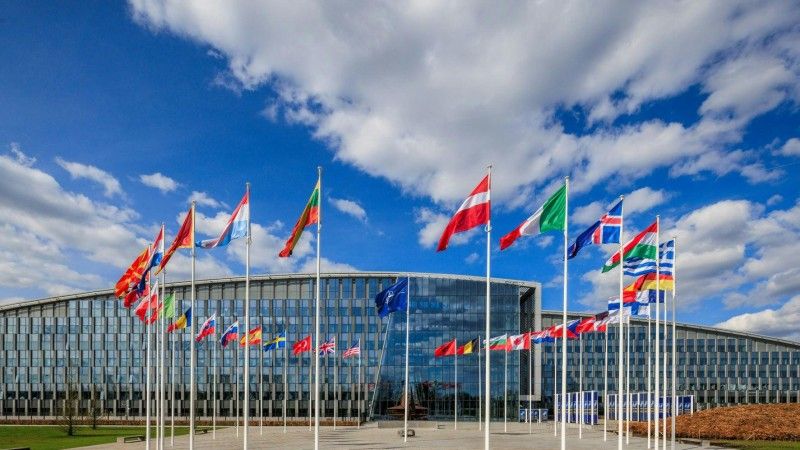
The NATO summit in Ankara will not be only about declarations of unity. It will test whether European allies can turn higher defence spending into real forces, whether the United States will keep enough military weight in Europe, and whether Ukraine remains central to NATO’s security agenda.
According to AP News, NATO Deputy Supreme Allied Commander Europe Air Chief Marshal John Stringer said the summit in Türkiye should push allies to spend more on defence, reaffirm support for Ukraine and show alliance unity. His assessment is important because Ankara comes at a difficult moment: Donald Trump has questioned America’s role in NATO, U.S. Defense Secretary Pete Hegseth has announced a six-month review of American forces in Europe, and European military leaders are waiting to see what capabilities Washington may reduce.
The problem is no longer only the level of spending. NATO members agreed to move towards 3.5% of GDP on core defence, but military credibility will depend on what this money produces. Finland’s Brig. Gen. Jyri Raitasalo warned that allies must go beyond communiqués, road maps and action plans. Sweden’s army chief Maj. Gen. Jonny Lindfors said NATO needs a common picture of how deterrence and defence should be realigned. Estonia’s Maj. Gen. Indrek Sirel underlined that Europe still has much to do if it wants to be credible against Russia.
The most difficult question concerns the American role in Europe. Stringer admitted that replacing U.S. long-range strike and surveillance capabilities would be difficult. The United States has systems and platforms Europe cannot quickly reproduce, including strategic bombers, deep-strike assets, intelligence capabilities and parts of the command architecture. European allies may be able to create a “cocktail” of alternative capabilities, but this will take time, money and industrial discipline.

That is why sudden changes in American planning are dangerous. Defence is not built month by month. If Washington signals withdrawals, then announces new deployments, and then launches another review, European armies cannot plan seriously. The eastern flank needs predictability: air defence, ammunition, logistics, long-range fires, surveillance, military mobility and U.S. presence where it still matters most.
Ankara will show which parts of NATO’s defence in Europe still exist only because the United States provides them. If Washington reduces long-range strike, surveillance, air defence, logistics or command assets, the eastern flank will feel it first. Russia will look exactly there: at ammunition stocks, bases, political delays, industrial output and the speed of allied decisions. The summit cannot hide this behind another communiqué. Either Europeans show what they can replace, where they will deploy it and how fast they can produce it, or Ankara will confirm that NATO’s European defence still depends on American choices made outside Europe.


