












- ANALIZA
- WIADOMOŚCI
Türkiye ahead of the 2026 NATO summit: Strategic partner or difficult ally?

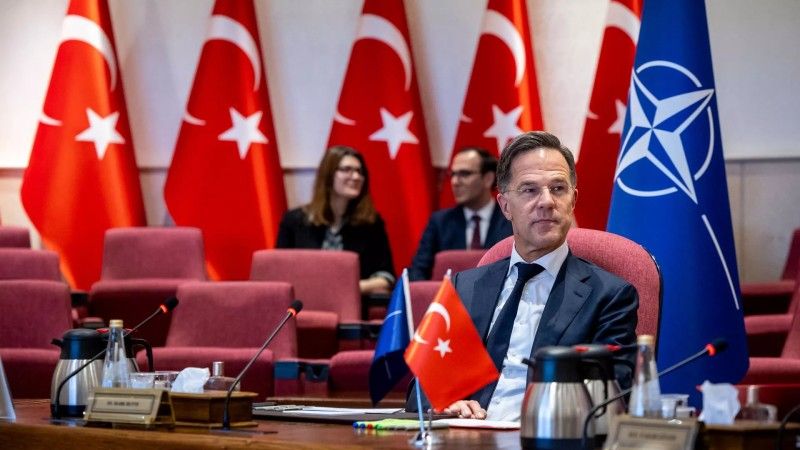
Photo. North Atlantic Treaty Organization (NATO), official website
Talking about Türkiye within NATO is easy; understanding it is much harder. Over the past few years, Ankara’s role has almost automatically been reduced to three issues: the country that delayed Sweden’s accession, the country that purchased Russian S-400 systems, and the country that continues to maintain dialogue with Moscow.
None of these descriptions are inaccurate. On the contrary, they represented genuine crises that contributed to a loss of trust within the Alliance. Washington removed Türkiye from the F-35 programme and imposed sanctions over the S-400 purchase, while Sweden was only able to join NATO in March 2024 after a long, politically costly, and exhausting accession process.
Yet this picture misses a larger point. As the 2026 Ankara Summit approaches, the central question is no longer whether Türkiye is a good ally. The real question is whether NATO can adapt to allies that are becoming more autonomous while simultaneously becoming more important to European security. European security is no longer moving along a single axis. There is war in the Black Sea region, state authority is weakening along the southern flank, energy and transportation corridors are becoming targets, defence production has once again become a strategic issue, and a second Trump administration in Washington is placing greater pressure on Europe to shoulder more of the burden. In this environment, viewing Türkiye solely through the label of a “difficult ally” produces a convenient cliché rather than an accurate explanation.
My answer is more straightforward: Türkiye is not a difficult ally despite its strategic importance. It is a difficult ally because of its strategic importance. We are talking about a middle power that controls access to the Black Sea, can speak with Russia while working with Ukraine, bears the costs of instability on its southern periphery, and is no longer merely a consumer of security but also a producer of defence capabilities. A country with this level of strategic weight does not behave like smaller allies whose positions are predetermined from the outset. Because it does not, it inevitably creates friction. Yet that friction is not always a sign of rupture; more often, it is a side effect of strategic importance.
The Black Sea is at the heart of the issue
From a Polish perspective, the natural centre of the security agenda is the Baltic region and NATO’s eastern flank. That is understandable. Yet after 2022, the Black Sea ceased to be a secondary issue connected to the Baltic. Grain exports, energy security, port protection, naval mines, maritime drones, the Turkish Straits, and access to Ukraine have all become central elements of European security. This is where Türkiye’s importance becomes clear. No other NATO member simultaneously holds legal control over access to the Black Sea while also maintaining channels of communication with both Kyiv and Moscow. When Foreign Minister Hakan Fidan visited Moscow in June 2026 and called on Russia to avoid actions in the Black Sea that could threaten Türkiye’s security and interests, it demonstrated that Ankara views this issue not as an abstract diplomatic matter but as a direct national security concern.
What makes Ankara’s role in the Black Sea significant is not geography alone. As the war has progressed, the risks in the region have expanded beyond the front lines. Attacks that damaged Turkish-owned vessels, unmanned systems targeting tankers along the northern coast, and unidentified platforms approaching national airspace have all shown how fragile the idea of a “limited war” in the Black Sea really is. In responding to this spillover effect, Türkiye has recently pursued a dual approach: increasing its engagement while also trying to prevent the conflict from evolving into a direct NATO-Russia confrontation. From the outside, this can appear inconsistent. In reality, however, maintaining stability in the Black Sea requires doing two things at the same time: deterring escalation while preventing the fire from spreading further.

Montreux: More a brake than a bargaining chip
Anyone seeking to understand Türkiye’s Black Sea policy inevitably returns to the Montreux regime. This framework does not give Ankara unlimited freedom to open or close the Turkish Straits as it wishes; rather, it provides a structured space for manoeuvre. In times of war, Türkiye can restrict the passage of warships belonging to belligerent states, and this is exactly what it did in 2022. The result imposed constraints on both Russia and NATO. For that reason, it is incomplete to interpret Montreux simply as “Türkiye blocked Russia.” A more accurate reading would be that “Türkiye narrowed the maritime space through legal rules.” This legal restriction did not turn the Black Sea into a more open operational environment. On the contrary, by limiting the freedom of manoeuvre of major powers, it functioned as a regional safety valve.
At times, this approach was viewed as insufficient by pro-Ukrainian circles. Yet a tougher policy is not necessarily a more useful one. In January 2024, Türkiye blocked the passage of two British mine countermeasure vessels destined for Ukraine, citing the Montreux Convention. At the same time, it helped establish a joint mine countermeasures task force with Bulgaria and Romania. Rather than bending the rules for a symbolic gesture, Ankara chose to preserve them while building a practical security mechanism.
The same logic applied to grain diplomacy. The framework established in Istanbul in 2022 helped sustain Ukrainian grain exports through the Black Sea. Even after Russia withdrew from the agreement, Türkiye continued efforts to preserve safe navigation and prevent a lasting deadlock. In this sense, Ankara acted not only as a mediator, but also as one of the key actors preventing a regional crisis from becoming permanent.
See also 

Engagement with Russia is not a question of loyalty, but of leverage
At this point, an objection naturally arises: what about all this engagement with Russia? This criticism deserves to be taken seriously. Excessive closeness to Russia creates not only a perception problem but also a genuine strategic risk. Issues such as energy, tourism, trade, Syria, and the South Caucasus have turned Ankara’s relationship with Moscow into a fragile area of mutual dependence. Some of Türkiye’s NATO partners view Ankara with suspicion for precisely this reason. They are not entirely wrong. The S-400 issue severely damaged trust, and that wound has not fully healed.
At the same time, an important distinction must be made: talking to Russia is not the same as aligning with Russia. Particularly in the Black Sea region, a policy of zero contact is simply not realistic for Ankara. Türkiye does not experience Russia as a distant threat but as a constant power that directly affects its borders, maritime traffic, and regional interests. For this reason, maintaining open channels with Moscow can create discomfort within NATO, yet it also preserves one of the few remaining diplomatic avenues for safe navigation, grain exports, crisis management, and potential negotiations. The issue is not the existence of contact itself, but the strategic purpose behind it. So far, the evidence suggests that Türkiye has used this relationship not to distance itself from NATO, but to expand its room for manoeuvre.
The Swedish accession process revealed the same pattern. Ankara’s decision to hold onto its veto for many months imposed a significant political cost on the Alliance, and there is little point in denying that. At the same time, the process revealed another reality: Türkiye is no longer an ally that quietly raises its security concerns behind closed doors. It places its demands openly on the table, slows down decision-making when necessary, and is willing to bear the political costs of bargaining. To many Europeans, this approach may appear blunt or even exhausting. Yet at its core, it is not an expression of hostility towards NATO. It is a demand to be treated as a stakeholder rather than a policy-taker within the Alliance.

The southern flank makes Türkiye an even more difficult ally
Looking at Türkiye solely through the lens of the Black Sea also leaves the picture incomplete. Ankara’s strategic mindset is shaped by two fronts: Russia and the Black Sea in the north, and the Syria-Iraq corridor, irregular migration, missile and drone threats, instability linked to Iran, and terrorism in the south. While NATO often acknowledges these southern challenges in its political documents, it does not experience their costs as directly as Türkiye does. This is precisely why Ankara tends to act more independently from the Alliance on issues related to the southern flank. At times, this independence creates discomfort within NATO. From Ankara’s perspective, however, the issue is not ideological but geographical. The map itself pushes Türkiye towards a more autonomous approach.
The defence industry is the second pillar of this autonomy. For many years, Türkiye benefited from NATO’s security umbrella while remaining relatively dependent on external suppliers for technology and military platforms. That picture is changing. This development should be viewed more soberly than the popular narrative surrounding Bayraktar drones. The real story is not the “legend of Turkish drones”, but the fact that Türkiye is increasingly becoming a country within NATO that not only requests capabilities but, in some areas, provides them and builds partnerships around them. The partnership announced in 2025 between Baykar and Italy’s Leonardo, which received conditional approval from Rome in 2026, is one of the clearest examples. It was also no coincidence that, during the same period, Mark Rutte warned the European Union against excluding critical NATO partners such as Türkiye from defence-industrial cooperation simply because they are not EU members. If Europe wants to increase defence production, it will have to see Türkiye not only as a political challenge but also as an industrial partner.
This development makes Türkiye harder to ignore and, consequently, harder to manage. Relationships with allies that produce capabilities are different from relationships with allies that primarily consume them. Countries that contribute capabilities tend to demand a stronger voice, negotiate more assertively, and seek a greater role in collective decision-making rather than simply following directions from others. Türkiye’s support for NATO’s 5 percent defence and security spending target in 2025, while simultaneously promoting its own „Steel Dome” architecture and indigenous defence systems, captured this dual approach well: remaining firmly within NATO, but no longer being connected to the Alliance solely as a consumer of security.

The Ankara Summit will test NATO, not Türkiye
For that reason, the question going into the Ankara Summit should not be whether Türkiye is reliable. Türkiye’s pattern of behaviour is already well established: a partner, but a demanding one; inside the Alliance, yet autonomous; cautious towards Russia, yet maintaining open channels of communication; restrictive in the Black Sea, more flexible on the southern flank; and increasingly ambitious in defence production. The real question is whether NATO can remain strategically flexible enough to work with allies of this kind. At a time when the Trump administration is reassessing force contributions in Europe and pressing European allies to take on a greater share of the burden, Türkiye’s value becomes less theoretical and more practical. As the United States seeks to reduce some of its commitments while expecting Europe and Canada to fill the gaps, countries with substantial capabilities, such as Türkiye, become increasingly important.
From a Polish perspective, the conclusion is straightforward. Warsaw does not need to agree with Türkiye on every issue. The real risk lies elsewhere. If NATO continues to treat the Black Sea as secondary while focusing primarily on the eastern flank, it risks conceding one of the most strategically important theatres of competition with Russia. Likewise, if Europe seeks to expand its defence-industrial capacity while excluding Türkiye, it will reduce both speed and scale. The challenge is therefore not whether Türkiye is easy to work with, but whether NATO can afford to overlook the advantages it brings.
In the end, Türkiye is not NATO’s most comfortable ally. But that is not the issue that matters today. At times, Türkiye slows down Alliance processes, frustrates its partners, and tests their patience. Yet the strategic value it provides in the Black Sea, on the southern flank, and in defence production does not disappear; if anything, it continues to grow.
This is why the 2026 Ankara Summit will not be a test of whether Türkiye belongs in NATO. The real test will be whether NATO can adapt to allies that behave more autonomously while simultaneously becoming more critical to the Alliance’s security architecture. The debate about Türkiye is no longer really about Türkiye. It is about whether NATO can adapt to a new generation of allies that are simultaneously more autonomous and more strategically valuable. As some allies become more autonomous, more assertive, and more capable, managing them becomes harder. Yet ignoring them becomes impossible. The Ankara Summit may therefore reveal less about Türkiye’s future in NATO than about NATO’s ability to adjust to its own changing strategic reality.
Author: Tarık Özcan
Tarık Özcan is an MA candidate in International Relations at the University of Warsaw and an emerging analyst specialising in NATO affairs, disinformation, hybrid threats, and international security. His analytical work focuses on NATO’s adaptation to contemporary security challenges, strategic communication, and security developments in the Black Sea region.
He has published analyses on NATO, European security, and regional geopolitics, with particular interest in Türkiye’s role within the Alliance and the evolving security dynamics of the Black Sea. His academic work has explored NATO’s role in Black Sea security and broader challenges related to disinformation and international security.


