


- WIADOMOŚCI
- KOMENTARZ
Oslo peace talks: Another summit, but what actually changed for Ukraine?

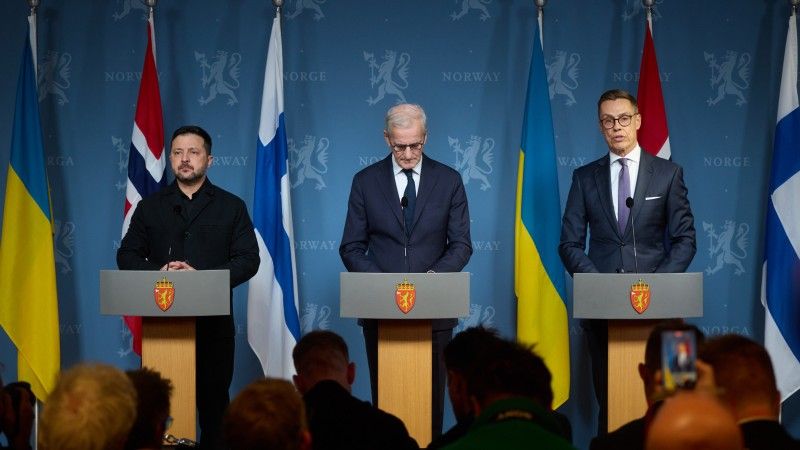
Another summit, another announcement of “progress”. If diplomatic optimism could intercept missiles, Ukraine would already have the strongest air defence in Europe. The Oslo discussions deserve a straightforward crisis management test: what changes on the ground, who is responsible for delivering it, and what happens if Russia refuses to comply?
The meeting brought together Ukrainian, American and European representatives, but it produced no agreed ceasefire, no publicly defined mechanism for enforcing security guarantees and no clear timetable for implementing a future settlement.
There was, however, one important development. President Volodymyr Zelenskyy confirmed that American intelligence sharing on Russian ballistic missile attacks had been restored. This is operationally significant, particularly for protecting civilians and critical infrastructure. Discussions with Norway also covered additional defence assistance, satellite communications and the development of the FREYJA anti-ballistic programme, with testing of its first components planned before the end of 2026. These are precisely the areas where diplomacy can produce measurable results. However, restoring capabilities that Ukraine already depended upon should hardly be presented as a major diplomatic breakthrough.
See also 

Russia’s response also deserves attention. Following Steve Witkoff’s meeting with Vladimir Putin in St Petersburg on 21 October, Moscow declared its willingness in principle to resume trilateral negotiations with Ukraine and the United States in November. Yet Russia has not abandoned its fundamental territorial and security demands. According to Kyiv, Moscow has also refused to commit to a reciprocal halt in attacks on energy infrastructure. Russia is prepared to discuss another negotiating format while continuing military operations and maintaining its principal demands. This is where diplomatic optimism must confront operational reality.
From a crisis management perspective, a framework requires operational substance: defined responsibilities, committed resources, deadlines, verification and credible consequences for violations. Without these, the distance between a promising meeting and an enforceable settlement remains considerable. Europe should also ask how long it intends to discuss its own security while depending on an American envoy to carry European proposals to Moscow. Participation in negotiations is useful. The capacity to shape and enforce their outcome is what gives participation strategic weight.
The measure of success should be fewer Ukrainian casualties, better protection of critical infrastructure and a demonstrable reduction in Russia’s ability to continue its aggression. The restoration of early-warning intelligence is an important step, but it does not replace the need for air defence interceptors, sustainable military assistance and enforceable security guarantees. Until these commitments become operational, the most reliable deliverable of summit diplomacy remains the next summit.


