


- WIADOMOŚCI
- ANALIZA
Russia's demographic war against Ukraine. Passports, deportations and stolen children [PART 1]

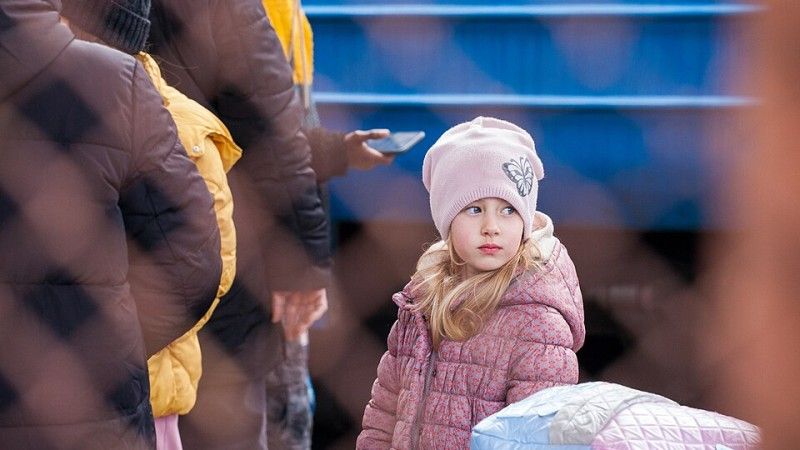
Photo. Mirek Pruchnicki from Przemyśl, Sanok, Polska / Wikimedia Commons
Russia’s war against Ukraine is not limited to military operations and territorial occupation. Moscow is also using demographic instruments to consolidate its control over occupied territories, including Russian citizenship, population transfers and the deportation of Ukrainian children. These activities could have consequences long after the fighting ends. Russia is seeking not only to control Ukrainian territory, but also to influence who lives there, which state they identify with and whether these regions can eventually be reintegrated into Ukraine.
Since the beginning of its aggression in 2014, Russia has combined military operations with political, economic and information activities. The full-scale invasion launched on 24 February 2022 expanded these efforts considerably. One of Moscow’s objectives has been to establish lasting control over occupied territories by transforming their administrative and social structures. Demographic policy has become an important instrument in this process, alongside conventional military operations and the establishment of Russian-controlled institutions.

Russian passports as an instrument of control
On 26 December 2022, Vladimir Putin signed Presidential Decree No. 951, establishing procedures for obtaining Russian passports in the occupied Ukrainian territories. The regulations covered residents of the self-proclaimed Donetsk and Luhansk people’s republics, as well as the occupied parts of the Kherson and Zaporizhzhia regions. The distribution of Russian citizenship has become an instrument for consolidating Moscow’s control over Ukrainian territory. It allows Russia to strengthen its administrative presence and create additional obstacles to the future reintegration of these regions with Ukraine.
Russian passports also have direct consequences for residents. Access to healthcare, pensions, property rights and public services has increasingly depended on possessing Russian documents. Ukrainians who refuse Russian citizenship may therefore face serious difficulties in everyday life. Moscow can also use the growing number of Russian passport holders to justify further political and military involvement, presenting its actions as the protection of Russian citizens. The result is a system in which the population is gradually incorporated into Russian administrative structures.
Deportations and the removal of Ukrainian children
Another particularly serious element of Russia’s demographic policy is the forced transfer of Ukrainian civilians, including children, to Russia and Belarus. In April 2022, Russian media reported that approximately 100 people, including 10 children, had been transported from a settlement in the Kharkiv region to Russia’s Belgorod region. Establishing the overall number of people unlawfully deported remains difficult because Ukraine does not control the occupied territories or significant sections of its border with Russia.
The deportation of children has also become an international legal issue. On 17 March 2023, the International Criminal Court issued arrest warrants for Vladimir Putin and Maria Lvova-Belova, Russia’s Commissioner for Children’s Rights, over alleged responsibility for the unlawful deportation and transfer of Ukrainian children. The Russian authorities have also introduced measures facilitating the acquisition of Russian citizenship by children transferred from occupied territories. The consequences extend beyond the physical removal of children from Ukraine, raising concerns about their identities, family connections and future return.

Forced population movements also affect Ukraine’s demographic and economic prospects. The departure of working-age residents reduces the available labour force, while the separation of families creates additional social problems. Changes in the age structure of the population could increase pressure on healthcare, pensions and public services. Some regions may struggle to recover even after the restoration of Ukrainian control, particularly if displaced residents are unable or unwilling to return.
Russia’s demographic strategy therefore creates challenges that cannot be resolved through military operations alone. Reclaiming territory does not automatically restore the population, institutions or social structures that existed before the occupation. Ukraine must also address the consequences of forced migration, imposed citizenship and the separation of families. Moscow’s objective is to make the occupation increasingly difficult to reverse, even if the military situation changes. The demographic consequences of this war could remain visible for decades.


