












- ANALIZA
- WIADOMOŚCI
Russia’s shadow fleet: A tool for circumventing Western sanctions

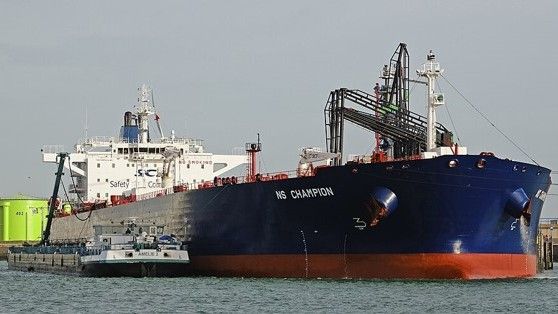
Photo. kees torn / Wikimedia Commons
One of the key instruments used by the Russian Federation to circumvent international sanctions is the shadow fleet. Undoubtedly, for the authorities in the Kremlin, it has served several functions that facilitated the achievement of both political and economic objectives.
Characteristics of Russia's shadow fleet
First and foremost, the shadow fleet is used to transport Russian fossil fuels, enabling Moscow to bypass the price cap mechanism, thereby maintaining revenues from energy exports and, consequently, financing the war. However, incidents in the Baltic Sea involving shadow fleet vessels also indicate its use as one of the manifestations of sabotage and espionage, targeting critical infrastructure located on the seabed of the Baltic Sea, including the Baltic Pipe and Balticconnector gas pipelines, LNG terminals, and high-voltage interconnections.
Speaking of attacks involving the shadow fleet, it is worth mentioning the tanker Eagle S, which in 2024 most likely participated in an alleged act of sabotage involving damage to subsea cables in the Baltic Sea using an anchor.
Moreover, the shadow fleet most often consists of ageing, uninsured vessels with opaque ownership structures that very frequently change their flag registration. Experts from the Center for Security and International Studies indicated that approximately 72% of shadow fleet vessels were over 15 years old, while 60% of them lacked insurance coverage. It is also worth mentioning that tankers often switched off their transponders and tracking systems, known as the Automatic Identification System (AIS).
On the one hand, this is intended to make them more difficult to identify, while on the other hand, it also poses a significant threat to maritime safety. Due to their poor technical condition, these vessels may cause environmental disasters, such as oil spills. By hiding their origin, the fleet avoided restrictions and was able to find additional buyers, including in countries that, in theory, were part of the sanctions regime.
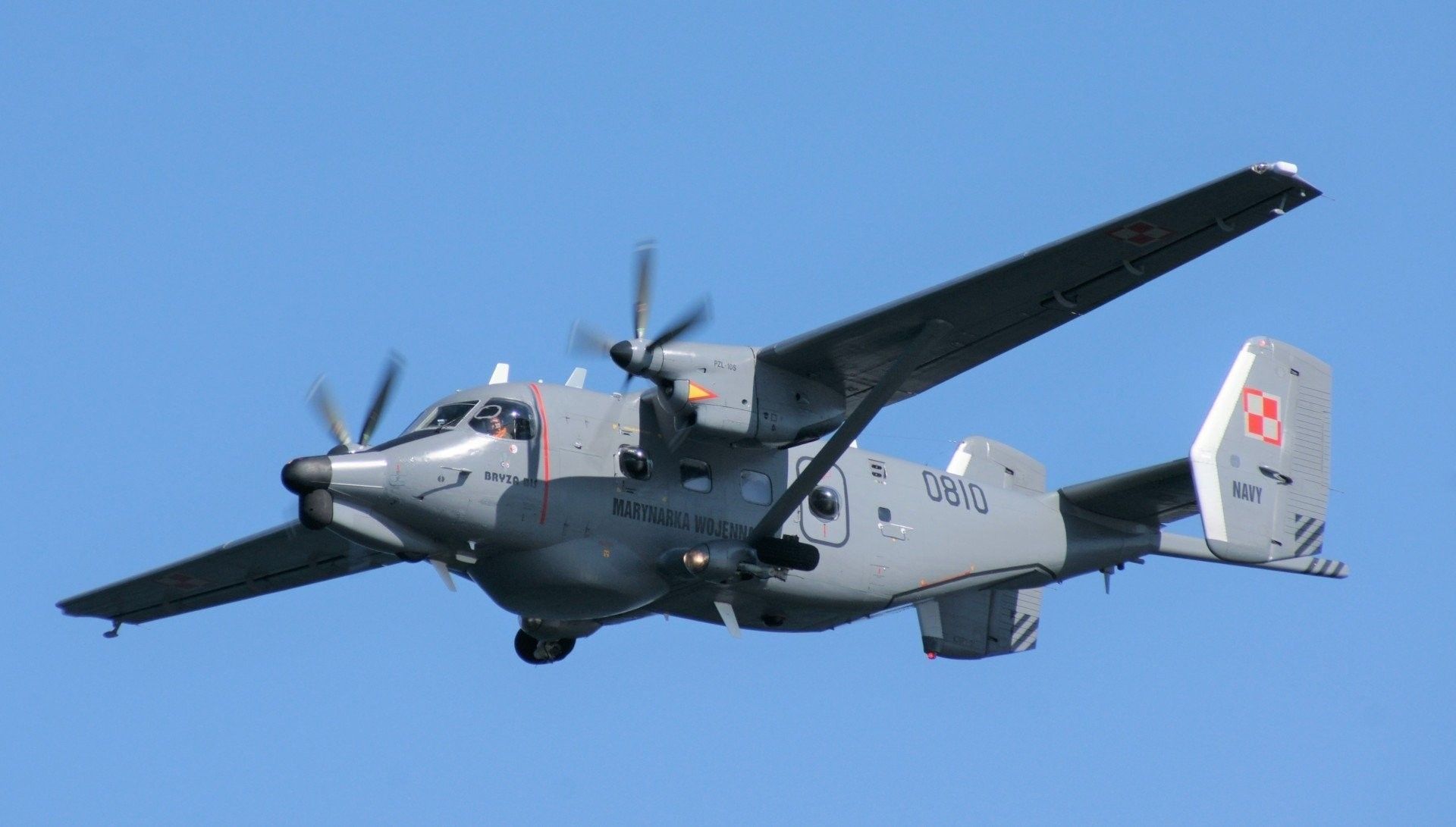
Russia's deployment of the shadow fleet
Since the beginning of the war, the Russian Federation has systematically increased the size of its shadow fleet. Since the spring of 2022, the country has spent approximately USD 10 billion on acquiring such vessels, mainly on the secondary market. Its exact size has not been fully determined; however, it is estimated to consist of between 600 and 1,000 vessels.
The Center for Strategic and International Studies provided its own data, according to which the fleet may consist of between 155 tankers and 435 support vessels, or as many as 591 ships in total. In the same study, experts estimated that this fleet transported approximately 3.7 million barrels of oil per day, accounting for 65% of Russia’s seaborne oil exports and generating between USD 87 billion and USD 100 billion in annual revenues. To illustrate the scale of the phenomenon, revenues from this illicit trading network were comparable to, and perhaps even exceeded, the total value of economic and military assistance provided to Ukraine since the beginning of the war.
With regard to the origin of these vessels, an investigation conducted by the Organised Crime and Corruption Reporting Project demonstrated that approximately 230 ships previously owned by Western shipping companies were acquired by entities involved in sanctions circumvention. Restrictions were also not respected with regard to tanker crews. According to SourceMaterial, approximately 13,000 seafarers were employed on around 1,000 tankers, including many originating from countries that had officially condemned Russian aggression.
Why is the Russian Federation using the shadow fleet?
As already mentioned, one of the principal objectives of the shadow fleet is to circumvent the price cap mechanism, thereby allowing continued oil exports to foreign markets. This practice involves a range of activities, including hiding the actual price of oil and adding transport charges, conducting ship-to-ship transfers at sea, falsifying documentation, and using intermediary companies located in countries that do not apply sanctions. Through such practices, vessels are able to avoid Western inspections and restrictions related to financial and insurance companies operating within the sanctions regime.
When discussing the functioning of the shadow fleet, attention should also be paid to the increasingly frequent use of false flags. In practice, this means that vessels operate without valid insurance and classification certification, while also remaining outside the standard mechanisms of international maritime supervision and regulation. Consequently, this may create risks to the environment, national security, and even international security. It is worth mentioning that one of the most used false flags in this illegal practice was that of Malawi.
By June 2025, 24 vessels using the flag of this African state had been identified as participating in the illegal transportation of Russian commodities. Furthermore, investigations revealed that the Malawian ship registry in question did not actually exist.

The trends in the deployment of the shadow fleet
The data indicate that the Russian Federation is systematically increasing its use of the shadow fleet for the maritime transportation of oil. An analysis of the use of the shadow fleet during the fourth year of the full-scale aggression shows that vessels involved in the illegal transportation of oil carried 65% of Russian exports of this commodity.
According to CREA data, in 2024, the impact of sanctions on Russian oil revenues was 70% lower than in the previous year. Experts identified the growing and increasingly sophisticated use of the shadow fleet to transport oil to new markets as the principal reason for this phenomenon, enabling Russia to bypass the price cap mechanism imposed on its oil exports.
The same analysis indicates that in 2024, Russia relied on 558 shadow fleet vessels, which transported 61% of all Russian seaborne oil exports, with the value of these exports reaching EUR 83 billion. Furthermore, the shadow fleet handled 78% of Russian maritime crude oil exports valued at EUR 57 billion, as well as 37% of refined petroleum product exports worth EUR 26 billion.
In 2025, ships operating under false flags transported Russian oil and petroleum products worth an estimated EUR 8.4 billion, with more than one-third of this cargo passing through European Union waters. Nevertheless, it is possible to observe a decline in vessels operating under false flags. According to CREA analysis, the number of shadow fleet vessels operating under false flags fell from a peak of 101 ships in October 2025 to 45 vessels by June 2026. At the same time, Russia increasingly transferred sanctioned vessels to its own registry, which expanded from 280 vessels in January 2025 to 382 vessels by June 2026.
Recent analyses indicate that the shadow fleet continues to play a central role in Russian oil exports in 2026. According to the KSE Institute, in June 2026, Russia used 325 tankers to export oil, including 176 shadow fleet vessels, which accounted for more than half of all ships involved in Russian seaborne oil trade. China and India remained the primary destinations for Russian crude transported by the shadow fleet. Furthermore, between August 2024 and June 2026, 431 out of 596 sanctioned tankers continued loading oil at Russian ports despite being subject to international restrictions.
CREA estimates that in August 2026, 52% of Russia’s seaborne oil exports were transported by sanctioned shadow fleet tankers. An additional 42% of export volumes were carried by tankers owned or insured by entities from the G7+, illustrating the continuing challenges in enforcing restrictions on Russian energy exports.
Summary
Despite ongoing efforts by Western countries to impose sanctions on additional vessels, the shadow fleet continues to play a crucial role in enabling the Russian Federation to circumvent restrictions and maintain revenues from fossil fuel exports. Over the years, its expanding operations have not only undermined the effectiveness of existing sanctions but have also created significant challenges for maritime governance, environmental protection, and regional security.


