












- ANALIZA
- WIADOMOŚCI
Sahel without Western military. Who filled the void? [PART 2]

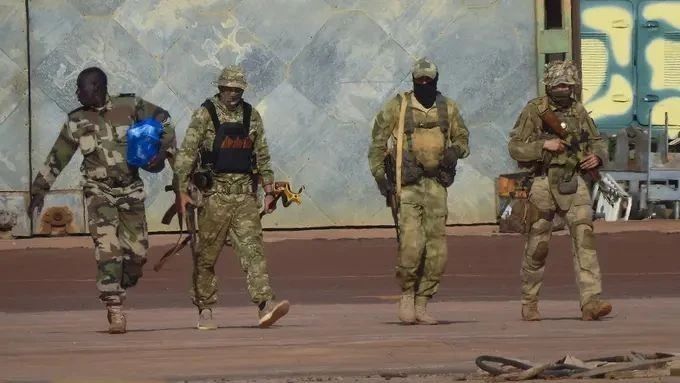
Photo. French Army
Following the collapse of the G5 Sahel, the Russian Federation moved into the resulting vacuum. Initially, Moscow’s primary tool was the Wagner Group, which offered authorities protection, training, and participation in operations in exchange for political influence and access to markets and raw materials.
Russian mercenaries were not interested in actually building the independent defence capabilities of their Sahelian partners. Prolonged insecurity justified their presence and allowed them to capitalise on further contracts. Essentially, Russia benefits from the juntas’ need for support.
This is the second part of the publication. To proceed to the first part, click here.
Mali is a war front for the Russian Federation
Following Prigozhin’s death, Moscow began formalising structures and placing them under the control of the Ministry of Defence and military intelligence. In Mali, Wagner was replaced by the Africa Corps, but the change of name did not signal the end of the Russian presence. Russia assumed greater responsibility for operations that could previously be presented as the activities of a private company. In July 2026, Russia and the AES (Alliance of Sahel States) nations once again announced a deepening of military cooperation, even as jihadists continue to gain ground.
It must be stated plainly: Mali is a war front for the Russian Federation in Africa. In the Central African Republic, the Russian presence primarily serves to protect the authorities, secure economic interests, and maintain the regime. In Sudan, the Russians focus on relations with the warring parties, logistics, and raw materials. In Mozambique, Wagner failed to cope with the conditions and withdrew after sustaining losses. In Mali, however, Russian formations participate in regular operations, suffer casualties, and are directly held accountable for whether they can stop JNIM and the separatists.
In the spring of 2026, coordinated actions by JNIM and Tuareg rebels led to serious losses for Malian and Russian forces. The Africa Corps confirmed a withdrawal from Kidal, and the crisis threatened Russian interests, which include mining and energy projects. Mali has become nothing more and nothing less than a litmus test for Russian credibility. If Moscow cannot stabilise the state where it operates most intensively, it will be harder to present its model as a more effective alternative to the West.
Russia can provide weapons, ammunition, helicopters, and instructors. It can also conduct brutal operations and help maintain key bases. However, it is unable to replace a functioning state. Furthermore, violence against the population, particularly against the Fulani and Tuareg communities, increases the number of individuals ready to seek protection or revenge through armed organisations. In recent years, the forces of Mali and Burkina Faso have been responsible for more civilian casualties than the jihadists, and the use of Turkish drones by the Malian military has also been linked to an increase in strikes against the population.

Gold links Africa to the war in Ukraine
The Russian presence in Mali cannot be analysed solely as a counter-terrorism operation. Access to gold, lithium, and other resources is at stake. The model previously developed in the Central African Republic and Sudan involved combining military services with concessions, mine protection, transport control, and export brokerage. This does not always mean a formal takeover of a deposit; influence over licences, mining security, and trade networks is sufficient.
The Kremlin may generate over a billion dollars annually from African resource extraction, and for Mali, Sudan, and the Central African Republic, a figure of approximately $2.5 billion (£1.9 billion / €2.3 billion) has been suggested. These are estimates, as a large portion of trade occurs outside official statistics. This does not change the fundamental conclusion: African gold helps Russia circumvent sanctions and finance activities related to the war against Ukraine.
The gold reaches, among other places, the United Arab Emirates, where it can be integrated into legal trade and converted into financial assets. The UAE remains the most significant entry point for undeclared gold from Africa. European markets, including Switzerland, also play an important role in the trade of gold from Mali, demonstrating that responsibility does not end at African borders. The problem is not only the extraction itself but also the lack of transparency regarding the resource’s origin.
Africa, Russia, and Ukraine are therefore interconnected vessels. Russian forces help maintain friendly governments and secure access to resources. The profits strengthen the Russian war economy, and the political presence allows Moscow to gain the support or neutrality of African states in international forums. Anyone who believes that the situation in Mali is unrelated to the security of Poland and NATO’s eastern flank is overlooking the financial and strategic dimensions of the Russian presence. The rivalry with Russian mercenaries in Africa is part of the same confrontation taking place in Eastern Europe.
The struggle for capitals
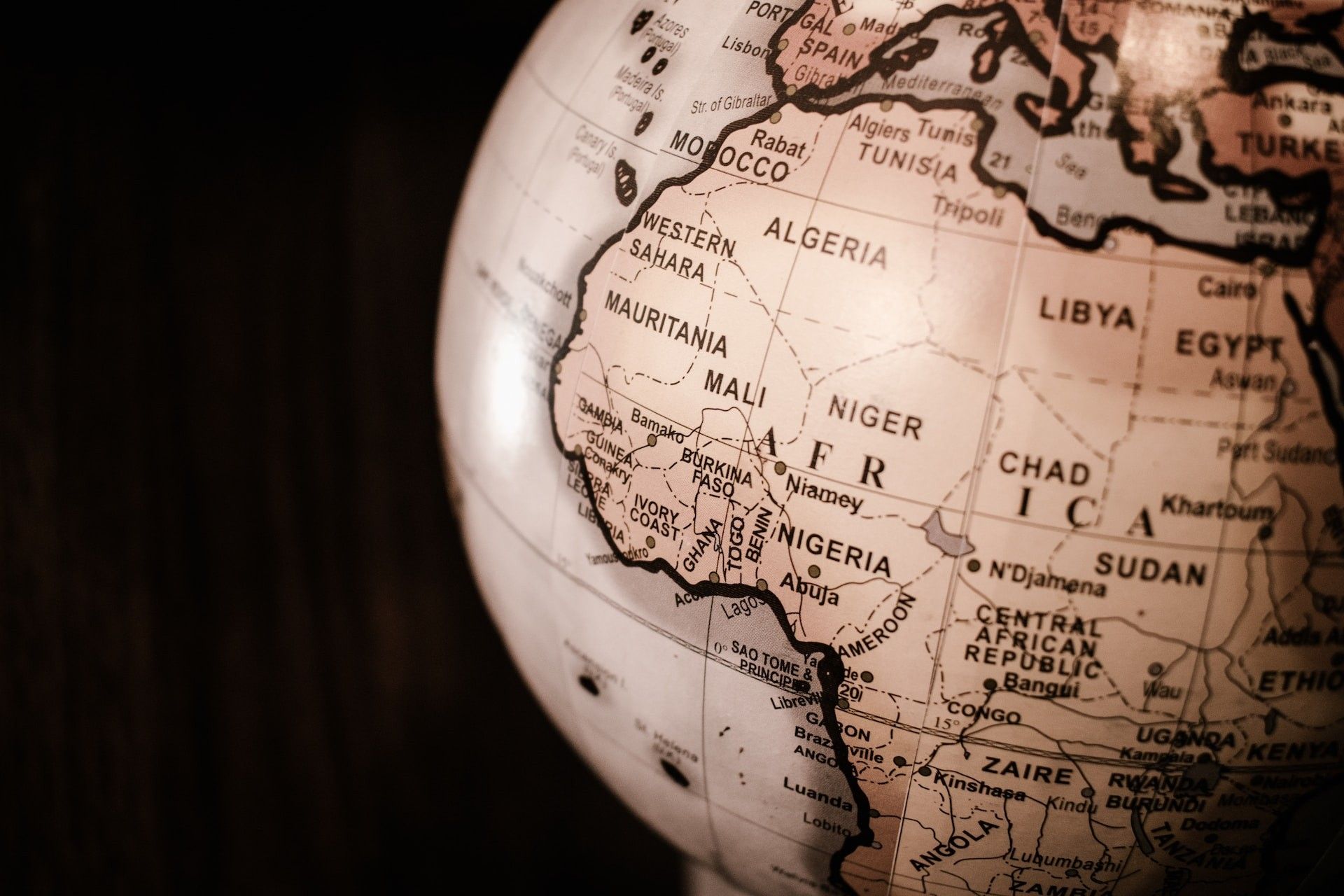
The greatest error in assessing the situation is measuring success solely by the number of capitals and large cities remaining under government control. JNIM does not need to capture Bamako, Ouagadougou, or Niamey. The organisation can surround smaller towns, destroy infrastructure, block fuel supplies, and force garrisons to remain behind base walls. The state formally holds the city but does not control the roads leading to it or the surrounding villages.
JNIM collects zakat, resolves disputes, regulates access to pastures, and enters into local agreements. In one region, it conducts an open offensive; in another, it limits violence after securing the residents’ subordination. Therefore, a lower number of attacks does not always indicate an improvement. Sometimes it proves that the organisation no longer needs to fight because the administration has been pushed out and the community has accepted the imposed rules.
Particularly dangerous is the ability to exploit local conflicts. One must not equate the entire Fulani community with jihadism. However, JNIM recruits among some herders who feel threatened by the military, militias, or competing communities. The situation with the Tuaregs is similar. Separatist groups are not part of Al-Qaeda and have different goals, but under certain conditions, they can coordinate actions with JNIM against a common enemy. In 2026, such cooperation was evident during the offensive against Malian and Russian forces.
This is precisely the current difficulty in the Sahel. The juntas present the conflict as a simple struggle between the state and terrorists, whereas in reality, disputes over power, land, pastures, resources, and the future of northern Mali overlap. A brutal operation may kill dozens of militants, but if it simultaneously destroys a village and kills civilians, it creates the foundations for the next round of recruitment.
JNIM and the Islamic State
JNIM, or Jama’at Nusrat al-Islam wal-Muslimin, was formed in 2017 through the merger of structures linked to Al-Qaeda. It included, among others, Ansar Dine, the Macina Liberation Front, al-Mourabitoun, and Saharan elements of Al-Qaeda in the Islamic Maghreb. The organisation has maintained a decentralised character, allowing it to adapt its actions to specific regions.
The most active component is Katiba Macina, which has expanded its influence in central and southern Mali by exploiting conflicts between herders and farmers and the weakness of local authorities. In northern Burkina Faso, Ansarul Islam plays a significant role, while in the east and southeast, structures responsible for expansion towards Niger, Benin, and Togo are developing. JNIM’s strength does not stem solely from the number of fighters, but rather from the organisation’s ability to combine Al-Qaeda ideology with local interests, smuggling, and informal governance.
The second major actor is the Islamic State in the Sahel, previously known as the Islamic State in the Greater Sahara. The group is particularly active in the borderlands of Mali, Niger, and Burkina Faso. JNIM and the Islamic State compete for territory, populations, and trade routes. They should not, therefore, be presented as a unified alliance. On the other hand, state pressure can temporarily limit their mutual fighting, and an offensive by one group creates an opportunity for the other to occupy abandoned areas. Crucially, both groups—for the sake of their common war—will fight against the FAMa (Malian Armed Forces) and the Russians (or the Africa Corps).
Niger is simultaneously fighting two wars. In the west, it faces JNIM and the Islamic State in the Sahel, while in the southeast, it remains threatened by ISWAP and the remnants of Boko Haram. A potential merging of these interests does not necessarily mean a formal alliance between terrorist organisations. A simple exchange of weapons, explosives, and information, along with the use of the same routes, is sufficient. It is these terrorist networks and attacks from multiple sides, rather than a unified command, that currently pose the greatest threat to the juntas in the Sahel.
The march south
JNIM’s expansion towards the Gulf of Guinea did not begin with a large column of fighters marching from Mali (in contrast, for example, to Russian columns in Ukraine). The organisation moves in stages; it first consolidated influence in Mali and Burkina Faso, and then further down the continent. Importantly, clashes are now regularly occurring on the Burkina Faso–Benin and Burkina Faso–Togo borders.
In Benin, JNIM no longer limits itself to using areas outside cities as a rear base. The organisation attacks the military and attempts to embed itself in local economies on both sides of the border with Niger. The group conducts propaganda activities, builds relationships with residents, and engages in illegal trade, such as arms smuggling. The situation is similar in Togo, where JNIM is increasingly active within the country.
Significantly, Ghana remains in a different situation. There is not yet a terrorist campaign comparable to that in northern Benin and Togo. The absence of major attacks does not mean an absence of threat. Northern regions may be used to maintain rear support to avoid opening another front.
A unified belt of territory controlled by jihadists from Mali to the ocean does not yet exist. The term “corridor to the Gulf of Guinea” should be understood as a network of spheres of influence, smuggling routes, and safe areas. JNIM does not need to control every kilometre. The ability to move people, weapons, and money through Burkina Faso to Benin, Togo, and northern Ghana is sufficient. Such a corridor is slowly forming. If no one stops JNIM and other groups, it will become a “terrorist belt” that, in the coming years, will resemble a “quasi-state”.
Jihadists also do not need to occupy ports. It is much easier to strike the roads leading to Cotonou, Lomé, Abidjan, and Dakar. Blocking transport can simultaneously weaken the coastal states and the AES juntas. For JNIM, economic warfare is often more profitable than attempting to hold a large city.

Drones and a new market
The Sahel has become a space for the rapid development of unmanned aerial vehicles (UAVs). Turkey has sold drones to the authorities of Mali, Burkina Faso, and Niger and has developed broader military cooperation. Ankara is building a political, economic, and logistical presence in Africa, offering partnership without the pressure comparable to the conditions set by the European Union. In 2026, Turkish influence in Mali grew in parallel with the problems faced by the Russian Africa Corps.
However, two phenomena must be distinguished. Turkey provides advanced systems to states, not to JNIM. Jihadists primarily acquire inexpensive civil drones, which they modify for reconnaissance and dropping payloads. Since 2023, JNIM has rapidly developed such capabilities and combined drone attacks with ground strikes. This is another example of how affordable technologies are changing a conflict in an area larger than many European states. Crucially, terrorists in the Sahel have begun using artificial intelligence to conduct attacks.
Not all Western nations have completely left the region. Italy has maintained a bilateral training mission in Niger, involving approximately 350 soldiers. Spain, however, ended the operation of its last permanent contingent in the Sahel in 2025, although it continues to develop cooperation with West African states. The difference highlights the lack of a single Western strategy. Individual states maintain contacts but do not create a system that could replace the previous presence.
China is also observing the situation and expanding its economic influence, but it does not intend to assume full responsibility for the fight against terrorism; the same applies to Turkey. Both states may provide equipment and investment, while avoiding major ground operations. The Sahel thus demonstrates the difference between presence and responsibility. Many actors want to benefit from the market and influence, but few are ready to bear the cost of long-term stabilisation.
The third and final part of the publication will be released shortly.


