












- WIADOMOŚCI
- OPINIA
- ANALIZA
The Hidden Costs of War (PART 1)

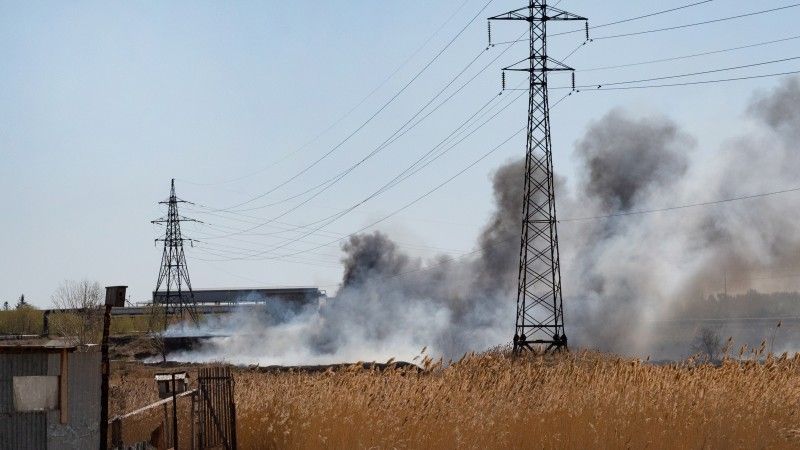
There are costs of war that are immediately visible, such as destroyed cities, burned infrastructure, rising budget expenditures, and figures written into financial legislation. These are the costs that dominate public debate and government reports because they are measurable, quantifiable, and immediately felt.
The second part will be published on Friday 4 September
But there are also costs that cannot be seen. They do not appear in budgets or annual reports. They unfold over time, permeate the economy and society, and their effects only become apparent years later. These include lost economic growth, unused human potential, the erosion of institutions, and demographic changes that permanently reduce a state’s capacity for development. What matters is not only what the state spends, but also what it loses.
In reality, these hidden costs constitute the largest part of the economic burden of war. They are more difficult to capture, but they determine how long a state will feel the effects of a conflict and how deeply war interferes with its future.
The Fiscal Illusion of War
In a budget, everything appears measurable. Budgets have the remarkable ability to show relatively well the money that a state spends on war (or preparations for it). They are much less capable of measuring what war takes away from the state. The budget contains a „defence” section, a specific amount of money, purchases of weapons, salaries, infrastructure, ammunition, and operational expenditures. It is therefore easy to get the impression that the cost of war is roughly equal to the sum of the „bills presented to the state.” This is convenient, but economically it is about as accurate as treating the cost of medical care for an accident victim as the full cost of the accident itself.
The problem begins when we try to calculate not only what the state has purchased, but also what, as a result of war (or preparations for it), it has ceased to possess, produce, finance, and develop. War is not merely an additional item on the expenditure side. It is simultaneously a mechanism that destroys human, physical, social, and institutional capital. These elements often disappear somewhere between demographic statistics, company accounts, household balance sheets, and the category of „damage difficult to estimate.”
The real price of war is significantly higher than the sum of expenditures visible in state budgets. War generates not only direct military and material costs, but also invisible losses and damages that only become apparent years later. We can therefore speak of two dimensions of costs: direct and hidden.
Direct costs primarily include military expenses such as purchasing equipment, ammunition and weapons, maintaining armed forces and conducting military operations, as well as logistics and fuel costs, among many others. These are accompanied by material losses – destroyed roads, bridges, power plants, cities, industrial facilities, and other elements of infrastructure. Human costs are also an important component, including medical treatment for wounded soldiers, war pensions, and benefits for the families of those killed. These are expenditures that can be measured and found in official budgets, although this is not as simple as it might seem, because they do not concern only the budget of the defence ministry, but many parts of the state budget, as well as municipal budgets, expenditures by insurance companies, private funds, and so on. They may be the most visible costs, although even here saying that they can be relatively easily identified would be a considerable simplification.
The Invisible Economics of War
Much more difficult to capture are the hidden costs of war. They are often imperceptible and do not appear immediately in budgets, while their effects may be felt for decades. One of the most important is lost economic growth. War means a decline in economic activity, an outflow of foreign investment, reduced innovation (paradoxically, in some cases, also increased innovation), and falling productivity. Over the long term, these losses may prove greater than the direct expenditures on conducting military operations.
The classical approach to the costs of war is temptingly simple. The state spends more on defence, so the cost of war can be measured by the increase in defence spending. If additional expenditures arise for refugee assistance, infrastructure reconstruction, compensation, or debt servicing, they can be added to the bill. We then obtain an impressive figure and can proudly say that we have calculated the cost of the conflict. Except that we have not calculated the cost of war. We have primarily calculated the cost of the state’s response to war. This is a fundamental difference. The budget is not a balance sheet of national prosperity. It reflects money flowing through the state’s accounts, but it is not designed to value lost decades of development, premature deaths, emigration, interrupted careers, lost investments, or the breakdown of the state’s institutional capacity. War can therefore appear in the budget as a very large expenditure, while in reality it is also a huge national asset that has been burned, damaged, or permanently lost.
See also 
People are the Greatest Lost Capital
The most obvious example of wartime losses is human capital. The death of a person does not mean merely the cost of a benefit paid to their family. It also means the loss of future production, future tax revenues, future skills, and future contributions to the economy. In the case of a young person, the difference between the cost of an administrative benefit and the actual economic loss can be so enormous and disproportionate that it may seem absurd. The economy loses decades of potential activity.
A person does not appear in the budget as an asset either. The state pays for education, healthcare, and infrastructure, but it does not record a university graduate as an asset with a specific value. Yet society invests for many years, sometimes decades, in the education, health, and qualifications of its citizens so that the economy can subsequently benefit from their work, taxes, entrepreneurship, and innovation. War can brutally interrupt this process.
Health consequences are even more problematic. A wounded soldier may survive, but their ability to work may be permanently impaired. The state will bear the costs of treatment, rehabilitation, and benefits, while the economy will simultaneously lose part of its potential productivity. Expenditure will therefore appear in the statistics, but it will be much harder to see the production that never took place. This is the economic paradox of war: public spending can increase while the real potential of the economy decreases at the same time.
There are also intergenerational effects. War does not end economically on the day a ceasefire is signed. A child growing up in wartime conditions will have poorer access to education, healthcare, a stable family environment, and infrastructure. A young person who leaves the country may spend decades building professional capital abroad instead of in their country of origin. A family that postpones having children because of uncertainty affects demographics not only today, but also twenty, thirty, and fifty years into the future. Added to this are trauma, PTSD and other mental health problems, the breakdown of social ties, and rising crime, all of which generate costs that are often invisible in usual economic calculations.
In very simplified terms, the death and emigration of young people, the outflow of skilled workers, and interrupted education mean a permanent reduction in a state’s economic potential. War also affects the condition of society. At the same time, demographic costs emerge, including a decline in population, lower fertility, and accelerated population aging. Rebuilding human capital and social trust can take decades.
Political and Institutional Losses
A prolonged conflict can weaken the rule of law, greatly increase the risk of corruption, particularly in the defence sector, and lead to the militarization of public life.
An important element is the institutional degradation of the state. War forces resources to be concentrated on emergency measures. The administration deals with the crisis, companies switch their production, courts and local governments operate under pressure, public infrastructure becomes overloaded, and some decisions are made under exceptional procedures. In the short term, this may be necessary. Over the long term, however, it creates a risk that the state will begin to lose its ability to perform its basic functions efficiently and predictably. Institutions also have their own productivity. If procedures become slower, corruption increases, and the administration loses competent employees, public trust declines and the quality of governance deteriorates.

The Economy and the Environment
War places a strain on the economy not only before it breaks out and throughout its course, but also long after it has ended. Financing military operations through borrowing increases public debt, while inflationary pressure can reduce the purchasing power of households. Ultimately, some of the costs are transferred into the future in the form of higher taxes, lower public spending, or slower economic growth. Entrepreneurs begin to make decisions not on the basis of economic calculations, but on the basis of political and security risks. The economy bears the cost of this because the consequences are felt by companies, workers, citizens, and the state, including through lower productivity, greater bureaucracy, waste of resources, reduced investment, and slower decision-making.
War also changes the structure of the economy while simultaneously causing mass unemployment and labour shortages. Some people will lose their jobs, while other sectors may suffer from a lack of workers. Companies have to allocate resources to survival instead of investment. Private capital becomes more cautious. An investor does not even have to believe that the risk of war is high. It is enough that they cannot reasonably price that risk. And capital particularly dislikes situations in which a financial model contains the uncertainty of „whether the area will still exist.”
Therefore, the real cost of war also includes lost economic growth. The issue is not merely how much GDP was produced in a given year, but the difference between an economy that could have developed under stable conditions and an economy forced to function under wartime conditions. This difference accumulates over time.
If an economy invests less for several years, educates fewer people, loses part of its workforce, and postpones infrastructure modernization, it is not enough later to say, „everything is fine because the war is over and we are returning to normal.” Normality is not a reset button. Years of lost investment cannot simply be added back to the calendar.
For the economy, disrupted supply chains, rising costs, and uncertainty will be crucial, leading to downtime, reduced investment, and business failures. Inflation and a weakening currency will also cause savings to lose value, while everyday life and purchases become more expensive.
Environmental costs must also not be overlooked. The destruction of industrial infrastructure, contamination of soil and water, degradation of ecosystems, and additional CO₂ emissions can have consequences whose removal will take many years and require substantial financial resources. The mining of millions of hectares of land and chemical contamination can also permanently remove parts of the territory from agricultural production.

What the Numbers Do Not Show
The key difference between the direct and hidden costs of war lies in their visibility and the time over which they exert their effects. Direct costs are primarily financial and material, appear relatively quickly, and can be measured or estimated comparatively more easily. Hidden costs are economic, social, psychological, demographic, and environmental in nature, and their full scale becomes apparent only over a period of years or even decades.
Put simply, the price of war does not fit into budget statements. The reconstruction of a destroyed bridge or power plant can be relatively easily valued. It is much harder to calculate the value of lost human capital, interrupted education, deteriorating mental health, emigration, cultural assets lost forever, or lost investment opportunities. This is precisely why the full scale of the hidden costs of war will remain not only difficult to estimate, but in many cases may never be fully understood.


