












- ANALIZA
- WIADOMOŚCI
The Houthis’ September offensive: The limits of Saudi deterrence

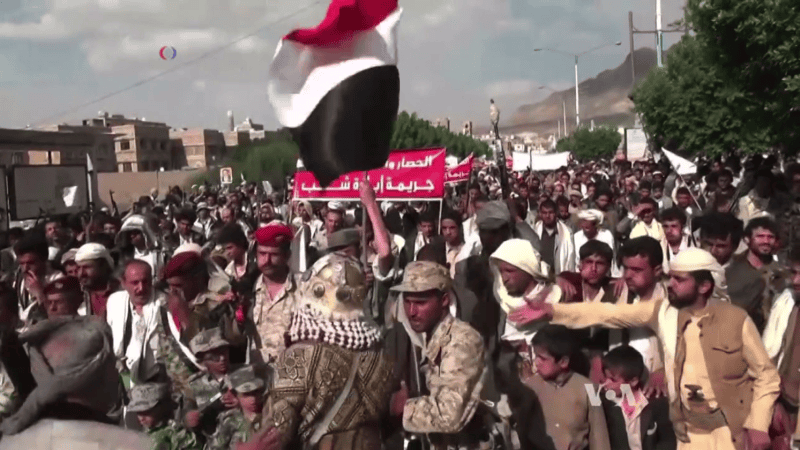
The Houthis’ September attacks on Saudi Arabia and advances along Yemen’s western coast combine military pressure with threats to Saudi exports. Riyadh must therefore reconcile the defence of its own territory with efforts to restore the position of its Yemeni partners. These distinct objectives shape the terms of any de-escalation. An agreement that curbs attacks on the kingdom could also consolidate Houthi territorial gains and their influence over the security of shipping.
The coalition's enduring divisions
The intervention launched by the Saudi-led coalition on 26 March 2015 was intended to restore President Abd-Rabbu Mansour Hadi to power. It failed to defeat the Houthis or re-establish government control over the entire country. The UN-brokered truce of April 2022 reduced the intensity of the fighting while leaving the struggle for power unresolved. Riyadh gained room to scale back its direct involvement, but security along its southern flank remained dependent on the conduct of the parties to the conflict.
Saudi policy was also constrained by differences within the coalition. Riyadh linked Yemen’s stabilisation to the restoration of central authority. Abu Dhabi expanded its influence through local partners, including the Southern Transitional Council, placing greater emphasis on the southern coast and its ports. Fighting a common adversary therefore left the future distribution of power unsettled.
By late 2025, these tensions had again taken a military form, exemplified by the Saudi strike on the port of Mukalla. Rivalry between external backers intersected with the independent ambitions of Yemeni groups. Under these conditions, financial assistance and weapons could strengthen individual formations without creating a common decision-making structure. This directly affects their capacity to respond to the current offensive.
Territorial gains and political pressure
The Houthis gradually expanded their means of exerting pressure. The sinking of the Magic Seas and Eternity C in July 2025 demonstrated the movement’s ability to inflict losses on shipowners. The ban on Saudi vessels announced on 20 July 2026 directed this threat specifically against the kingdom’s interests. In September, pressure on shipping was combined with attacks on Saudi territory and advances on land.
According to the Saudi-led coalition, 73 people were injured in attacks on Abha, Khamis Mushait, Jizan and Najran on 8 September. The Saudi energy ministry confirmed fires and the shutdown of some facilities. Two days later, government and allied forces lost Mokha. Reuters subsequently reported, citing Yemeni government sources, that the Houthis had also seized Perim Island at the entrance to the Bab al-Mandab Strait on 11 September.
The political value of these gains lies in the opportunity to connect the local balance of power with the security of international trade. Holding positions along the coast would strengthen the Houthis’ position both against the Yemeni authorities and in any negotiations over curbing attacks on shipping. The movement could seek concessions in return for restraint while retaining the territorial gains secured during the offensive.
Such an outcome would benefit Iran by increasing the costs borne by its regional adversaries. The Houthis, however, also have their own interest in consolidating their position in Yemen. The convergence of benefits for Tehran and Ansar Allah does not establish joint direction of operations or the movement’s willingness to pursue an open-ended escalation. Territorial gains could provide a basis for further military action, but they could also raise the price of a future agreement.
See also 

Pressure on exports and the role of alternative routes
A presence on Perim would facilitate the monitoring of shipping and the deployment of weapons. Sustaining a blockade of the strait would nevertheless require adequate armament, intelligence and supplies, as well as the ability to withstand a naval response. Seizing the island increases the scope for exerting pressure, but does not in itself provide control over all shipping.
The Houthis do not need to stop every vessel to generate economic consequences. In a statement issued on 12 September, they claimed that 73 vessels had passed through the strait over two days, while maintaining the ban on Saudi ships. These figures come from a party to the conflict. The statement can nonetheless be interpreted as an attempt to present the movement as the actor determining whose passage remains safe. A selective threat can influence shipowners’ decisions, insurance costs and route choices even while a substantial share of traffic continues.
Riyadh’s position was further weakened by disruption to the infrastructure that allows it to bypass the Strait of Hormuz. On 11 September, the Saudi energy ministry announced a precautionary shutdown of the East–West pipeline following attacks the previous day. The extent of the damage and the timetable for restoring flows remained unclear. Riyadh and Baghdad indicated that the drones had come from Iraq. This did not establish which organisation was responsible for the strike.
The threat to maritime transport was therefore compounded by an interruption to oil flows to Yanbu. On 13 September, Reuters reported, citing three industry sources, that stocks at the terminals there could sustain exports for five to seven days. The agency also pointed to inventories at Egyptian terminals. Drawing on these stocks provided time to restore pipeline operations, but a prolonged outage would increase pressure to find a solution.
The consequences also depend on the destination of shipments. Voyages from Yanbu to Europe through Suez bypass Bab al-Mandab. The shortest route to Asian customers passes through the strait, although the much longer alternative through Suez and around Africa remains available. For Poland, both the continuity of Saudi oil supplies and the effect of export constraints on global prices are relevant. Alternative routes reduce the risk of interrupted deliveries, but do not eliminate the costs of longer journeys.
A military response requires political agreement
The Yemeni authorities pledged to recover the lost territory. On 13 September, the Associated Press reported that forces were regrouping and reinforcements were planned. It also cited a military statement announcing airstrikes on Mokha, Dhubab and other Houthi positions. The prospects for a counter-offensive nevertheless depend on cooperation between groups whose interests extend beyond defeating a common adversary.
Recapturing the port requires ground forces. Holding it also requires agreement on command, supplies and future administration. Without such arrangements, military success could revive competition between the formations involved in the operation. Saudi air power can strengthen their combat capabilities, but the durability of any gains depends on local political agreements.
According to NDTV, Tareq Saleh’s forces accused the Houthis of using artificial intelligence to clone his voice in a recording calling for a withdrawal. The allegation remains an unverified claim by a party to the conflict and does not establish that such an operation contributed to the loss of the city.
The scope of the Saudi response also depends on American assistance. Citing two US officials, Axios reported that Donald Trump had rejected a request from Mohammed bin Salman, made on 10 September, for strikes against the Houthis. Reuters, meanwhile, reported that Washington was willing to provide intelligence and targeting support. This division of involvement would strengthen Saudi operational capabilities while leaving Riyadh responsible for the scale and costs of the campaign, as well as any further escalation.

Allied support and diverging interests
The practical value of the Mecca Pact in this crisis depends on the scope of the tasks its participants agree to undertake. Assistance in defending Saudi territory would reduce the impact of Houthi attacks. Supporting an operation in Yemen, however, would involve participation in a campaign whose outcome also depends on local divisions and the future distribution of power. For Turkey and Pakistan, these forms of engagement would carry different political costs.
On 9 September, Reuters reported that Pakistan had conveyed a Saudi warning to Iran concerning further Houthi attacks. According to a Pakistani source cited by the agency, representatives of the three countries agreed during consultations in Riyadh that their troops would not enter Yemen and that any response would be conducted from Saudi territory. The following day, a Pakistani foreign ministry spokesperson denied reports that Islamabad had warned Iran and said that no discussions on military action under the pact were under way.
The discrepancy leaves the scope of the cooperation under consideration unclear. Reports that operations would be confined to Saudi territory cannot be treated as an agreed policy among all participants. For Riyadh, declarations of solidarity need to translate into specific military roles. Their scope would show whether assistance from its partners also extends to operations affecting the balance of power in Yemen.
Ankara’s position combined support for the kingdom with an emphasis on limiting escalation. On 12 September, the Turkish foreign ministry condemned the attacks launched from Iraqi territory, reaffirmed its support for Saudi sovereignty and praised Riyadh’s restraint. The statement did not announce participation in a military operation.
Turkey also maintains military ties with Somalia, including a training facility in Mogadishu and a 2024 agreement on maritime security support. Using this presence to support operations near Bab al-Mandab would require separate arrangements on forces, tasks and command. A broader Turkish role could ease the burden on Saudi Arabia while giving Ankara a greater say in defining the objectives of a joint operation.
The importance of the Horn of Africa also extends to networks operating on both sides of the Gulf of Aden. As early as March 2025, the British representative to the UN pointed to links between the Houthis and Al-Shabaab, as well as weapons flows from Yemen to Somalia. These connections support the case for combining the protection of shipping with efforts to identify and disrupt supply routes. They also broaden the cooperation required to achieve a more lasting reduction in the threat.
See also

Possible scenarios
As of 13 September, three scenarios could be considered, depending on the Houthis’ ability to hold their territorial gains, the restoration of oil flows to Yanbu and the extent of Riyadh’s cooperation with Yemeni and foreign partners.
The first is limited de-escalation. Restoring oil flows and reaching an agreement to curb attacks on the kingdom and shipping would ease pressure on the Saudi authorities. Riyadh could accept a reduction in hostilities without resolving the struggle for the coast. The Houthis would then retain territorial gains that strengthen their negotiating position and allow them to renew pressure in the future.
The second scenario is a protracted confrontation. In the absence of an agreement or the capacity to reverse Houthi gains, the Saudi response could focus on protecting infrastructure and conducting limited retaliatory strikes. Periodic Houthi attacks would sustain uncertainty for shipping, increasing the costs of transport and securing exports. Neither side would gain a decisive advantage, while short-term efforts to contain the effects of the crisis would take the place of a political settlement.
The third scenario involves an expansion of military operations to recover lost positions. Prolonged export disruptions, further attacks on Saudi infrastructure or additional Houthi advances would intensify pressure for such a decision. The effectiveness of the operation would depend on Yemeni groups agreeing on command arrangements and objectives, as well as the extent of external support. Without these conditions, greater Saudi involvement could increase the costs of the war without delivering a lasting change in the balance of power.


