












- ANALIZA
- WIADOMOŚCI
Trump hesitated over the NATO summit

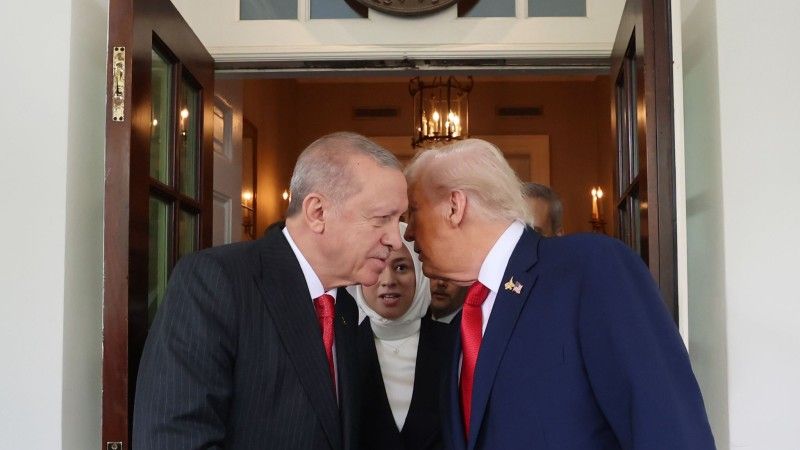
The NATO summit in Ankara will not be a routine meeting of allies. It will show whether the United States still wants to carry the main military burden in Europe, whether Europeans can replace part of that power, and whether Türkiye can use the summit to strengthen its own role inside the Alliance.
Donald Trump hesitated over whether to attend the NATO summit in Ankara at all. This matters because he had already attended the G7, a format that includes the same large European powers that often oppose his decisions and his view of international politics. NATO is different. In the G7, the dispute is mainly political and economic. In NATO, it concerns American troops, money, security guarantees and Europe’s expectation that Washington will remain the main military pillar of the continent.
According to reports, Trump told Recep Tayyip Erdogan that he would come to the summit because of him. This shows the importance of the Trump–Erdogan relationship. Trump strongly respects the Turkish president and sees him as a leader able to deliver results in a region that matters to Washington. He values Türkiye’s role in Middle Eastern diplomacy, including talks around Gaza and Iran, and he also understands Türkiye’s military weight.
Erdogan commands one of NATO’s largest armies, has a growing defence industry and controls a state positioned between the Black Sea, the Middle East and the Caucasus. Trump also knows that if he comes to Ankara, he does not arrive as a guest among equals. He arrives as the key figure at a summit where most European allies need American presence more than Washington needs another declaration of unity.

Türkiye also delivered on issues important to Trump. Ankara played a role in the Gaza ceasefire and supported the Iran memorandum, which Trump praised. It has already passed NATO’s old 2% defence spending target and says its military planning is moving towards the 5% objective by 2035. For Trump, this is the language of seriousness. It is very different from European declarations that are not always followed by capability.
The French case is very different. Relations between Paris and Washington are now among the worst in decades. France and the United States do not share a common vision of European security, while Washington, Paris and Berlin should be holding the most serious conversation in years about the future of the U.S. military presence in Europe. Instead, the relationship is deteriorating.
France has quietly adjusted its NATO posture before Ankara because its previous „360-degree” approach was difficult for allies to read. Since the Vilnius summit, Paris had claimed that it could reinforce allies in the event of Russian aggression, except with nuclear deterrence assets. That position was unique in the Alliance, but not politically clear enough at a time when Europe needs concrete force contributions, command roles and integration into NATO planning.
See also 

This is also a fight for influence inside NATO’s structures. France has capable forces and operational experience, but influence in NATO is built through contributions to the NATO Force Model, staff positions, military planning and presence in headquarters under SHAPE. Germany, Poland and the Nordic states are also trying to strengthen their position while the United States reviews parts of its presence in Europe. Paris cannot only speak about strategic autonomy. It must show what it can deliver inside NATO.
For the eastern flank, the summit is about Russia. Poland, the Baltic states, Romania, Finland and Sweden need confirmation that NATO can defend its territory if the United States reduces part of its military role in Europe. They need air defence, logistics, ammunition, military mobility, command structures, maritime security and permanent deterrence, not only communiqués.
For Trump, the hierarchy of threats looks different. The Middle East is the immediate challenge, and Europe is a theatre where allies are expected to pay more and rely less on American resources. This difference will shape the summit. Many European states still buy American weapons and want Trump visibly present in Ankara, but at the same time they fear that Washington will reduce its presence faster than Europe can build replacements.
See also

Pete Hegseth’s warning that the United States will review its military presence in Europe over the next six months adds pressure before Ankara. Washington is linking troops, budgets and credibility. The message is direct: if Europe wants American engagement, it must spend more, generate more forces and stop treating U.S. protection as an automatic entitlement.
Ankara will therefore be difficult not because NATO lacks slogans about unity, but because the Alliance has to discuss power, dependence and the real distribution of military responsibility. Türkiye understands that Trump hesitated, that Europeans needed his presence and that the eastern flank wants concrete deterrence against Russia. Erdogan will try to use this moment because behind the summit communiqué, the real question will be who provides forces, who pays, who commands and who still has enough political weight to shape NATO.


