- WIADOMOŚCI
- WYWIADY
Ukraine is a global war: The strategic transformation of power and order

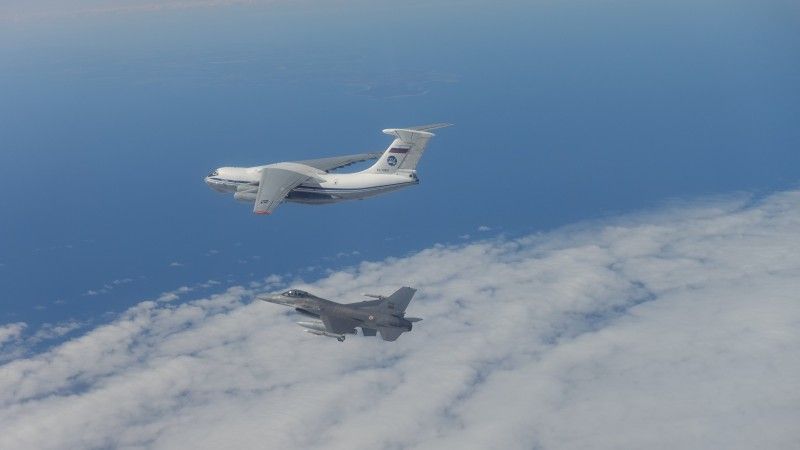
The war in Ukraine is a defining conflict with global implications that is transforming the balance of power in Europe, Asia, and the Arctic, says Dr. Robbin Laird, analyst, consultant, and head of the Defense Info analytical center.
Dr. Robbin F. Laird, analyst and consultant, head of the Defense Info analytical center and author of over 60 books on global strategic issues, discusses with Prof. Robert Czulda, PhD, of the University of Łódź, the evolving role of the United States in a multipolar world, the strategic calculations driving the Trump administration, and the future of NATO and European defense.
The global nature of the Ukraine war
Robert Czulda: You argue that the war in Ukraine is not a regional conflict. Why is this characterization important?
Dr. Robbin Laird: From the very beginning, Putin never intended this to be merely a regional war. This has always been a war against Europe. But there is a deeper dimension that is often overlooked: this is the first time since the Mongol invasions that Asian powers have been directly involved in a major war on European soil. That reality alone transforms this into a global war.
When President Trump returned to power, he did not initially recognize this element. The involvement of China, North Korea, and Iran alongside Russia creates a fundamentally different strategic environment than what most observers acknowledge. This is not a bilateral conflict between Russia and Ukraine. It is a multilateral confrontation with profound implications for the global order.
How has the war affected Russia itself?
Putin has destroyed Russia. He has set it back politically, economically, and militarily to a condition resembling the 1990s. There is growing resentment within Russia toward his rule, even if it is not always visible to outside observers.
He is now a desperate man, increasingly dependent on China. At this point, Putin is closer to being a subordinate pawn of Beijing than an independent strategic actor. This makes ending the war far more difficult, because desperation and dependence create a dangerous combination. The damage Putin has inflicted on Russia’s scientific and technical class is staggering. His country is shrinking, both demographically and in terms of its strategic autonomy.

Trump's foreign policy and negotiation strategy
How does this war fit into broader changes in US foreign policy?
The United States is undergoing a fundamental transformation that spans at least three administrations. Each successive administration seeks to reverse the policies of the previous one, yet there is more continuity than most observers acknowledge, especially between Trump’s first and second terms.
People express frustration trying to interpret the Trump administration. I understand that frustration completely. But the fundamental problem for any American president at this point in history is the global nature of the challenges we face. The United States no longer controls the global order. Trump, for all his faults, is more realistic about this than traditional strategic elites who still operate under the illusion that Washington controls a »rules-based order.«
For more than sixteen years, I have argued that we are moving toward a multipolar world. That world is now fully visible.
What is your assessment of Trump’s attempts to negotiate an end to the war?
I understand the criticism of Trump’s negotiating efforts, but I would like someone to propose a genuinely better alternative.
The reality is that Russia will likely retain some Ukrainian territory. Anyone who believes that this fact alone will end the war is deluding themselves. The war will not truly end until Russia itself changes fundamentally, and that transformation will not happen quickly.
Europe must continue what Poland, the Baltic states, and the Nordic countries are already doing: strengthening their defense systems. If this effort falters, Europe faces a far more dangerous future. We are approaching a point where Ukraine’s manpower will be exhausted. Without some form of truce, Western powers may eventually be drawn directly into the conflict. That would mean a dramatic escalation.
China is the key variable here. Beijing is increasingly concerned about the war’s impact on its interests. When Poland closed its border with Belarus, China realized that its multi-billion dollar investments in that country were effectively blocked. Secondary sanctions now threaten Chinese transactions denominated in dollars. In my assessment, Chinese pressure will ultimately prove more decisive for Putin than Western diplomacy. And that creates its own dangers, because desperate leaders behave unpredictably.
Trump’s rhetoric is often criticized. Doesn’t it undermine US foreign policy?
Trump’s bombastic rhetoric certainly does not help. But beneath the inflammatory words lies significant continuity in American support for Europe.
The United States has no real alternative but to continue supporting European defense efforts, especially now that Europeans are finally beginning to take their own security seriously. The question is not whether the United States will support Europe, but how that support is structured and sustained.
The picture is undeniably messy. The United States continues to strengthen Europe militarily, including through the reconstitution of the Second Fleet, even as the political messaging remains chaotic. Many people dislike Donald Trump, and that’s understandable. But the ultimate reality is that Europe must begin a renaissance of its own defense, particularly on the infrastructure side.
The Defense Industrial Crisis and Western Resilience
In our 2020 book, my wife and I argued that infrastructure is even more important than force structure. Without realistic logistics, mobility, and industrial capacity, military forces become meaningless. Since then, real progress has been made. Europeans and Americans finally recognize that we lack depth in ammunition reserves, logistical resilience, and industrial capacity. For too long, we have outsourced too much of our critical manufacturing.
This is not merely a military crisis. It represents a crisis of civilization for the West. The West embraced globalization as an economic doctrine. China did not follow the same path. Beijing pursued a mercantilist strategy within a globalized system, while the West dismantled its own industrial base. The clash between these two fundamentally different approaches is now fully visible.
Russia’s war, based on Putin’s belief in an easy victory similar to the 2014 annexation of Crimea, has exposed both the weakness of the Russian military and the broader fragility of Western assumptions about deterrence, industrial capacity, and strategic preparedness.
There are many profound changes underway that are not captured by any coherent concept within the Trump administration. But I don’t think most observers have a coherent vision and understanding of these issues either.
In a sense, Trump’s worldview is more realistic than that of most traditional strategists in the United States. They think in terms of blocs and alliances, while the world no longer conforms to that framework. One of my colleagues used to say that Trump is a transformational president, but the outcome of that transformation remains entirely unclear. What will happen next is uncertain. But the global war in Ukraine is a defining conflict across multiple dimensions and regions, something that no one predicted when it began in 2022.

Poland and the Transformation of European Defense
What role do Poland and the Nordic and Baltic states play in this transformation?
They are driving Europe’s defense transformation. In many ways, they are advancing change faster and more seriously than the older powers of Western Europe. This reality concerns some countries, but it is absolutely necessary.
A genuine transformation would occur if Germany fully embraced its role as Europe’s logistical base. This is what Europe ultimately needs from Germany: infrastructure, mobility, and strategic seriousness rather than rhetorical commitment without substance.
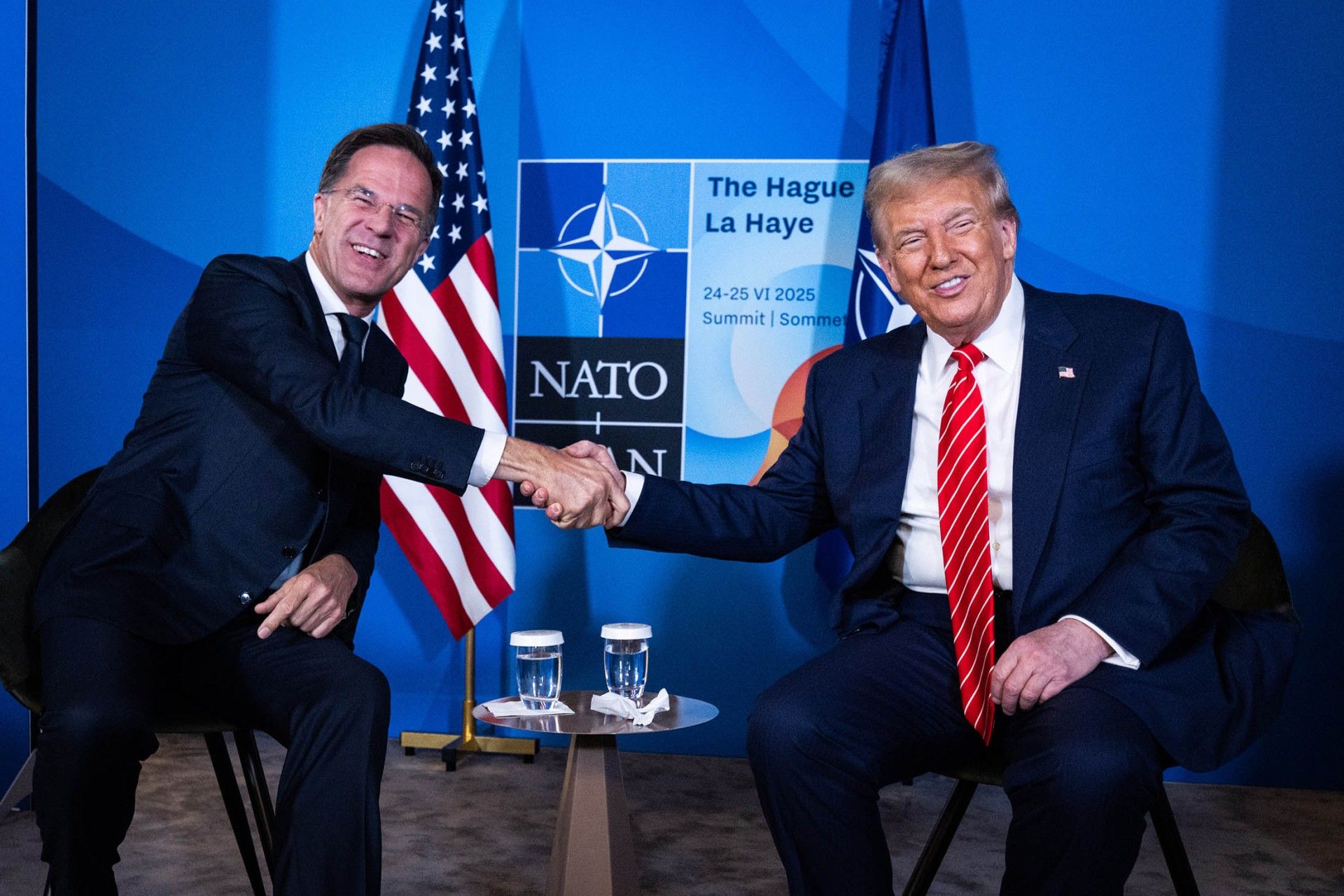
Trump I versus Trump II: Continuity and evolution
How does Trump’s second presidency differ from his first term?
Trump’s first administration took office in 2017 with a mandate that his supporters interpreted as a restoration of »traditional« America. This restoration itself represented a radical transformation of Republican orthodoxy and challenged fundamental assumptions of American governance that had prevailed since the end of the Cold War. Trump I was driven by a rejection of what its architects perceived as a fundamental revaluation of America’s priorities during the Obama era, both domestically and internationally.
In foreign policy, Trump I challenged the postwar consensus on US global leadership. The »America First« doctrine rejected multilateralism, as reflected in withdrawals from the Trans-Pacific Partnership, the Paris Climate Agreement, and the Iran nuclear deal. International institutions were viewed not as force multipliers but as constraints on US sovereignty exploited by other countries.
Trump’s agenda rested on several core assumptions: that globalization favored elites and foreign competitors at the expense of American workers; that immigration altered culture and labor markets without adequate consideration for citizens; that political correctness stifled legitimate grievances and majority interests; and that US allies benefited from American security while pursuing unfavorable trade policies.
Implementation faced significant obstacles, including resistance from the bureaucracy, the Republican establishment, and the loss of the House majority in 2018. Many changes were implemented through presidential executive orders and were easily reversible. The COVID-19 pandemic disrupted the administration’s economic narrative and led to an emergency expansion of federal power that contradicted its deregulatory approach.
Trump’s return to the presidency in 2025 is neither a simple restoration of Trump I nor a mere reversal of Biden-era policies. Trump II reflects lessons learned from his first term and adopts a more coherent and strategic framework for action. Compared to the reactive, personality-driven style of Trump I, the second administration demonstrates greater organizational discipline while retaining its populist character.
Trump II focuses on two related priorities: advancing US interests in a multipolar world and securing the country against threats in its immediate neighborhood. This represents an evolution of the »America First« doctrine, shifting from withdrawing from commitments to redefining them based on clear calculations of US benefit and rebuilding the country’s capacity for strategic competition.
This shift is evident in tariff policy. Unlike Trump I’s ad hoc tariffs, Trump II treats tariffs as instruments of industrial policy and strategic reconfiguration. The objective is not only to reduce trade deficits but to rebuild production capacity in strategic sectors related to defense and critical infrastructure, challenging the long-standing bipartisan orthodoxy of free trade.
Security of the immediate environment constitutes another priority. Beyond border control, this encompasses concerns about hostile powers especially China in Latin America and the Caribbean. The southern border is perceived as a strategic vulnerability exploited by criminal networks and foreign adversaries, justifying more decisive federal action and even consideration of military options.
Governance in Trump II reflects lessons learned from earlier conflicts with the bureaucracy. Greater attention is devoted to appointing loyal personnel, presidential control over executive agencies has been strengthened, and deference to bureaucratic autonomy has been reduced. Critics characterize this as authoritarian, while supporters argue that it restores democratic accountability to an entrenched administrative apparatus.
In foreign policy, Trump II manages the tension between »America First« principles and competition with China and Russia more pragmatically. While remaining skeptical of traditional alliances, the administration recognizes the necessity of building coalitions against China. Alliances are treated as transactional and conditional but are acknowledged as sometimes necessary to advance US interests.
Surprises and strategic implications
Has anything about Trump’s presidency surprised you thus far?
The first ninety days of Trump’s second term have been characterized by aggressive reversal of policies that were deeply unpopular among his base, which has made him extraordinarily popular among his supporters.
What surprised me most was the aggressive use of tariffs. The irony is remarkable. Many years ago, I wrote my undergraduate thesis on the McKinley Tariff of 1890, a congressional bill that raised average import tariffs to nearly 50 percent to protect American industry and workers from foreign competition. My professor said at the time that it was a strong paper but somewhat irrelevant because no one would ever pursue such policies again.
Tariffs may serve Trump’s objective of rebuilding American industry. I understand that nostalgia. I grew up in northeast Ohio, where we had steel mills, and all of that is gone now. But tariffs fundamentally undermine coalition building, which every military commander considers a strategic priority. You cannot build effective military coalitions while economically punishing your partners. Moreover, Trump can expect serious challenges next year when the Supreme Court is expected to rule against aspects of his tariff policy.
In the context of the current political scene, the absence of congressional debate on national security is striking. Would you agree?
This represents a serious weakness in the contemporary American political system. Important decisions such as designating drug cartels as terrorist organizations are made without congressional hearings or substantive public debate. This leaves the military uncertain about political intentions and responsibilities. When officers face discipline, it is often unclear what was actually expected of them.
However, the breakdown of public debate did not originate with Trump. It is a long-standing problem, exacerbated by disastrous decisions in Iraq and Afghanistan, which made leaders fearful of scrutiny and criticism.
I believe this represents a profound weakness for the United States, especially during times of substantial change. We should discuss these matters openly with the public so that informed citizens can assess situations directly rather than attempting to decipher vague, hastily written Pentagon guidance on strategic direction.
Leadership Style and National Security Structure
Trump’s leadership style is often described as chaotic. Is that a fair assessment?
Trump governs more like Franklin Roosevelt than most modern presidents, disregarding bureaucratic processes and relying on informal networks. This approach can be effective. The successful rebuilding of relations with the Philippines demonstrates this. The key person facilitating that process was the individual who managed Trump Towers in Manila. This illustrates how Trump operates, but it simultaneously creates substantial unpredictability.
Unpredictability can strengthen deterrence. Xi Jinping and Vladimir Putin cannot easily predict Trump’s actions. But this same unpredictability undermines transparency and consensus-building both domestically and internationally.
The deeper problem is that the US national security system has been fundamentally broken for decades. Strong national security advisers are rare, and the presidency is increasingly disconnected from both Congress and public opinion. Trump is not exceptional in this regard. I challenge anyone to identify who actually ran the Biden administration with regard to foreign policy. I have no clear answer to that question.
It is critically important to rebuild a strategic culture adequate to the global challenges we face. I’m not speaking specifically about Donald Trump. I’m addressing what strategies we should pursue collectively. What will we construct in the West? What kind of defense structure for Europe? Which countries are genuinely committed and which are obstructing? Hungary and Slovakia represent serious obstacles to what needs to be accomplished. But how do we address this? How do we deal with Russia after Putin? Because Putin will not survive indefinitely. What kind of Russia is possible? How might we influence that transformation? What can we realistically achieve? We still face enormous challenges in the Arctic. He is the first president to elevate this issue prominently. His approach toward Greenland may seem absurd on the surface, but underneath lies full recognition that the principal threat to the United States emanates directly from the Arctic.
The End of American global primacy
Is the United States still the »world’s policeman«?
It cannot be and never genuinely was. The fantasy that the United States can oversee global order defined the Bush, Obama, and Biden administrations. But the United States cannot serve as the world’s policeman. Many strategists in Washington still aspire to play that role, but they are living in a world of illusions.
We should focus on our immediate interests and immediate neighborhood. We have been moving away from this focus for far too long, as I have been writing for twenty years. The irony is profound: the Department of Defense has often neglected the actual defense of the United States itself. Trump, regardless of his numerous flaws, understands this fundamental problem.
The era of rules-based order and unfettered globalization has ended. China represents the central systemic challenge, supported by a loose coalition of authoritarian states. We need fundamentally new concepts and new strategic thinking adequate to this transformed environment.
Are alliances such as NATO still adequate for today’s strategic needs?
The traditional alliance model is increasingly outdated. What matters now are flexible partnerships capable of rapid adaptation.
If Poland determines that it must act independently to defend its airspace by operating over Ukraine, this is not a matter governed by Article 5, but it may be absolutely necessary for Poland’s security. These operational realities no longer fit comfortably within the framework of Cold War alliances. The key strategic players today are medium-sized powers: India, Australia, Japan, South Korea, rather than the abstract »great powers« that dominated nineteenth-century international relations. The US military understands this reality far better than many policymakers in Washington, including some at the Pentagon. This represents one of my criticisms of Trump’s social media approach—it does not facilitate effective relations with these critical partners.
The 2025 National Security Strategy and congressional response
The White House recently published a new National Security Strategy, which has sparked considerable controversy. How do you assess this document, particularly in the context of the National Defense Authorization Act (NDAA) passed by Congress?
The debate over President Trump’s National Security Strategy has been dominated by reactions to its language and symbolism rather than analysis of what the United States is actually doing regarding the war in Ukraine. This imbalance reflects a deeper problem in contemporary foreign policy analysis: the tendency to judge administrations by rhetoric rather than actions, by presidential tweets rather than congressional resolutions, and by symbolic gestures rather than sustained diplomatic engagement.
Critics identify elements in the National Security Strategy that seemingly diminish Europe’s role, emphasize transactional negotiations, and place migration and border security at the center of America’s grand strategy. However, when the strategy is examined alongside the National Defense Authorization Act for Fiscal Year 2026 and the diplomatic initiatives led by Secretary of State Marco Rubio, a different picture emerges: Washington continues to fund deterrence in Europe, supports Ukraine’s war effort, and maintains the only serious high-level channel of negotiation capable of testing whether a political settlement is achievable.
There are many elements in the 2025 National Security Strategy that naturally alarm traditional Atlanticists: a rhetorical shift toward the Western Hemisphere, a harsh characterization of migration as a security threat, and suggestions that Europeans must bear substantially more of the conventional defense burden. All of this is expressed in the language of national renewal and American sovereignty rather than allied solidarity and burden-sharing. In places, the document reads like a manifesto for Fortress America rather than a blueprint for sustained global engagement.
However, on the crucial issue of European security and deterring Russian aggression, the document still anchors US policy in maintaining NATO as the primary security instrument and preserving sufficient military superiority to deter both Russia and China across multiple regions. The strategy unequivocally reaffirms Article 5 commitments and recognizes that US security interests extend beyond its immediate neighborhood. What has changed are not the fundamental commitments to European security but rather the conditions on which those commitments are predicated and the expectation that European allies will contribute substantially more to their own defense.
It is striking how European governments and the US Congress have treated the National Security Strategy not as a declaration of withdrawal but as a warning. Their response has been to reinforce a more conventional deterrence posture through legislation and funding, using the NDAA and parallel defense initiatives in Europe to ensure that, regardless of White House rhetoric, the practical framework for supporting Ukraine and European security remains grounded in sustained military support and forward presence on the eastern flank.
In other words, the National Security Strategy has become part of a larger negotiation within the West over burden-sharing and risk management rather than a unilateral declaration of disengagement. Defense budgets in Europe are growing faster than they have in decades. Poland is becoming a formidable military power on NATO’s eastern flank. The Baltic states and Romania are investing heavily in air defense and logistics infrastructure. This is not the behavior of allies who believe America is abandoning them; it reflects the behavior of allies who have received a clear signal that the »free rider« problem must end definitively.
The National Defense Authorization Act for Fiscal Year 2026 is perhaps the most underappreciated element of this strategic picture. It does not resemble legislation from a country preparing to abandon Ukraine or dismantle European deterrence. Instead, it establishes multi-year support for Kyiv, strengthens statutory restrictions on reducing US forces in Europe, and invests in military capabilities based on the assumption that Russia remains a long-term threat requiring sustained American attention and resources.
Specifically regarding Ukraine, the NDAA extends and funds the Ukraine Security Assistance Initiative and related accounts, providing hundreds of millions of dollars over the next two years not only to replenish US stockpiles but also to launch new production capacity benefiting Ukraine. This is not emergency aid that expires with shifting political winds; it represents institutional support embedded in the defense budget cycle. The bill also includes provisions for training Ukrainian forces, integrating Ukrainian capabilities with NATO systems, and developing Ukraine’s domestic defense industrial base.
Congress has also used the legislation to maintain or strengthen minimum troop levels and security cooperation initiatives on NATO’s eastern flank. The European Deterrence Initiative, which funds deployment of equipment and rotation of US forces in Poland, the Baltic states, and Romania, receives substantial funding. There are statutory prohibitions on reducing the US military presence in Europe below specified levels without congressional approval. These represent actions by a legislature that, despite partisan divisions on other issues, remains committed to European security as a bipartisan priority.
This military force structure is complemented by a diplomatic track led by Secretary of State Marco Rubio in his engagement with Ukrainian and Russian representatives. Rubio has also worked extensively with European allies to ensure that no American diplomatic initiative leaves European capitals feeling overlooked or excluded. This has included consultations with Poland, the Baltic states, Germany, France, and the United Kingdom, countries with varying interests in Ukraine’s future and differing assessments of threats posed by Russia. The result is a diplomatic process that, although led by the United States, maintains broad European support and avoids the impression of superpower decision-making conducted over European heads regarding Ukraine’s fate.
Europe's relevance and internal challenges
Does Europe still matter to the United States?
Europe faces its own problem with internal divisions. But more fundamentally, I believe that for most Americans, Europe simply does not matter as much as it once did. This is largely a generational issue. American attention has shifted to other regions, Latin America, Africa, the Indo-Pacific, without establishing a clear consensus on what we are actually attempting to achieve. As a consequence, there is no coherent global vision driving American strategy.
You could write a dissertation on the global strategy of the United States, but you would be better served talking to Elon Musk and the technology sector. They possess a global strategy. One of the most significant changes in the United States is that serious strategic thinking no longer occurs primarily in government. It takes place in the private sector, which represents a profound challenge to traditional governance models.
How do you assess Europe’s internal divisions and its capacity to defend itself?
Europeans have not taken sufficient responsibility for their own security. Hopefully, the shock delivered by the war in Ukraine will catalyze the development of an authentic strategic culture, at least among key European nations, focused on infrastructure and credible defense capabilities. The fundamental issue is straightforward: you cannot maintain a healthy economy without the capacity to defend it.
Modern Europe was constructed on the European Union’s vision of globalization and the diminishing relevance of nation-states, predicated on the assumption that defense was unnecessary because trade would remain the principal tool of influence and engagement. This belief persisted despite Europe’s twentieth-century history, which includes the most catastrophic wars in human civilization.
Today, even within debates inside the European Union, there is a growing sense of realism. The critical question is how to construct a dynamic European economy and political system that treats defense as a normal expectation, independent of the United States and resistant to the predations of actors like Putin.

American priorities and the China challenge
Secretary of State Marco Rubio recently stated that the war in Ukraine »is not America’s war.« What does that statement reveal about United States priorities?
From a narrow perspective, it is not America’s war. It is fundamentally a European war. But it is not exclusively a European war, because Russia also poses a direct security threat to the United States, particularly in the Arctic. Statements like Rubio’s are directed toward the American public, which is exhausted by endless military engagements.
The problem is that American engagement is not truly a matter of choice. Trump himself discovered this reality, the more he understood about the war in Ukraine, the more he recognized how profoundly it affected US interests, whether he welcomed that recognition or not. This represents a reluctant engagement, not an enthusiastic commitment.
Nevertheless, the greatest long-term threat to the United States is not Putin but China, particularly China’s strategy of incorporating countries such as Brazil, Australia, and potentially Russia as suppliers of natural resources within a new global power structure dominated by Beijing. This challenge is far more serious than the gradual destruction of Russia under Putin’s leadership. Rubio’s rhetoric does not facilitate effective policy, but Washington ultimately has no choice but to engage substantively with these realities.
Europe's Russia Strategy: The unanswered questions
From our European perspective, the most concerning element of Trump’s policy involves his approach toward Russia. How do you assess this dimension? How do you perceive our European concerns?
I think the first question we must ask is: Can you articulate what Europe’s strategy toward Russia actually is? I am surprised that since the collapse of the Soviet Union, there has been no coherent vision of Russia within Europe. When countries such as Poland »joined Europe,« they became complications for the European conception of Russia. Europe treated Russia as a transactional partner in constructing a new European order.
Meanwhile, fundamental questions remain unanswered. What will Europe’s relationship with Russia look like after Putin? What about the Arctic, energy security, and trade relationships? These issues are merely suspended by the war, not resolved, and they will fundamentally shape Europe’s future. Russia cannot be economically isolated indefinitely.
For the United States, the problem is genuinely existential in nature. Our strategic elite many trained at what I jokingly call »John F. Kennedy’s School of Irrelevance« still clings to fantasies of America’s traditional global role. This is fundamentally absurd given current realities.
The global war in Ukraine has disrupted the existing international order, but it has not helped us determine the direction we should pursue. That is why I believe it is valuable for analysts and policymakers to ask foundational questions: Where are we going? What kind of Russia will we be dealing with in the future? A leader like Putin, who is likely to retain some Ukrainian territory which actually represents a catastrophic defeat for him despite how he will portray it will present this as a great victory. But how are we prepared to address this reality?
What will Ukraine’s future look like? What actions will countries bordering Russia take? Will Germany support the security measures Poland and others intend to implement? Or will Germany revert to the historical relationship of the nineteenth century, characterized by close German-Russian cooperation?
Trump is currently exploring different formulas for negotiating with Putin. As you have noted, Putin has not accepted any of them. But there is no indication that Trump wants to offer Putin favorable terms. The challenge lies in finding an acceptable framework that addresses both immediate security concerns and longer-term strategic stability.
Strategic advice to Poland
How should Poland interpret Trump’s rhetoric and United States commitments under NATO, including Article 5?
Trump’s rhetoric often diverges from operational reality, though rhetoric itself carries significance. Furthermore, we have a press corps that amplifies every statement they oppose, especially from Trump. But examine the concrete actions. The US Secretary of Defense’s first international visit was to Poland. Commitments to Poland have been maintained and strengthened. Trump respects Poland. He respects countries that take defense seriously. We have sustained our commitments to Poland and will continue to do so.
Disregard the rhetorical noise. Focus on the strategic opportunities. The United States still possesses global military reach. We deploy the F-35, which provides extraordinary firepower and situational awareness. Air power capabilities in Europe are deeply integrated, nearly automatic in terms of procedures and interoperability.
If Russia seriously threatened Poland or the Baltic states, the escalation ladder would be extremely short. The next operational step would involve establishing military presence over Ukraine. We are not a paper tiger. We no longer possess the overwhelming air superiority we once enjoyed, but we retain formidable capabilities. Just a few Israeli F-35 aircraft delivered devastating strikes against Iranian targets. The Second Fleet, responsible for operations in the North Atlantic, was reconstituted under Trump’s first administration. This formation focuses on ensuring supply lines to Europe. We maintain substantial presence in Poland. Russia understands this reality, even if Putin, as a desperate leader, might miscalculate.
However, the problem resides in rhetoric that creates the impression of strategic gaps. That perception always represents a danger. False rhetoric proves as dangerous as actual capability shortfalls. Under the Biden administration, we experienced constant false rhetoric about American strength. But in the final year of Biden’s presidency, we achieved only 70 percent of our military recruitment targets. Under Trump, we are exceeding recruitment commitments. That is why Secretary Hegseth was ultimately appointed to his position.
If you examine the comprehensive picture, some elements of the rhetoric have been deeply unfortunate. Some statements were remarkably blunt, though others have been disregarded, such as what Secretary Hegseth stated during his visit to Poland. I cannot imagine being more explicit than he was regarding American commitment.
If you were advising the Polish government today, what policy would you recommend?
The essence of Poland’s current actions is entirely appropriate: strengthening its own defense capabilities, serving as a crucial logistics hub for Ukraine, deepening cooperation with the Baltic states and Finland, and securing its borders decisively. This comprehensive approach constitutes the foundation of effective strategy.
Building on this foundation, the message to Washington should be straightforward: We have taken your calls for greater responsibility seriously and implemented them; now we expect reciprocal support and recognition. There is no need to overcomplicate the message.
Regarding Russia, there is no need for elaborate explanation. Actions speak more powerfully than statements. Closing the border with Belarus represented a powerful signal. It demonstrated willingness to assert »enough« unequivocally. It transmitted a clear message not only to Moscow but also to Beijing, which has substantial investments at stake.
The next strategic step involves communication and demonstration. Poland, the Baltic states, and Nordic countries have accomplished far more than most observers realize, internal security force modernization, infrastructure investments, regional coordination mechanisms. I have followed Nordic defense transformation since my first research visit in 2010, and I can state definitively that if you are not monitoring their actions closely, you remain unaware of how substantially the strategic landscape has changed.
You must demonstrate clearly and collectively what you are constructing. Yes, the war catalyzed these changes, but this transformation transcends immediate wartime necessity. It concerns normal politics, long-term stability, and sustainable security architecture. This represents the Europe that must be built for the twenty-first century.
This message should reach both Washington and Moscow. Not through speeches and declarations, but through demonstrable actions and sustained commitment. The Russians understand this language perfectly. When Russian Foreign Minister Lavrov attempted to lecture Finland about their security choices, I found it almost comical. You don’t dictate terms to the Finns. It’s comparable to telling my French wife what to do—it won’t conclude favorably.
What I mean is that Russia has initiated the process of its own strategic marginalization in Europe. Our responsibility is to ensure this process reaches completion, so that every future regime in the Kremlin comprehends how much trust they must rebuild. And that burden belongs entirely to them, not to us. They must demonstrate through sustained actions over years, perhaps decades, that they can be reliable partners. Until then, Europe must maintain its defensive posture and strategic autonomy.
Thank you for this comprehensive discussion.
Thank you. These are critical conversations that need to continue among serious analysts on both sides of the Atlantic.
Dr. Robbin F. Laird is an analyst and consultant, head of the Defense Info analytical center, and author of over 60 books on global strategic issues, international security, and geopolitics.
Originally published in Polish at Defence24.pl on January 13, 2026. The interview was conducted on December 22, 2025 when Laird was in Paris, France.