












- WIADOMOŚCI
- WAŻNE
US–France cooperation beyond political tensions

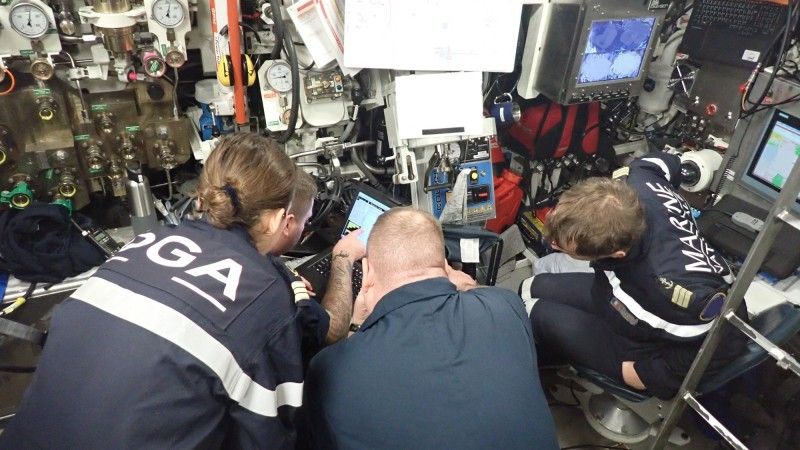
Despite visible tensions within NATO and political frictions between Washington and Paris, military cooperation between the United States and France remains operational, consistent and highly advanced.
Between 16 and 20 March 2026, a French nuclear-powered attack submarine conducted joint activities with the US Navy off the coast of Toulon, deploying and recovering an American underwater drone. The exercise included complex submerged operations, as well as autonomous missions carried out by the drone before returning to the submarine.
The key point, however, is not the exercise itself, but what it represents. At a time of political disagreements, including rivalry and strategic divergence between President Donald Trump and President Emmanuel Macron, both armed forces continue to cooperate in highly sensitive domains. This includes submarine warfare and advanced unmanned systems, which require a high level of trust and interoperability.
#SNA | En plongée au large de Toulon, un SNA a testé avec succès la mise en œuvre d’un drone sous-marin américain de type Razorback depuis son DDS. La validation de cette nouvelle capacité illustre le haut niveau d’interopérabilité avec l’@USNavy 🇫🇷🇺🇸 pic.twitter.com/kiVZSiEWPP
— Marine nationale (@MarineNationale) April 1, 2026
This case illustrates a broader dynamic within NATO. Political tensions, public disputes and competing strategic visions do not translate directly into a breakdown of military cooperation. On the contrary, operational ties remain strong and are continuously tested through joint activities.
In practice, NATO today functions on two levels. The political level is increasingly fragmented, while the military level remains cohesive. Exercises such as the one conducted near Toulon confirm that interoperability is not declaratory, but real, maintained and developed in operational conditions.


