- ANALIZA
- WIADOMOŚCI
V4 after the freeze. Ahead of the summit in Hungary
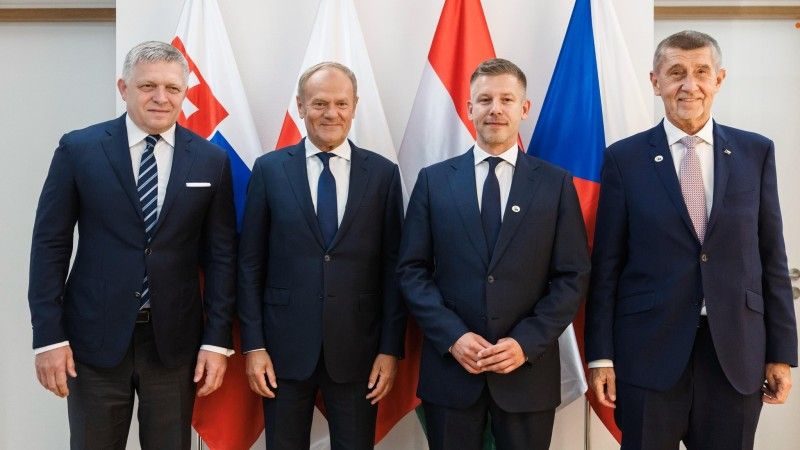
The Visegrad Group is unlikely to return as a single political voice of Central Europe. But after years of political freeze, it may still regain relevance as a practical format for issue-based cooperation — especially on cohesion policy, competitiveness and Ukraine-related coordination, while also opening space for closer work on defence industry and military mobility.
A signal of renewed cooperation
In recent years, the Visegrad Group — Czechia, Hungary, Slovakia and Poland — has been put into a kind of political deep freeze. It has not disappeared, but its political energy has clearly weakened. Differences over Russia, Ukraine and some aspects of European policy have made common political action much more difficult. But following the Hungarian elections, there may be a chance to unfreeze the V4 — not as a single political voice of Central Europe, but as a practical regional format for cooperation around concrete interests.
The meeting of the prime ministers in Budapest and Gödöllő, scheduled for 23 June, will test the pledges to renew cooperation that have been made in recent months by the governments of Czechia, Slovakia, Hungary and Poland. The V4 prime ministers also met in a four-country format last week in Brussels, returning for the first time since 2022 to the practice of meeting ahead of an EU summit. The previous V4 prime ministerial meeting had taken place on 27 February 2024 in Prague, in a different political setting and amid serious tensions.
According to the announcements, the summit will focus on migration, cohesion policy, agriculture and energy policy, as well as coordination among the V4 countries on key issues within the European Union. The V4 does not have to pretend to be a perfectly united political bloc. It can still be useful if it helps the four countries turn overlapping interests into concrete joint positions on selected sectoral EU policies.
For years, V4 cooperation was also oriented towards supporting the pro-Western aspirations of Eastern European and Western Balkan countries. Ukraine should remain part of this discussion. Even if the V4 countries do not share the same political language on Ukraine, they should talk more, not less, about Ukraine-related policy. Energy, transport, reconstruction, agriculture, border infrastructure and EU negotiations are all areas where Central European coordination matters. The V4 already has some experience here in coordinating positions, for example in the area of agricultural policy towards Ukraine.

The Brussels dimension: cohesion, competitiveness and the EU budget
If the V4 is to regain relevance, it should also be understood as a format for cooperation in Brussels. This is especially true for cohesion policy, the future EU budget and the debate on competitiveness. In the past, during budget negotiations, the V4 formed the core of the Friends of Cohesion group. In the current negotiations on the next EU Multiannual Financial Framework, Romania plays a particularly important role as a Central European engine of the Friends of Cohesion group. Together with Poland, Romania is among the largest beneficiaries and strongest defenders of cohesion policy.
For Central European countries, cohesion is not simply a budgetary issue. It is about convergence, infrastructure, territorial development and the political credibility of the European project. It means supporting a policy that has been one of the EU’s greatest successes in recent years, bringing tangible benefits also to Western European countries and companies.
It is also worth noting that the Friends of Cohesion largely overlap with the Three Seas region. All EU members of the Three Seas Initiative (3SI), with the exception of Austria, belong to the Friends of Cohesion and together form a majority within that group. The same countries that promote north–south connectivity also have a strong interest in preserving cohesion policy as one of the central instruments of EU development.
Central European countries also have an interest in ensuring that the European Competitiveness Fund is not available only to selected regions and does not deepen regional disparities. Corrective instruments are needed, perhaps including stronger support for regions located along the EU’s eastern borders.
This is where regional formats and Brussels politics meet. The same countries that need better roads, railways, ports, energy connections and digital infrastructure also need a strong cohesion policy. Central Europe is particularly sensitive to questions of competitiveness. A recent example is the debate on the impact of the EU Emissions Trading System on energy-intensive industries. At the Competitiveness Council in May 2026, Czechia, Poland and Slovakia, together with Romania, Bulgaria and Greece, raised this issue jointly. The Czech initiative received further support from Hungary, as well as from Italy and Austria. This shows that broader Central European and sectoral coalitions can emerge in Brussels not under one formal regional label, but around concrete interests: competitiveness, energy prices and the survival of industrial capacity.
Poland's wider regional map
This Brussels-oriented approach is part of a broader shift in Polish regional policy. From the Polish perspective, regional security cooperation is no longer centred in the core of Central Europe — in the V4 region. The Baltic Sea region has become increasingly important. After Finland and Sweden joined NATO, the Baltic Sea became a much more coherent strategic space. It is central for energy security, critical infrastructure protection, maritime security, military mobility and cooperation with Nordic and Baltic partners. In this sense, Baltic cooperation today has a clearer strategic logic than the V4, because perceptions of Russia’s revisionist policy are much more similar.
But this does not mean that Poland is abandoning Central Europe. It means that Polish regional policy is becoming more multidirectional. Poland is trying to connect several spaces: the Baltic Sea, Central Europe, the Black Sea, the eastern flank and the Three Seas region — countries located between the Baltic, Adriatic, Black and Aegean Seas.
Regional cooperation in Central and Eastern Europe is becoming more flexible. The V4 matters again, but Poland is also looking more strongly towards the Baltic Sea region, Nordic partners, the Bucharest Nine and the eastern flank as a whole. The main goal is not to create new institutions for their own sake. The main goal is to build practical cooperation around infrastructure, resilience, energy security, defence readiness and effective influence in Brussels. This last point is very important for the V4. Regional formats should not be understood only as summits, declarations or family photos. Their real value is tested when they help member states coordinate their positions inside the European Union: in the Council, in budget negotiations, in industrial policy, in energy policy and in debates on competitiveness.
Connecting regional formats
This wider regional map also gives additional meaning to the upcoming Slovak V4 Presidency. At the summit, Hungary will hand over the V4 Presidency to Slovakia. This is important because Slovakia will also host the next Three Seas Initiative Summit and Business Forum in 2027. This creates an interesting opportunity to connect the V4, the Three Seas Initiative and broader Central European cooperation in a more coherent way. Slovakia can use this moment to focus less on grand political declarations and more on concrete areas where the region still has common interests: competitiveness, energy security, connectivity, military mobility, industrial policy and sectoral cooperation in Brussels.
The V4 Presidency is also an opportunity to highlight synergies with other regional cooperation formats, such as Baltic cooperation, the Bucharest Nine (B9), the Central Five (C5) — Hungary, Czechia, Slovakia, Austria and Slovenia — and the Slavkov Triangle (S3) — Czechia, Slovakia and Austria. The Three Seas Initiative gives the region a language of connectivity and development. The Bucharest Nine gives it a cross-regional security perspective. The Visegrad Group offers a core network of practical coordination, which can, if necessary, be expanded into a V4+ format. And the Friends of Cohesion show that many countries of the region can act together on the future of EU investment policy.
Defence industry and regional synergies
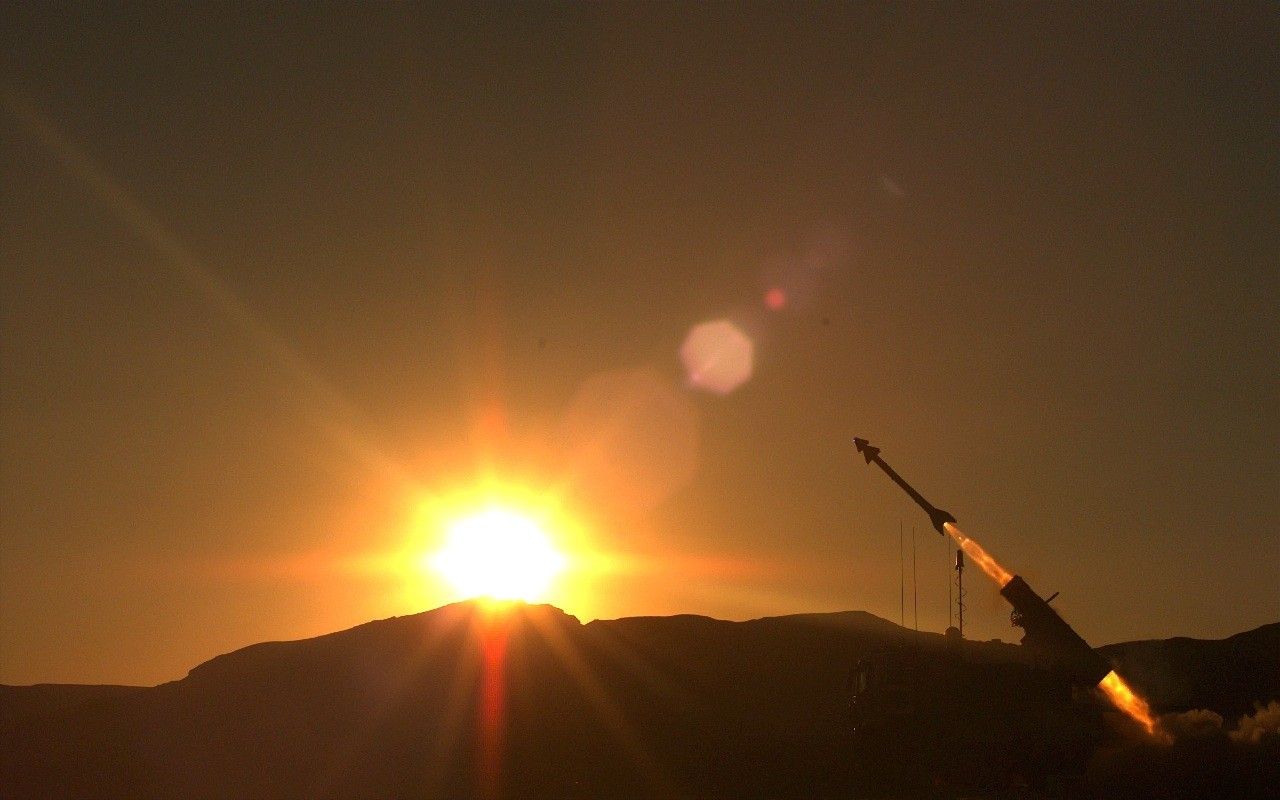
Defence industry is also an area where V4 countries can find many common interests. In the past, V4 initiatives for joint procurement and defence-industrial cooperation often disappointed. Some observers even described V4 defence cooperation as a graveyard of projects. This should not obscure the fact that the V4 also has some achievements in defence cooperation. The rotations of the V4 EU Battlegroup were a visible joint contribution to the EU’s Common Security and Defence Policy and helped strengthen interoperability among the armed forces of the four countries.
But today the context is different. Russia’s war against Ukraine, the needs of NATO’s eastern flank and new EU instruments such as SAFE create a much stronger incentive to look for regional synergies. This does not have to happen only under the V4 flag. It may happen bilaterally or trilaterally. It may happen between companies, between governments, or in mixed government-to-business formats, as is the case, for example, in the Polish-Slovak defence-industrial dialogue. But the Visegrad space still matters as an area where such cooperation can be tested.
For Central Europe, this is not only about business. It is also about security, resilience and industrial transformation. In countries whose economies are strongly dependent on the automotive sector, the development of the defence industry can become an additional engine of growth and technological upgrading. Joint defence-industrial projects can also bring our countries strategically closer. Over time, they may help strengthen a more shared understanding of security challenges in the region.
Locating more production in Central Europe shortens supply chains. This kind of military nearshoring is useful economically, but also strategically.
Military mobility as strategic connectivity
Military mobility is perhaps the clearest example of how infrastructure, defence and regional cooperation come together. It is also a topic for the V4 and, more broadly, for Central European cooperation. The idea is simple: Europe must be able to move troops, tanks, ammunition and equipment quickly across borders. Today this is still too slow and too complicated. There are different national procedures, long permission processes and infrastructure that was not always built for heavy military transport.
From a Polish perspective, military mobility has several geographic dimensions. First, Poland needs strong west–east connections with Germany, the Netherlands and other Western allies. Reinforcements must be able to reach the eastern flank quickly. This also applies to the expansion of the NATO fuel network. Second, Polish ports and Baltic infrastructure are becoming more important for the whole eastern flank. Third, Central Europe matters as strategic depth for Poland. The infrastructure of Central European countries and their host-nation support may become important for allied reinforcement. Fourth, there is the north–south dimension: towards Slovakia and Hungary, further to Romania and the Black Sea, and also further south to the Greek port of Alexandroupolis.
Here, projects such as Via Carpatia and the Rail2Sea railway project linking Gdańsk and Constanța are important not only for trade, but also for military mobility. They are part of a broader Central European agenda: to connect the Baltic Sea with the Black Sea and the Aegean Sea, to strengthen north–south infrastructure, and to make the region more resilient, more competitive and better prepared for crises. Military mobility should not be seen as a narrow technical issue for logistics officers. It is part of deterrence. If a potential adversary knows that NATO and the EU can move forces to a threatened region within days rather than weeks, this changes its calculations.

What the V4 can still deliver
Over the years, the V4 has become an important brand of Central European cooperation. However, it has never been, and will not become, Central Europe’s single political voice. Such an ambition would not be realistic. The V4 can still serve as a useful regional space for sectoral cooperation. Sometimes this can happen in a broader V4+ format. At other times, the V4 can act as a core format that initiates sectoral cooperation in the EU or wider projects within the Three Seas Initiative, which should be more closely linked to EU policies and political advocacy in Brussels.
This will not be easy. The V4 remains difficult to manage. One possible challenge may be Slovak-Hungarian relations. For many years, under Viktor Orbán, some tensions in Slovak-Hungarian relations were politically muted or pushed into the background. These tensions have become more visible again, and they may complicate regional coordination. But this is exactly why the four-country format still has value. It has helped ease tensions in bilateral relations before, and this remains one of its added values.
Regional formats in Central Europe should be treated as instruments, not as goals in themselves. We should not ask only whether the V4, 3SI, B9 or Baltic cooperation are politically fashionable at a given moment. We should ask what each of them can deliver. Regional cooperation should be measured not only by the number of meetings or declarations, but also by its ability to shape EU decisions: on cohesion, infrastructure, energy prices, industrial competitiveness, defence production and military mobility.
The future of regional cooperation in Central and Eastern Europe will depend less on creating new formats or adding new countries to the V4, and more on connecting existing ones: infrastructure with security, the Baltic Sea with the Black Sea, regional initiatives with EU instruments, and political declarations with effective coalitions in Brussels.