












- ANALIZA
- WIADOMOŚCI
Arab capital as an opportunity for the Polish defence sector

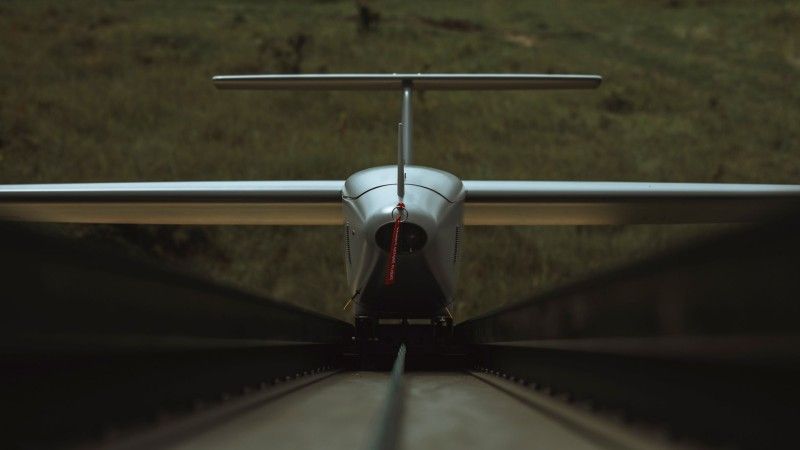
In the face of delays in US deliveries and the discrediting of Russian military equipment on the Ukrainian battlefield, the Gulf states (led by Saudi Arabia and the United Arab Emirates) are radically diversifying their defence procurement portfolios. For the Polish defence industry, which possesses combat-proven systems, this creates a historic window of opportunity. At stake are not only lucrative export contracts, but above all the acquisition of strategic capital to expand insufficient production capacity in Poland.
For decades, the security architecture of the Middle East was based on a simple transaction: Arab states purchased security guarantees through massive contracts with the US defence sector under the Foreign Military Sales (FMS) system, occasionally balancing these purchases with acquisitions from Russia. This duopoly is now being dismantled. US export procedures are subject to increasingly stringent political clauses, while delivery times have increased dramatically due to the prioritisation of theatres of operations in the Pacific and Eastern Europe. At the same time, the Russian defence-industrial complex, subject to sanctions and consumed by a war of attrition, has lost credibility as a supplier of advanced technologies. New players are moving into this vacuum, and Poland possesses unique arguments for becoming one of the beneficiaries of this reorientation.

"Combat-proven" as the strongest currency
The decision-makers in Riyadh and Abu Dhabi have completely changed their procurement philosophy. They now expect not only off-the-shelf deliveries, but also full technology transfers, localisation of production on their territory, and source codes. While US defence giants are extremely reluctant to share their know-how, Polish entities, both state-owned (PGZ) and private (led by WB Group), demonstrate considerably greater flexibility and pragmatism in this area.
Poland’s competitive advantage lies in the combat-proven status of the solutions it offers. Experience from the war in Ukraine has clearly demonstrated the superiority of electronic reconnaissance systems, loitering munitions, and tactical command systems over many, often overrated, Western counterparts. For Arab states engaged in asymmetric conflicts (e.g. in Yemen) and exposed to swarms of drone attacks, Polish C4ISR solutions (command, control, communications, computers, intelligence, surveillance and reconnaissance) and electronic warfare (EW) capabilities provide an answer to their current operational gaps.
The synergy of Arab capital and Polish technologies
However, the key element of the emerging cooperation is not exports themselves, but capital investment. The main Gulf sovereign wealth funds, such as Saudi Arabia’s PIF and the UAE’s Mubadala, possess enormous investment capital and are seeking opportunities to deploy it in the advanced defence-technology sector.
From the Polish perspective, this represents an opportunity to address the greatest weakness of the domestic defence industry—the lack of scale. Despite possessing world-class technologies, Polish plants struggle with production bottlenecks. A sharp increase in production capacity requires investments that the state budget alone cannot sustain in the face of simultaneous, large-scale arms purchases abroad (in the United States and South Korea). Arab funds could finance the construction of new production lines in Poland, creating joint ventures. Such a model would facilitate Gulf states’ acquisition of technology while enabling Polish industry to obtain an injection of capital, expand domestic infrastructure, and increase its own mobilisation potential.

Relations between the Polish defence industry and Middle Eastern states suffer from a post-colonial complex and bureaucratic conservatism. Too often, we treat Saudi Arabia and the UAE solely as exotic export markets for our surplus equipment. It is time to understand that Riyadh and Abu Dhabi are today not merely markets, but powerful technological and capital hubs pursuing an aggressive policy of reducing their dependence on traditional powers.
The money offered by the Gulf for technology transfers and joint ventures (JVs) is the only realistic opportunity for a rapid scaling-up of production in the Polish defence sector. If Poland’s Ministry of State Assets and Ministry of National Defence block capital mergers with Arab entities in the name of a misguided form of state protectionism, we will soon lose this race to Turkey and South Korea. Ankara and Seoul understood long ago that Arab capital is a vehicle that makes it possible to build their own national technological sovereignty with other people’s money. Polish defence plants must open themselves to external investment capital; otherwise, we will remain a workshop producing excellent prototypes that, in a moment of crisis, will be unable to supply our own armed forces with the necessary volumes of equipment and ammunition.


