












- ANALIZA
- WIADOMOŚCI
How can Saudi Arabia defend itself? Freedom of action at stake

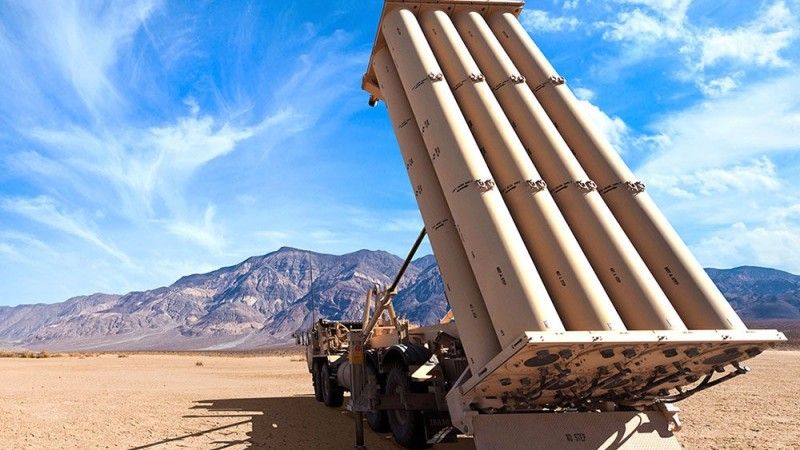
Photo. www.lockheedmartin.com
The effectiveness of Saudi Arabia’s defences shapes its ability to sustain and expand operations in Yemen. Patriot, THAAD and modern air power help reduce the missile threat, but Riyadh’s freedom of action also depends on how long that protection can be sustained and how resilient its economy remains. The experience of the UAE and Qatar shows why technological superiority must be assessed in terms of operational endurance, the quality of surveillance and the terms of allied support.
On 4 October, Yemen’s internationally recognised government announced the launch of an offensive against the Houthis. Saudi aircraft are supporting Yemeni forces. The following day, Reuters reported advances near Bab al-Mandab, citing government and military sources. The extent of those gains remained disputed. For Riyadh, the operation tests its ability both to support its partners in Yemen and to protect its own infrastructure against retaliation.
On 3 October, the Houthis claimed to have attacked an Aramco facility in Riyadh with missiles and drones. Reuters cited a witness account of fire and smoke near the installation. However, Turki al-Maliki, spokesperson for the Saudi-led coalition, described the Houthi claims of a strike on the capital as misleading. The available accounts do not establish how individual components of Saudi Arabia’s defences performed.
The relationship between defending the kingdom and operating in Yemen lies at the heart of Saudi strategy. The greater the risk of prolonged disruption to the domestic economy, the higher the cost of expanding operations. The Houthis may therefore seek to constrain Riyadh’s choices by putting pressure on its domestic infrastructure, even without the ability to defeat Saudi air power. Air defence is intended to weaken this source of pressure and give the leadership time to choose its response.

Patriot and THAAD: Complementary roles
Saudi forces have the technical foundations for a layered defence. On 3 July 2025, the Saudi Press Agency reported the activation of the kingdom’s first THAAD unit following testing, system evaluation and personnel training, stating that it had achieved operational readiness. The procurement programme covers seven batteries. That figure describes the scope of the programme, rather than a confirmed total of operational units in October 2026.
THAAD intercepts ballistic missiles in the terminal phase of flight, both inside and outside the atmosphere. It uses the AN/TPY-2 radar and destroys its target through a direct hit. Its role is to provide the upper tier of missile defence. Protection against cruise missiles and drones requires other capabilities. Expanding THAAD therefore strengthens defence against a specific category of threats while leaving the need to develop the remaining layers.
Patriot’s range of missions depends in part on the interceptor employed. GEM-T is designed to engage aircraft, cruise missiles and tactical ballistic missiles. The PAC-3 family uses hit-to-kill interception, while the MSE variant offers improved performance over the earlier PAC-3 CRI. Counting batteries without considering their configuration and available missiles therefore provides an incomplete picture of capability.
The value of combining Patriot and THAAD lies in providing more opportunities to intercept incoming threats and dividing responsibilities between the systems. That benefit depends on data sharing, command and control, and crew training. The key question for Riyadh is therefore whether successive acquisitions strengthen a defence network whose components can operate together. Public delivery announcements confirm the development of the arsenal, but do not establish how thoroughly the wider network is integrated.
Interception costs and campaign endurance
On 30 January 2026, the US Defence Security Cooperation Agency announced State Department approval for a possible sale to Saudi Arabia of up to 730 PAC-3 MSE missiles, along with equipment and support. The notification establishes the scale of the proposed acquisition; it does not confirm delivery. The ability to withstand a prolonged campaign depends on the stocks available throughout it and the rate at which they can be replenished. Neither can be reliably calculated from contract values and procurement announcements.
Comparing the price of an interceptor with that of a drone captures only part of the calculation. An expensive interception may be economically justified if it prevents casualties or a prolonged shutdown of a critical facility. The cost of defence must also be assessed against the losses avoided. In a protracted conflict, however, there is an additional cost to depleting finite stocks: a missile fired today will be unavailable during the next attack until it has been replaced.
Short-range air defence therefore also matters to the endurance of the wider system. The US military journal Air Defense Artillery documented the use of Saudi Skyguard systems with 35 mm guns against unmanned targets during the Red Sands exercise. Electronic warfare capabilities were also tested. The exercise demonstrates the direction of preparations, while leaving their effectiveness in combat an open question.
Expanding short-range air defence can reduce expenditure of more costly surface-to-air missiles where the shorter-range systems can effectively engage the same targets. THAAD complements this arrangement by providing protection against ballistic missiles. The allocation of tasks should therefore reflect the type of threat and the actual capabilities of each system.

The UAE: Surveillance as an element of combat power
The United Arab Emirates had already developed a defence architecture based on Patriot PAC-3 and THAAD. The US Missile Defence Agency confirmed THAAD’s combat use in the country in January 2022. The UAE also invested in airborne surveillance. In September 2024, Saab delivered the country’s fifth GlobalEye aircraft. These aircraft combine surveillance of air, maritime and land targets, supplying data to other elements of the armed forces.
For Saudi Arabia, this provides a reference point for assessing its own E-3A airborne early warning aircraft. In May 2017, Boeing announced the completion of their radar upgrade. Riyadh also operates F-15SAs equipped with active electronically scanned array radar, an infrared search-and-track system and a digital electronic warfare suite. During Red Sands in September 2025, Saudi F-15s, Typhoons and AH-64 helicopters took part in a counter-drone exercise.
The value of these platforms is reflected in the ability to detect threats early and respond in time. Early warning can improve the effectiveness of several defensive assets simultaneously, provided that information reaches the right units and supports timely decisions. Buying another fighter offers limited benefit if the means to sustain surveillance, maintain the aircraft or generate its next sortie are lacking. Investment in surveillance, aerial refuelling and maintenance can increase the utilisation of existing aircraft and help sustain operations.
The importance of this support was illustrated by the UK’s 22 September 2026 announcement that it would make an RAF Voyager tanker available to Saudi Arabia. The announcement followed a Saudi request for assistance with defensive operations. The kingdom has its own tankers: an Airbus table dated April 2026 listed six A330 MRTTs as delivered. A further four were ordered in 2024, with service entry planned for 2027. British assistance could therefore increase the capacity available to sustain operations before those future deliveries materialise.
Ongoing operations in Yemen draw on the same support resources: aircrews, maintenance, surveillance and aerial refuelling. Further expansion would intensify competition for those resources. Defending Saudi territory and supporting operations abroad require coordinated priorities. An advantage in air power has strategic value when it can be sustained alongside the defence of the kingdom.
See also 

Qatar: Joint defence and the limits of shared commitments
Qatar’s procurement choices illustrate the importance of complementing missile defence with additional capabilities. Contracts announced by Raytheon in July 2019 covered NASAMS, work on AMRAAM-ER certification and additional Patriot units. NASAMS is designed to engage aircraft, drones and cruise missiles, among other targets. This combination provides a basis for dividing tasks between different defensive layers. The contract announcement alone, however, does not establish their subsequent operational availability.
Iran’s attack on Al Udeid on 23 June 2025 provided a practical example of cooperation. According to US Central Command, both Qatari and US Patriot batteries took part in the defence. In January 2026, a regional air defence coordination cell was established at the same base, with responsibilities including the exchange of information and warnings. Such cooperation develops the capacity for a joint response, although it does not amount to unified command over all national systems.
London presents its assistance as support for Saudi defensive operations backing Yemen’s recognised government. Its announcement does not specify the detailed conditions governing the Voyager’s use. On 2 October, before the offensive began, Reuters reported, citing its sources, that Riyadh’s partners were not expected to participate directly in the planned operation. Logistical assistance and infrastructure protection can nevertheless enhance the capacity to conduct operations, even when partners do not take part directly in airstrikes.
Allied support can thus expand Riyadh’s options without, in itself, establishing political agreement on escalation. Common weapon systems facilitate interoperability; shared political objectives require separate agreement. Any assessment of Saudi defences should therefore also consider the scope and durability of foreign assistance as the conflict evolves.

From interception to national resilience
On 29 September, Reuters reported the resumption of oil loadings at Yanbu following the restart of the East–West pipeline. Pipeline operations had been suspended after an 11 September attack that Saudi authorities attributed to Iraqi militias. The resumption of exports illustrates the importance of restoring infrastructure to operation. In assessing the kingdom’s security, the duration of a disruption matters as much as the course of the attack itself.
This perspective changes the calculation behind defence investment. Backup power, spare parts and repair teams ready to respond can limit the consequences of a strike that could not be prevented. These measures compete for funding with weapons procurement, but serve the same purpose: keeping the protected facility functioning. NATO’s 2025 integrated air and missile defence policy envisages a similar approach to resilience across the system, including infrastructure protection and backup arrangements.
There are also limits to what air defence can achieve. The East–West pipeline allows oil to reach the Red Sea without passing through the Strait of Hormuz. Protecting a terminal, however, secures only one part of the export process. The safety of the onward voyage depends on the route chosen, conditions at sea and the means available to protect shipping. Even stronger protection for infrastructure cannot, on its own, remove the threat to maritime trade.
Saudi defensive success can therefore coexist with continued economic pressure. If most incoming threats are intercepted but isolated strikes cause prolonged interruptions to exports, the adversary retains a means of influencing Riyadh’s decisions. If attacks cease to cause lasting disruption, however, the ability to extract concessions by threatening exports will diminish, even if the Houthis retain the capacity to strike again.
Saudi Arabia can build an effective defence by combining specialised interception systems with surveillance, ammunition reserves, air force readiness and resilient infrastructure. Its most important contribution would be to reduce the risk that threats to the economy force an urgent choice between escalation and concessions. Such a defence would make it easier to conduct limited military operations while also allowing Riyadh to negotiate under less economic pressure. Its strategic value will depend on whether the kingdom retains the freedom to choose between those options.


