












- WIADOMOŚCI
EU convenes urgent Foreign Ministers’ Meeting ahead of Trump–Putin talks on Ukraine

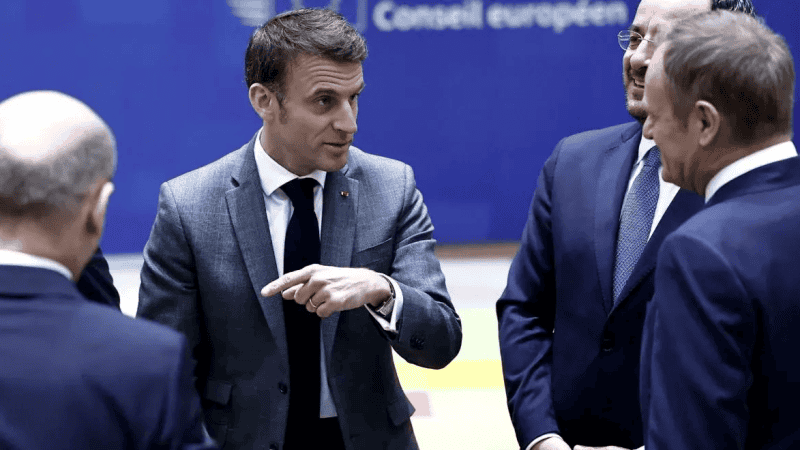
With the prospect of a high-stakes U.S.–Russia summit on Ukraine this Friday, EU foreign policy chief Kaja Kallas has called an extraordinary meeting of EU foreign ministers. While aiming to ensure Ukraine’s interests are safeguarded, the Union faces the reality that Washington remains Kyiv’s primary backer — and that Europe’s role risks being limited to supporting lines already set by others.
The European Union will hold an extraordinary virtual meeting of foreign ministers on 11 August, ahead of the scheduled 15 August encounter between U.S. President Donald Trump and Russian President Vladimir Putin. Announcing the move, EU High Representative for Foreign Affairs and Security Policy Kaja Kallas underlined that „any agreement between the United States and Russia must include Ukraine and the EU, as this is a matter of security for Ukraine and the whole of Europe.”
Her statement reflects growing concern in European capitals that the Alaska meeting could produce arrangements at Kyiv’s expense. Ukraine fears a settlement that might freeze the current frontlines, legitimising Russia’s territorial gains and weakening its negotiating position. Kallas emphasised the principles of international law, insisting that „all temporarily occupied territories belong to Ukraine” and warning that no deal should become „a springboard for further Russian aggression against Ukraine, the transatlantic alliance, and Europe.”
EU Member States have had more than three years to prepare for such a scenario. Since Russia’s full-scale invasion in 2022, European governments have discussed the possibility of a U.S.–Russia negotiation bypassing EU structures. Yet no coherent alternative security architecture or negotiation framework has been presented to Ukraine. The reality remains that the United States is Kyiv’s primary strategic supporter, providing decisive military aid and diplomatic cover.
For Brussels, the immediate and tangible step is to maintain — and ideally accelerate — the supply of weapons, ammunition, and critical systems to Ukraine regardless of the outcome of the Trump–Putin talks. Sustaining the pace and volume of deliveries will be essential to strengthen the Ukrainian Armed Forces over the next one to three years, a period during which the Kremlin may attempt renewed offensives if it senses Western fatigue or political division.
By convening the extraordinary meeting, the EU signals unity and intent. However, the coming week will test whether Europe can convert that political alignment into strategic influence — or whether it will remain a reactive player in a game set by Washington and Moscow.


