












- WIADOMOŚCI
Iran war shock: Germany regrets nuclear exit, eyes coal

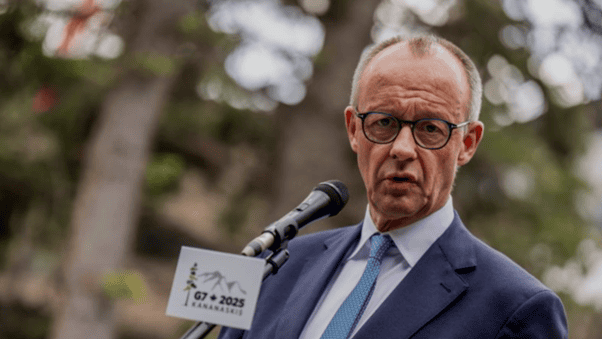
Photo. deutschland.de
Despite labeling its nuclear exit a “huge mistake”, Germany refuses to reverse course. Instead, Berlin is considering a return to coal to bridge a perilous near-term energy gap.
Germany is reopening a debate it once considered settled. As a fresh energy shock ripples across Europe, Berlin’s top leadership is openly criticising the nuclear phase-out, a policy accelerated by Angela Merkel following Fukushima and finalised in 2023. Paradoxically, the government’s immediate fallback is not a return to atomic energy, but an increased reliance on natural gas and, potentially, coal.
Chancellor Friedrich Merz recently branded the closure of Germany’s final reactors a “serious strategic mistake”, echoing European Commission President Ursula von der Leyen’s assessment of the phase-out. Economy and Energy Minister Katherina Reiche was even more direct at the CERAWeek conference in Houston on March 24, labeling the exit a “huge mistake” Despite this buyer’s remorse, Berlin insists the nuclear chapter remains firmly closed. The government maintains that the decision is “irreversible”, with Reiche explicitly ruling out a return to conventional nuclear generation.
This leaves fossil fuels as Germany’s near-term insurance policy. A coalition working group has proposed bringing decommissioned coal plants back online if the ongoing conflict in Iran continues to drive up energy prices, while Chancellor Merz has acknowledged that some active coal-fired units may need their lifespans extended. Industry leaders argue that holding coal in reserve could conserve gas and stabilise prices. Critics, however, counter that this reliance on coal merely exposes Berlin’s sluggishness in developing adequate backup infrastructure.

Looking ahead, Berlin plans to build 12 gigawatts (GW) of new dispatchable capacity, primarily consisting of gas-fired plants designed to eventually transition to hydrogen. However, these facilities are not expected to come online before 2031, leaving Germany to bridge a significant near-term gap. With renewables still accounting for nearly 56% of gross power consumption in 2025, this pivot does not signal the collapse of the GermanEnergiewende (energy transition). Rather, it serves as a stark reminder: when nuclear power is definitively ruled out and reliable backup systems are delayed, crisis management inevitably becomes more carbon-intensive.


