












- WIADOMOŚCI
France may buy Himars

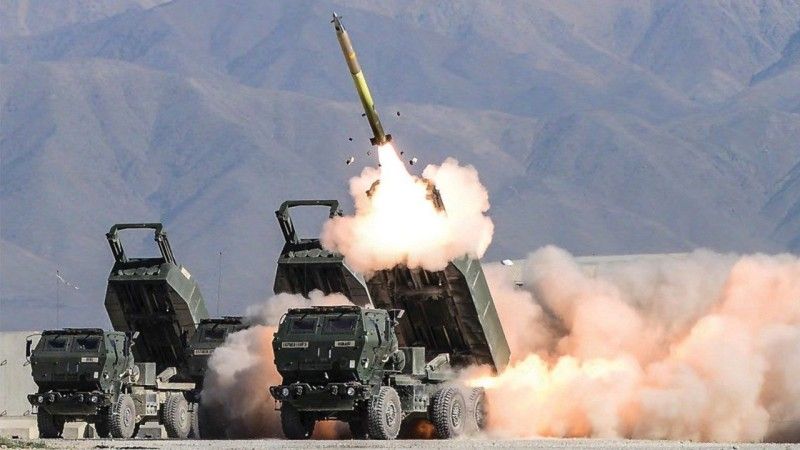
France has to replace its ageing land-based rocket artillery, but the choice is becoming politically uncomfortable. As BFM Business reports, Paris has two French industrial offers on the table, yet it has still not ruled out buying a foreign system, including the American HIMARS. For a country that speaks so often about defence sovereignty, this would be a very difficult decision to explain.
The French Army’s current lance-roquettes unitaires are reaching the end of their service life, and the remaining systems will become obsolete around 2027. This creates a direct capability problem, because recent wars have shown that long-range land strike is no longer optional. It is needed to hit command posts, logistics hubs, artillery positions, air-defence systems and operational infrastructure far behind the front line.
France does have national options. Safran and MBDA are proposing Thundart, a mobile launcher with eight rockets, designed to fire quickly and then leave the position before drones or counter-battery fire can respond. ArianeGroup and Thales are offering a different long-range strike concept, with an emphasis on ballistic technologies, range and rapid industrial scaling. On paper, this should be exactly the type of competition France wants: French companies, French technologies and a sovereign answer to a capability gap.
See also 
The problem is time; as have been since 2022. The Ministry of the Armed Forces wants effectiveness, price and delivery capacity, not only industrial patriotism. That is why foreign systems remain part of the discussion. South Korea’s K239 Chunmoo, American HIMARS and other existing solutions offer one clear advantage: they are already mature, already fielded and already tested by war. France may want sovereignty, but the battlefield does not wait for industrial schedules.
The HIMARS option would be the most politically sensitive. It would mean buying from the United States at a time when Emmanuel Macron continues to defend European preference and when the Macron–Trump relationship is extremely difficult. It would also create questions about American approvals, ammunition supply, export controls and operational freedom. In France, this point matters a lot: a long-range strike system is not just another piece of equipment. It is a political instrument of military power.
It would also be deeply ironic. France is one of the strongest advocates of European defence autonomy, while Marine Le Pen has recently again argued that France should leave NATO’s integrated command while remaining inside the Alliance. At the same time, Paris is considering whether it may need American or South Korean systems because its own industrial base may not deliver fast enough. This shows the French contradiction very clearly: ambition is high, but capability, cost and time remain brutal.
The decision will therefore say much more than which launcher France prefers. If Paris chooses a French system, it will accept delay, cost and industrial risk in order to preserve autonomy. If it chooses HIMARS or another foreign system, it will admit that even France sometimes has to buy what is available rather than what is politically ideal. That would be uncomfortable for Paris, but it would also be very French in practice: speak about sovereignty, but calculate power, deadlines and military effect.


