












- WIADOMOŚCI
- WAŻNE
- ANALIZA
- PILNE
NATO launches its largest Baltic military exercise

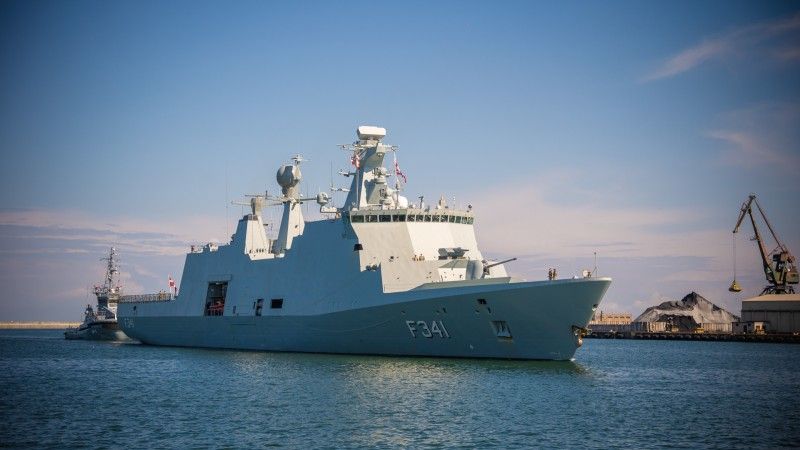
Photo. Marynarka Wojenna RP / X
As the world speaks of NATO’s collapse, BALTOPS 2026 tells a different story. Over 50 years of tradition, hundreds of units, and a clear signal: even amid transatlantic turbulence, the Baltic Sea region remains the binding force of allied cooperation.
On 4 June 2026, the BALTOPS (Baltic Operations 2026) exercises commenced in the Baltic Sea waters — one of the largest and longest-running NATO naval manoeuvres. The exercises will run from 4 to 19 June and will be commanded by the US Sixth Fleet in cooperation with STRIKFORNATO.
For more than five decades, BALTOPS has been held annually, establishing itself as one of the most enduring allied traditions in the Baltic. Today it stands as a cornerstone of NATO’s collective defence on the north-eastern flank: a region that, since Russia’s full-scale aggression against Ukraine, has moved from the periphery of the Alliance’s collective strategic thinking to its very core.
Poland in the spotlight
This year, Poland claimed a particularly notable distinction within BALTOPS. Unlike last year, when the exercises departed from Warnemünde, the starting point for 2026 is Gdynia in the Bay of Gdańsk — a symbolic recognition of Poland’s role as a key participant and a frontline NATO state. The manoeuvres will conclude on 19 June in Kiel, at the heart of the German Baltic coast.
The overall exercise area is vast, covering the western, southern, and central Baltic, stretching from Skagen to the Gulf of Riga. BALTOPS 2026 brings together 15 NATO nations — alongside Poland: Belgium, Denmark, Estonia, Finland, France, Germany, Greece, Italy, Latvia, Lithuania, the Netherlands, Turkey, the United Kingdom, and the United States.
Operational scope
Planning for this year’s exercises took place in April in Turku, where the Finnish Naval Command hosted nearly 160 planners from across the Allied nations. The very fact that Finland — a country that joined NATO only in 2023 — served as host for the planning conference illustrates how rapidly the Nordic-Baltic wing of the Alliance has gained operational maturity.
BALTOPS 2026 will begin with exercises in the western Baltic before shifting eastward — towards the Swedish island of Gotland, where allies will practise the protection and maintenance of free sea lanes. The protection of these sea lanes is of the utmost importance as the Baltic states remain connected to the rest of NATO territory by only a narrow land corridor, making maritime resupply routes a literal economic lifeline.
See also 
Other key training areas include surface and sub-surface defence, amphibious operations, and air defence. Traditional elements also encompass mine countermeasures, convoy escort, and defence against unmanned aerial vehicles and missiles.
Whilst the scale of BALTOPS 2026 is slightly reduced compared to last year — with a portion of Allied forces committed to other regions, including the Middle East — the very fact that the exercises are being maintained at such a high level despite the dispersal of resources speaks volumes about the priority NATO places on the Baltic region.
BALTOPS as an opportunity for NB8 and NB8+
BALTOPS 2026 also fits within a broader political context — the rapidly deepening cooperation under the Nordic-Baltic Eight format, bringing together eight Nordic and Baltic states.

In 2026, the NB8 presidency is held by Estonia, which has made the deepening of regional defence integration and the strengthening of the group’s strategic standing on the international stage among its key priorities. In April, NB8 foreign ministers pledged to deepen cooperation within the format, including through the Joint Expeditionary Force, with the aim of enhancing situational awareness and intelligence sharing. The ministers also underscored that Russia remains the most serious, immediate, and long-term threat to Euro-Atlantic security across all domains, requiring urgent, resolute, and coordinated action.
Growing cooperation, increasing agency, and deepening strategic cohesion with the Nordic-Baltic states offer Poland a natural path forward — a formal membership in the Nordic-Baltic Eight+. Warsaw shares a convergent threat perception with the Nordic-Baltic countries, and its commitment to military modernisation — including its naval forces — makes it a natural partner in the region’s security architecture. Moreover, the combined weight of the format’s member states will translate into real influence across Europe.
The strategic window of opportunity is open. Poland should seize it.
See also Baltic defence and transatlantic unitySponsored
The Baltic as the anchor of the transatlantic relationship
BALTOPS exercises constitute a platform of unique operational and political significance. They represent an opportunity to deepen interoperability not only amongst European nations, but also with the United States — which, despite the current transatlantic inflection point, still remains one of Europe’s most indispensable allies.
The command ship for BALTOPS 2026 is USS Mount Whitney (LCC-20), the flagship of the US Navy’s Sixth Fleet, ordinarily homeported in the Mediterranean. Its annual presence in the Baltic is a signal that cannot be overstated — particularly at a time when Washington’s commitment to European security is increasingly called into question. Furthermore, the growing cooperation and investment in sovereign capabilities, particularly amongst the Nordic-Baltic Eight+ states, creates scope for strengthening the transatlantic relationship.

The Baltic is therefore not merely a theatre for exercises. It is a binding force for transatlantic unity and a platfrom through which Europe builds its real capabilities in one of the continent’s most militarily critical regions. For Poland, it is equally a precedent for even deeper strategic entrenchment in the region and for strengthening cooperation with the Nordic-Baltic states.


