












- WIADOMOŚCI
- KOMENTARZ
US is considering a return to Syria – military training at stake

 Add as preferred on Google
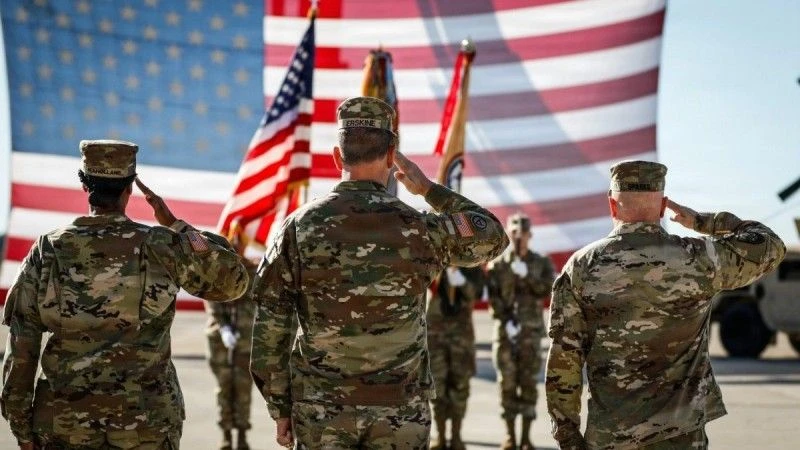
Washington is weighing a military training programme for Syrian forces, focused on demining, explosive ordnance disposal and border security. If this proposal is implemented, it would be the first training mission involving Syrian forces since the change of government in December 2024.
The multinational programme could start in March 2027 and would also involve personnel from about 15 US allies, including Britain, France, Germany, Australia, Saudi Arabia and the United Arab Emirates. In terms of funding, US officials are currently examining the possibility of allocating the remaining resources from Operation Inherent Resolve to finance the project.
Nevertheless, there are still some mutual constraints that keep this plan at a theoretical level. On the one hand, the American side faces scepticism as well as legal and financial constraints. The latter are especially connected with the controversial backgrounds of some commanders in Syria’s new security forces, including former members of Islamist armed groups, as well as human rights abuses, which remain an issue in Syria. In terms of legal hurdles, according to the Leahy Laws, the US is not allowed to provide assistance to units of foreign security forces when there is credible information that they have committed gross violations of human rights.
The Damascus side is also still more reserved towards this idea. Furthermore, some officials in Syria’s defence ministry have been reluctant to grant American military personnel access to its institutions and facilities, complicating efforts to establish training programmes.
Although this initiative is still on the table, if it happens, it would mean a US return to Syria shortly after the withdrawal of a decade-old mission against Islamic State, completed just one year earlier.
If the cooperation proves successful, broader joint actions are also being considered. It is expected that the current proposal would build on the Damascus Coordination Center (DCC), established last year in Jordan to improve cooperation between Syrian authorities, American forces and regional allies.
According to Captain Tim Hawkins, a spokesperson for the US military’s Central Command, the DCC was continuing its work in support of a stable, unified and peaceful Syria, and full decisions had not yet been taken on its future structure and mission focus.
For now, Syrian officials have not commented on the matter. However, just two weeks ago, on November 12 in Damascus, Syrian Defence Minister Murhaf Abu Qasra met the operation’s commander, Rear Admiral Liam Hulin. The meeting touched upon the proposed multinational coordination mechanism, plans to train Syrian forces in demining and explosive ordnance disposal, as well as unspecified assistance with border security.
Deepening Syrian-American ties
It is worth noting that relations between Washington and Damascus have improved since the overthrow of President Bashar al-Assad in December 2024. In December 2025, the US lifted broad economic sanctions, removed Syria’s designation as a state sponsor of terrorism in August 2026, and eased arms export and defence services restrictions in October, allowing licences to be considered on a case-by-case basis.
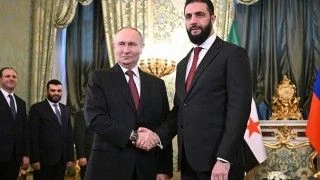
Nevertheless, military cooperation was not initially under consideration. At the same time, the Russian Federation still maintains two military bases in Syria: the Tartus naval facility and Hmeimim air base. However, their status has changed significantly since the regime change. In August 2026, Damascus and Moscow announced a new agreement covering the future of the above-mentioned military facilities. According to the agreement, Russia’s autonomous military control has ended, and, for now, Tartus and Hmeimim are to be converted into joint training and capacity-building centres.
Therefore, an American return to Syria, even with a small number of personnel, would still be perceived as a symbol of current US engagement in the region and could be treated as leverage against the Russian Federation.