












- WIADOMOŚCI
A huge deal for American missiles. Is Poland among the recipients?


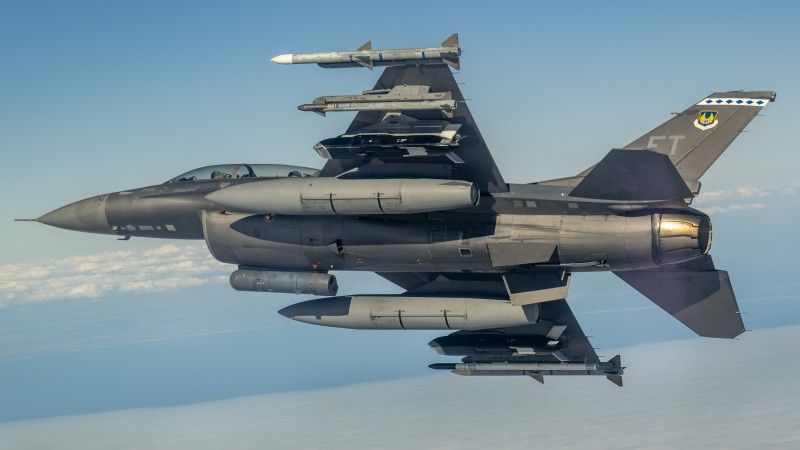
Raytheon has been awarded a multi-year framework agreement by the US Department of Defense for the production of AIM-120 AMRAAM missiles, with a maximum value of $20.7 billion. The agreement is set to remain in effect for five years, with an option to extend for a further two years. Crucially, Poland is among the nations authorised to acquire missiles under this arrangement.
The framework agreement is intended to allow Raytheon to increase AMRAAM production to at least 1,900 missiles per year. This represents a massive increase in manufacturing capacity, particularly considering the growing demand from both the United States and its allied nations.
Raytheon reports that in 2025, it nearly doubled AMRAAM production compared to 2024. The company is increasing the capacity of its facilities, expanding its supply chain, and collaborating with hundreds of small and medium-sized enterprises involved in the production of individual missile components. Simultaneously, the corporation has initiated efforts to develop international co-production.
Up to 13,000–14,000 missiles
The scale of the new contract is immense. Assuming production is maintained at a level of at least 1,900 AMRAAMs per year over seven years, this potentially yields approximately 13,300 missiles. Based on this—and taking into account the unit price of AMRAAM missiles in the fiscal year 2027 budget, which stands at just over $1.5 million—estimates suggest the possibility of producing approximately 13,000–14,000 missiles under the entire programme.
However, an important caveat must be noted. The $20.7 billion figure does not mean the Pentagon has just spent this amount to purchase 13,000–14,000 missiles. This is the maximum value of the multi-year framework production agreement. Specific batches of weaponry will be funded and ordered in subsequent years.
At the time the contract was awarded, only a portion of the funds was released. Available information indicates that approximately $240 million was allocated for initial commitments, with the majority coming from Foreign Military Sales (FMS) funds—resources associated with purchases by foreign states. Approximately $85 million came from the United States budget. Congress has yet to approve funding for significantly larger purchases for US requirements than in previous years.
This means that the full value of the contract will be utilised gradually as subsequent orders arise and funding is secured for their execution.

Poland among states covered by the contract
Documentation from the US Department of Defense specifies that under this agreement—which involves the use of planned production capacities until 2031–33—missiles can be acquired by countries other than the United States. The list includes 17 states:
Australia, Belgium, Canada, the Czech Republic, Denmark, Finland, Germany, Italy, Japan, Kuwait, the Netherlands, Norway, Poland, Sweden, Taiwan, and the United Kingdom.
Poland is thus directly mentioned as a state whose purchases can be realised under this multi-year programme. The listed nations have either already placed their orders via the FMS route for missiles covered by production lots under this framework agreement (this likely includes Poland, as the contract for new AIM-120D missiles was signed in November 2025, and it is natural for it to be fulfilled based on this arrangement) or potentially plan to do so in the future. The Pentagon orders equipment directly from manufacturers as part of production lots on behalf of foreign partners after intergovernmental agreements have been signed. Poland signed such agreements for AMRAAMs in the D variant in November 2025 (and the older C-8 variant in 2024), as have other recipients of US weaponry.
This is a standard method for organising large orders of American armaments. A single production contract allows the manufacturer to increase capacity and ensure appropriate scale, while the Pentagon orders weaponry in successive stages using funds received from Congress and FMS programme resources.

Contract until 2033
Production resulting from the agreement may continue until 2033. This demonstrates that the United States anticipates a sustained high demand for air-to-air missiles for many years to come.
The AMRAAM is currently one of the primary medium-range missiles used by NATO members and their partners. Raytheon states that the missile is in service with 44 countries and is utilised on 14 different platforms.
The missile is used both in aerial combat and in the NASAMS ground-based air defence system. According to the manufacturer, AMRAAMs have been used in over 7,000 successful test and combat launches.


