












- WIADOMOŚCI
- ANALIZA
Airbus pivots to Saab after FCAS collapse

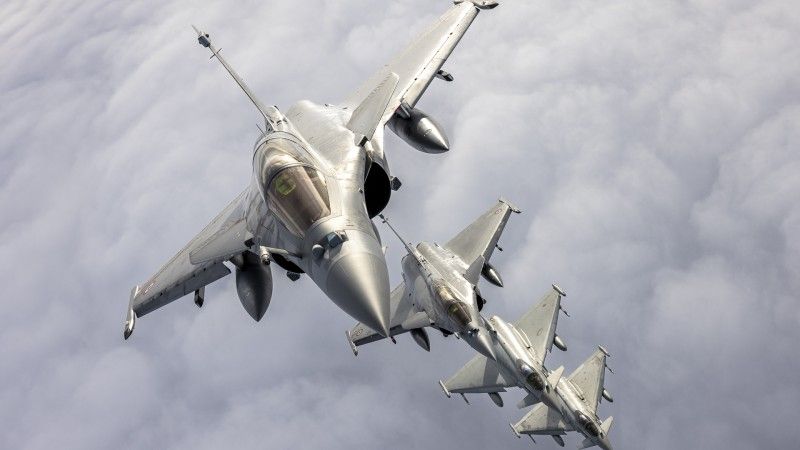
Photo. NATO Air Command
The Future Combat Air System has officially collapsed — but that doesn’t mean it’s over. At least three alternative paths remain, one of them centred on an Airbus–Saab consortium.
Last week, German Defence Minister Boris Pistorius outlined several options for Germany to acquire next-gen fighters after the Future Combat Air System (FCAS) programme collapsed:
- Procuring a batch of F-35s from the United States
- Germany joining the Global Combat Air Programme (GCAP), including the United Kingdom, Italy, and Japan.
- Airbus-led project in conjunction with other companies, for example Saab
Simultaneously, France will most likely continue pursuing its own development of next-generation design, with Dassault at the forefront.
This means Europe will have at least three paths towards sixth-generation capability: the Airbus-led project, potentially with Saab; a French national effort; or GCAP. If progress stays stalled, the most likely outcome is the procurement of more F-35s as an immediate gap-filler.

Airbus and Saab join forces
According to Reuters, following the collapse of FCAS, Airbus has reportedly intensified contacts with Saab, Sweden’s largest defence contractor and the maker of the Gripen fighter jet. Simultaneously, consultations with other firms are ongoing, but the Swedish option is currently perceived as the most pragmatic and viable one.
The major root cause of FCAS failure stemmed from internal disagreements between France and Germany. France wanted to maintain a leading role in the project, including controlling key decisions, such as export policy and the development of nuclear-capable and carrier-based aircraft.
At the same time, Germany viewed such extensive requirements as unnecessary, wary of too large a financial commitment, while seeking greater influence within the programme itself. The Franco-German disagreements resulted in a deadlock, and eventually a failure of the whole project in June 2026. Since then, Airbus has intensified contacts with Saab.
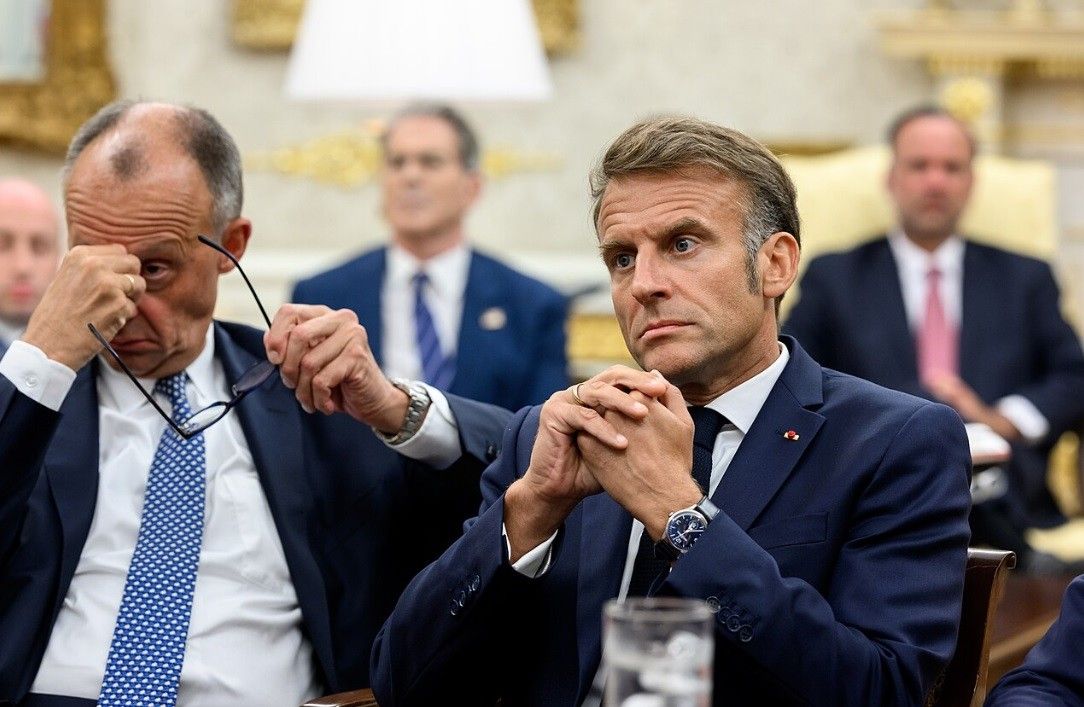
Stockholm traditionally doesn’t push for a strictly sovereign development model and shies away from sprawling geopolitical defence partnerships. Consequently, Sweden’s outlook sets a more flexible basis for cooperation, one that centres on efficiency and system performance, not political control. Furthermore, Saab’s experience in developing one of Europe’s most cost-effective and combat-proven fighter jets — the Gripen — will undoubtedly contribute to a faster progress, should the Airbus-Saab cooperation officially move forward.
Germany and Spain rally to save breakthrough tech
Importantly, the Airbus-led path named earlier already has an institutional backbone. Following the official collapse of the FCAS, Germany and Spain joined forces, with Airbus launching „Team Gen 6” at ILA Berlin. Team Gen 6 is a German-Spanish industrial coalition, which brings together major German contractors, including: Airbus Defence and Space, Autoflug, Diehl Defence, Hensoldt, Liebherr, MBDA Deutschland, MTU Aero Engines, and Rohde & Schwarz. On the Spanish side, the effort draws in GMV, Grupo Oesía, Indra, ITP Aero, and Sener.
Team Gen 6 is not a continuation, it is rather a realignment to make sure the breakthrough technology developed through FCAS is not lost, especially its combat cloud. Saab, discussed above, could join this grouping as an external partner rather than a founding member.
Yet a German-Spanish bloc coalescing around Airbus, even as France goes its own way and others look towards GCAP, is itself a symptom of the deeper problem: Europe is once again organising into competing camps rather than a single, coherent programme.

The consequences of fragmentation
The collapse of FCAS might prove a blessing in disguise — a failure that clears the way for more effective alternatives. Yet this trifurcation risks deepening Europe’s internal fragmentation, fostering competition between member states rather than cooperation. And the central trade-off of that competition is lost time — something Europe cannot afford.
The result is a familiar pattern: renewed fragmentation that undermines the very goal of building a sovereign European sixth-generation capability. The collapse of FCAS shows once again how irreconcilable internal differences, compounded by competing national and industrial interests, stall progress — and in doing so deepen the very dependencies the programme was meant to reduce, including the prospect of acquiring more U.S.-based systems.
Whether the Airbus–Saab partnership bears fruit remains to be seen — but its more flexible political footing gives it a real chance.


