












- WIADOMOŚCI
Anti-drone barrier for 15 billion PLN. MOD includes forests and swamps in the East Shield

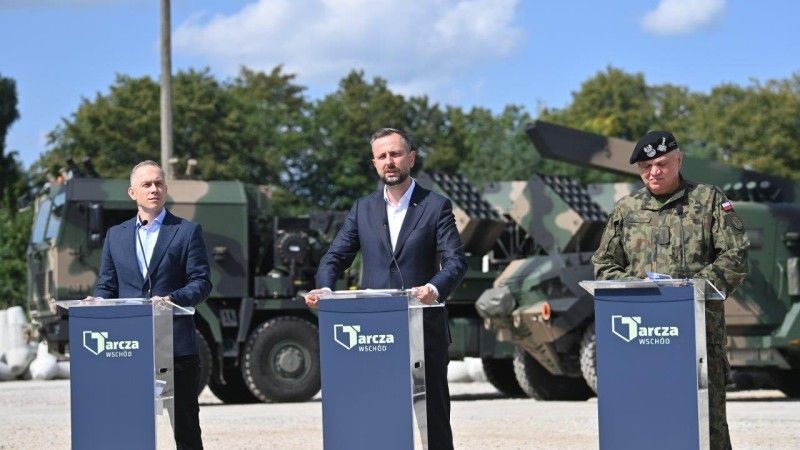
Eighteen battery modules of the SAN system costing approximately 15 billion PLN net (approx. £2.8 billion / €3.4 billion), new telecommunications infrastructure, and the strategic use of forests, wetlands, and watercourses to block enemy movement – this, according to the Ministry of National Defence (MOD), is what the technological and environmental component of East Shield is set to look like. The first three SAN fire platoons are expected to be delivered to the military as early as 2026.
The Ministry of National Defence maintains that East Shield is neither a single line of fortifications nor a “wall” built along the border. The programme is designed to integrate engineering barriers with anti-aircraft and anti-drone defence, reconnaissance, communications, logistics, and appropriate terrain preparation.
One of the most critical elements of this architecture is the SAN system, which forms the lowest layer of air defence. According to the MOD, 18 battery modules have been contracted, with a value of approximately 15 billion PLN net. The first three fire platoons belonging to the first battery are to be handed over to the Polish Armed Forces by the end of 2026.
“Two years ago, one of the first decisions after taking over the government was our decision to establish the National Deterrence and Defence Programme East Shield. This involves building fortifications, defences, and purchasing drone and anti-drone systems to protect our own troops and the civilian population, as well as to hamper the operations and prevent the movement of foreign forces,” said Deputy Prime Minister Władysław Kosiniak-Kamysz.
Wicepremier W. @KosiniakKamysz: Dwa lata temu jedną z pierwszych decyzji po przejęciu rządu była decyzja podjęta przez nas o ustanowieniu Narodowego Programu Odstraszania i Obrony „Tarcza Wschód”. Budowy umocnień, fortyfikacji, zakupu systemów dronowych i antydronowych w celu… pic.twitter.com/wbyfVwiJ0T
— Ministerstwo Obrony Narodowej 🇵🇱 (@MON_GOV_PL) August 21, 2026
Each platoon to independently combat drones
SAN will not consist of a single type of armament. The Ministry describes it as an integrated suite of sensors, command systems, and kinetic and non-kinetic effectors. Each fire platoon is intended to independently detect, track, identify, and engage targets. The multi-layered design of the system will allow for the selection of the appropriate means of engagement based on the type and value of the threat. The MOD emphasises that this will limit the use of expensive missiles against cheap, mass-deployed unmanned aerial vehicles (UAVs).
SAN is intended to complement the Vistula, Narew, and Pilica+ systems, primarily strengthening the defence against drones and other assets operating at low altitudes. The Ministry also reports that the programme relies heavily on the Polish defence industry, although the materials provided do not offer a detailed breakdown of work shares between individual enterprises.
See also 
Digital infrastructure along the border
The MOD states that as part of the expansion of military communications systems, 21 tasks concerning high-altitude telecommunications infrastructure and two tasks related to ground infrastructure and power systems have been prepared.
Simultaneously, the civilian GSM network is being expanded. Work has been coordinated across 32 locations, 24 of which – according to the Ministry – have already been completed. The next stage will involve the installation of 184 Small Cell stations to improve network availability and coverage in key areas of the programme.
The project, planned for the years 2026–2030, is set to receive 150 million PLN (approx. £28 million / €34 million) in funding under the SAFE mechanism. The MOD also reports the selection of six innovative solutions in the fields of command, communications, and cybersecurity. Technologies utilising robotics, unmanned systems, and artificial intelligence are to be tested under the Intelligent Border programme.
Forests and wetlands as a barrier
East Shield will also leverage the natural characteristics of the terrain. The Ministry highlights forests, wetlands, rivers, canals, and land relief as elements that can slow down an adversary, restrict their freedom of manoeuvre, and channel their units into areas advantageous to the defenders.
In military planning, specific areas are to be assessed as “go”, “slow-go”, or “no-go” – ranging from terrain that facilitates movement to regions that are extremely difficult or inaccessible for certain types of equipment.
Three priority zones have been designated along the borders with Belarus and Russia: 0 to 5 km, 5 to 10 km, and 10 to 50 km. In 2026, new forest management rules are to be introduced in areas managed by the regional directorates of State Forests in Białystok, Gdańsk, Lublin, and Olsztyn.
According to the MOD, limiting clear-cutting, preserving the lower layers of the forest and natural regeneration, and the broader application of complex felling systems will allow for a higher stand density. Particular importance has been assigned to wetlands and water management, which can enhance the natural obstacle properties of the terrain.

East Shield as part of the NATO system
The Ministry presents East Shield as the Polish component of a broader defence system for NATO’s north-eastern flank. The programme is to be linked with the Baltic Defence Line being constructed by Lithuania, Latvia, and Estonia, and is prepared to receive and support Allied forces.
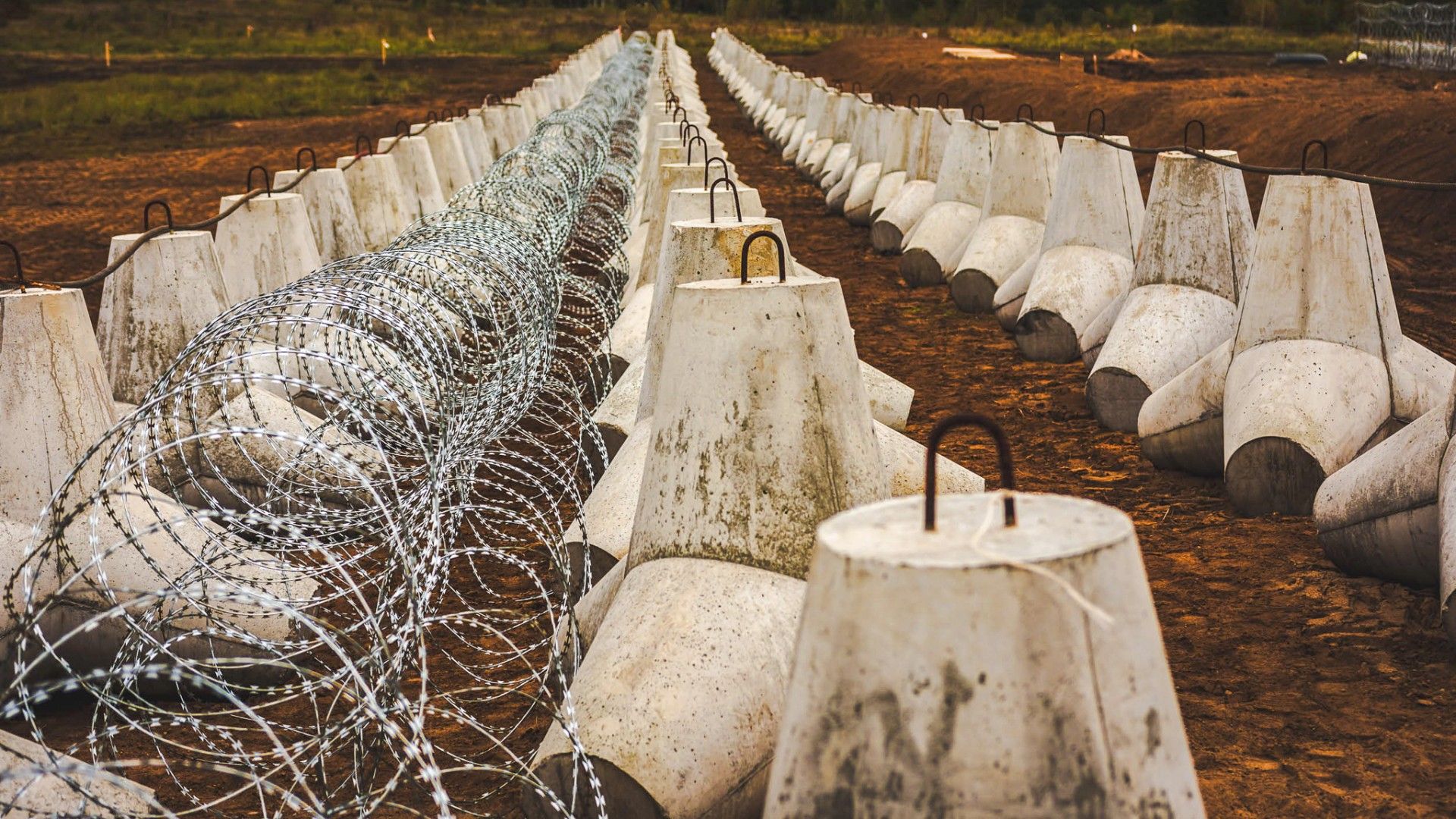
“In a moment, we will be able to speak about our other partners who will arrive here. We will describe Tarcza Wschód as the primary site for investment in the security of NATO’s eastern flank. It is not just about reinforced concrete hedgehogs. It is not just about the warehouses that are already plentiful in many border counties. It is, in fact, an entire philosophy of deterrence and defence that the whole Alliance is implementing – that is, adopting as its own,” said the Minister of National Defence.
Wicepremier W. @KosiniakKamysz: Za chwilę będziemy mogli powiedzieć o innych naszych partnerach, którzy tutaj przybędą. Właśnie Tarczę Wschód będziemy opisywać jako główne miejsce do inwestycji w bezpieczeństwo wschodniej flanki NATO. To nie są tylko też żelbetonowe jeże. To nie… pic.twitter.com/gvByVPOu0d
— Ministerstwo Obrony Narodowej 🇵🇱 (@MON_GOV_PL) August 21, 2026
The MOD reports that German engineering sub-units are already participating in the infrastructure expansion. The involvement of an engineering sub-unit from the Illinois State National Guard is also planned. Reconnaissance and talks regarding the practical participation of French troops in the programme have also been conducted.
Furthermore, Poland is cooperating with Finland, the Baltic states, the United Kingdom, and the United States. According to the Ministry, the goal is to create a coherent system in which fortifications, terrain, sensors, drones, air defence, and operational troops function as a single deterrence architecture. East Shield is therefore intended not only to make crossing the Polish border more difficult; according to the MOD’s declarations, it should deprive a potential aggressor of the ability to act swiftly and provide Poland and NATO with the advantage of time, information, and prepared terrain.


