- WIADOMOŚCI
- ANALIZA
Can Britain afford rearmament? Between strategic ambitions and fiscal constraints

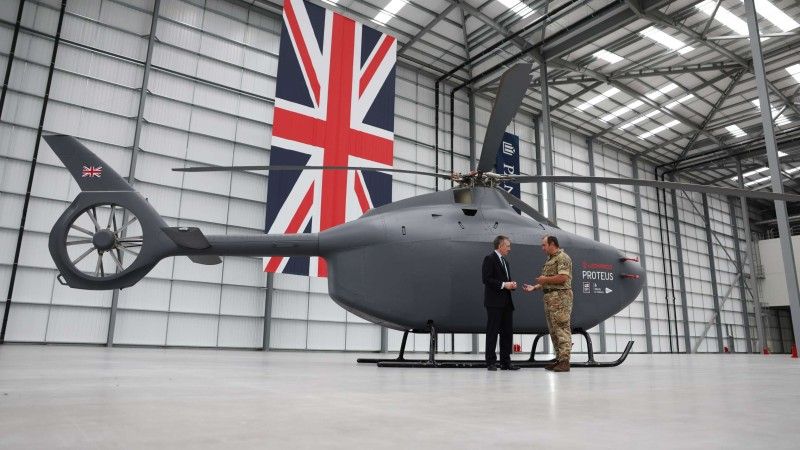
Photo. Official X channel for UK Ministry of Defence.
The UK currently finds itself at one of the most crucial moments in the strategic debate on defence and security policy since the end of the Cold War. Russian aggression in Ukraine, the deteriorating security situation in Europe, growing instability in the Middle East, and the gradual reduction of American involvement in European security are forcing London to redefine its defence policy. At the same time, the country is grappling with a difficult budgetary situation, high debt, rising social spending, and pressure to maintain public service funding. This raises the fundamental question of whether the UK can finance the rebuilding of its military capabilities without incurring high political and economic costs.
This debate centres on the long-awaited Defence Investment Plan (DIP), which will define how British defence will be financed over the coming decade. The document, whose publication was repeatedly delayed, has become symbolic of a wider problem in British security policy: the mismatch between the country’s declared ambitions and its actual capabilities.
The Crisis of British Defence Policy
For many years, British defence policy operated under conditions of structural underfunding. Successive strategic reviews assumed that the UK could maintain its global role while simultaneously cutting spending and reducing the size of its armed forces. In practice, this led to a gradual erosion of the country’s military potential.
The scale of these changes is significant. In 1990, the British Army numbered over 153,000 professional soldiers. Today, there are fewer than 74,000. The number of reservists has fallen from around 76,000 to fewer than 26,000. The Royal Navy has reduced its number of major combat ships from 48 to just 13, while the Royal Air Force currently operates significantly fewer combat aircraft than it did three decades ago.
Although modern weapons systems are more technologically advanced, the reduction in force size has resulted in limited capabilities for sustained operations and simultaneous responses to multiple crises. As a result, an increasing number of analysts argue that the UK maintains only a „skeleton” of its full military potential. This means that it possesses almost all types of forces and systems, but in numbers insufficient to conduct large-scale military operations.

Great Power Ambition Versus Reality
One of the main issues that can be identified is the persistent gap between London’s strategic ambitions and the country’s actual resources. British decision-makers continue to view the UK as a key Western military power, capable of playing a leading role in NATO and participating in global operations.
In recent years, London has considered, among other things:
- leading security missions following the withdrawal of US troops from Afghanistan
- participating in a potential peacekeeping force in Ukraine
- securing naval operations in the Strait of Hormuz
- fielding significant land forces for NATO
However, many analysts believe that the potential of the British armed forces no longer matches these ambitions and that any foreign mission now requires deploying military resources to their limits, or even beyond. A good example of this occurred during the Middle East crisis in 2026, when the UK needed several weeks to deploy a single destroyer to the Persian Gulf. This event became a symbol of the limited power-projection capabilities that, just two decades ago, formed the foundation of British global strategy. This apparent gap between Britain’s ambitions and the resources it actually possesses indicates a high degree of self-deception regarding its actual military capabilities.
Ultimately, the DIP will have to choose between focusing on the ability to defend the UK and its immediate surroundings or restoring its global power-projection capabilities—a choice that appears extremely risky, both politically and economically.
The End of the Era of Total Dependence on the United States
For decades, British security strategy was based on the assumption that the United States would remain the primary guarantor of European security and that London would play the role of Washington’s most important partner on the continent.
Today, this assumption is increasingly being questioned. A report by the British House of Lords emphasized that the high level of military dependence on the United States is no longer a sustainable foundation for British strategy. The need to build more autonomous defence capabilities and deepen cooperation with European partners is being discussed increasingly frequently. The problem, however, is that greater strategic autonomy requires significant financial investment and the reconstruction of industrial capacity, which has been neglected and marginalised for years.

The Defence Investment Plan and the Financing Problem
The key document aimed at addressing these problems is the Defence Investment Plan. According to press reports, this plan is expected to envisage investments of approximately £15 billion, financed primarily through spending cuts in other sectors of public administration.
At the same time, the Ministry of Defence indicates that the funding gap in current defence plans is approximately £28 billion. Even after partial deficit reduction, the shortfall remains around £18 billion, and the Treasury is only prepared to cover a fraction of this amount.
The situation was further exacerbated by the political crisis triggered by the resignations of Defence Minister John Healey and Armed Forces Minister Al Carns. Both politicians openly accused the government of underfunding defence and lacking the willingness to make difficult budgetary decisions. Healey even stated that the proposed plan „does not meet the country’s defence needs at a time of growing threats.”
Who Will Pay for the Military?
The biggest challenge remains finding the necessary funding. Prime Minister Keir Starmer has committed to gradually increasing defence spending to 3% of GDP and, in line with emerging NATO targets, potentially to 3.5% of GDP for defence and 5% of GDP for broader security-related spending. Currently, the UK spends around 2.3% of GDP on defence.
This would require finding tens of billions of pounds in additional funding each year. According to estimates, achieving the 3.5% target alone could require an additional £36 billion annually.
Resolving the issue of defence funding would be particularly desirable before the July NATO summit in Ankara, where US President Donald Trump will undoubtedly reiterate his call for allies to increase defence spending and reduce their reliance on American security guarantees.
In practice, the British government faces three options:
- Cuts in public spending – including development aid, climate policy, transport, and certain social programmes.
- Increased public debt – a solution the Treasury remains reluctant to accept.
- Tax increases – a politically costly option for the Labour government.
It is becoming increasingly clear that higher military spending will not be possible without significant compromises in other areas of public policy. While many people understand the need to strengthen national defence, this may come at the expense of public services, particularly healthcare, potentially affecting the overall quality of life and well-being of the average Briton.
The UK, NATO, and European Defence Autonomy
The debate over British defence funding is not limited solely to the national budget, which alone would be unable to cover the growing costs associated with the current need for rearmament. Therefore, the UK’s role in the evolving European security architecture is becoming increasingly important. A particularly significant example is the dispute over the UK’s participation in the SAFE (Security Action for Europe) programme, a €150 billion fund aimed at supporting joint defence procurement among European states. Cooperation could also be extended to selected partner countries, which the UK could theoretically join. (As of June 2026, Canada is the only third country to have concluded a full agreement with the EU under Article 17 of the SAFE Regulation.)
However, despite political declarations regarding the need to deepen defence cooperation between the EU and the UK, no formal agreement has yet been reached on British participation in SAFE. The main sticking points remain the size of London’s financial contribution and the extent of access for British companies to contracts financed under the programme. A lack of agreement on participation fees led to the breakdown of negotiations at the end of 2025.
Currently, British companies can participate in SAFE-funded projects only on a limited basis, which, from London’s perspective, is insufficient. The UK is seeking a greater role, arguing that it possesses one of the largest and most advanced defence industries in Europe.
Minister for the Armed Forces Al Carns described the lack of agreement between London and Brussels as a „suicidal” step from the perspective of European security. He argued that the UK remains a key pillar of European security and that limiting the British defence industry’s access to new funding mechanisms weakens the defence capabilities of the entire continent.

Countering Russia’s „Shadow Fleet”
The growing hybrid threat posed by Russia provides another argument in favour of increasing defence spending in Europe, including in the U. On 14 June 2026, British special forces conducted the first-ever operation to seize a Russian tanker belonging to the so-called „Shadow Fleet” in the English Channel. Royal Marines commandos boarded the tankerSmyrtos, supported by helicopters, Royal Navy ships, and a maritime patrol aircraft, after which the vessel was placed under the supervision of the British authorities.
The operation forms part of a broader effort by European countries to counter Russian attempts to circumvent sanctions and demonstrates NATO’s growing determination to address hybrid threats. It also highlights that, despite financial challenges, the UK still possesses the capabilities required to conduct complex military operations of strategic importance.
The Problem Is Not Just About Money
Some experts argue that increasing the budget alone will not solve all of Britain’s defence problems. The British military procurement system has for years been plagued by delays, cost overruns, and shortcomings in the implementation of modernisation programmes.
The National Audit Office has repeatedly highlighted problems in the delivery of major defence projects. A significant number of key programmes have been assessed as being at risk of failure, while the acquisition process for new equipment often takes many years.
Furthermore, questions have been raised about the direction of modernisation. Following his resignation, Al Carns argued that some of the planned spending remains focused on systems designed according to the logic of previous conflicts, prioritising highly advanced—and therefore expensive—equipment that is difficult to replace quickly. By contrast, the experience of the war in Ukraine has demonstrated the importance of rapidly developing drones, autonomous systems, and modern battlefield technologies that are effective without necessarily being the most expensive.
Conclusions
The debate surrounding the UK’s Defence Investment Plan (DIP) demonstrates that the UK now faces a strategic choice. It is no longer just about the size of the defence budget, but rather about what role the country wants to play in the international security system and whether it will be able to bear the costs associated with these ambitions.
The growing threat from Russia, uncertainty about the future involvement of the United States in Europe, and an increasingly unstable international environment are forcing European countries to increase military spending. At the same time, fiscal constraints, public pressure, and years of neglect in the modernisation of the UK’s armed forces make the realisation of these ambitions exceptionally difficult.
Ultimately, the most important challenge for the British authorities will not be increasing defence spending itself, but aligning strategic ambitions with the country’s actual capabilities. If the DIP fails to resolve this fundamental contradiction, it may become yet another document promising more than the UK can deliver.