- ANALIZA
- WIADOMOŚCI
Can the UAE protect its economy from missile and drone attacks?

The United Arab Emirates has advanced combat aircraft, ballistic missile defences and a growing defence industrial base. A prolonged conflict, however, tests its ability to sustain protection while keeping the economy functioning. US approval in October of a potential sale of APKWS-II guidance kits highlights the importance of broadening the weapons available for this task. For Abu Dhabi, the challenge is to reduce the extent to which successive attacks force it to expend its most valuable munitions, draw on allied support and interrupt operations at the facilities it seeks to protect.
In early October 2026, the US Department of State announced approval of a possible sale to the UAE of up to 10,000 Advanced Precision Kill Weapon System II guidance kits, known as APKWS-II, together with associated equipment and support. The package was valued at an estimated USD 1.041 billion and covered both air-to-air and air-to-ground configurations. The announcement does not establish that 10,000 complete rockets have been delivered, or that the entire package is intended for counter-drone operations.
APKWS-II converts unguided 70 mm rockets into laser-guided munitions. BAE Systems identifies countering unmanned aircraft as one of its applications. This capability could broaden the choice of weapons available to defenders, provided the relevant configurations are delivered, integrated with their launch platforms and supported by trained crews. The programme’s significance therefore extends beyond the number of kits in the proposed package: it concerns how the burden of defence can be distributed across different weapons.
Layered defence and the cost of sustaining it
Patriot and Terminal High Altitude Area Defence, or THAAD, are among the principal elements of the UAE’s ballistic missile defences. THAAD intercepts ballistic missiles during the terminal phase of flight. The US Missile Defence Agency confirmed its combat use in the UAE during Houthi attacks in January 2022. The Emirates thus has experience of employing an advanced system against an actual threat.
The layers of this defence perform different tasks. THAAD does not replace weapons designed to engage low-flying drones. Nor does the possession of advanced missile defence systems establish an ability to protect every facility against simultaneous attacks involving different types of threat. Detection, target classification, the availability of suitable weapons and effective information sharing all matter.
The cost of an interception also requires context. Firing an expensive missile at a cheap drone can be justified when a terminal, passenger aircraft or populated area is at risk. The difficulty lies in sustaining such engagements. Defenders must preserve reserves for threats that cheaper weapons cannot defeat, while ensuring a continued supply of munitions.
The potential value of APKWS-II lies in taking on some of these engagements under suitable conditions, thereby reducing expenditure of other missiles. It cannot, however, substitute for ballistic missile defence. Success depends on matching the weapon to the threat, rather than simply reducing the cost of ammunition.
Early warning and the ability to coordinate defence
The UAE has also developed capabilities to detect threats earlier and direct its forces. On 17 September 2024, Saab announced the delivery of its fifth GlobalEye airborne early warning and control aircraft to the Emirates, completing a series of deliveries that began in 2020. The platform combines sensors for surveillance of the air, sea and land.
The operational value of these aircraft depends on their cooperation with combat aviation and ground-based air defences. Earlier warning provides more time to identify a threat and assign the appropriate forces. It also helps allocate engagements, reducing the risk of several units being tasked unnecessarily against the same target. These benefits depend on reliable communications, command procedures and data exchange.
Five delivered aircraft do not mean five aircraft permanently available for missions. Continuous surveillance requires crew rotations, maintenance and scheduled overhauls. Fleet size is therefore a starting point for assessment, not a measure of round-the-clock coverage. Saab’s delivery announcement does not specify the fleet’s current operational availability.
Rafale and the demands of sustainment
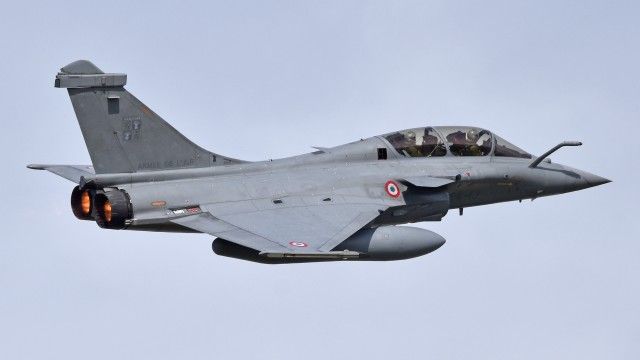
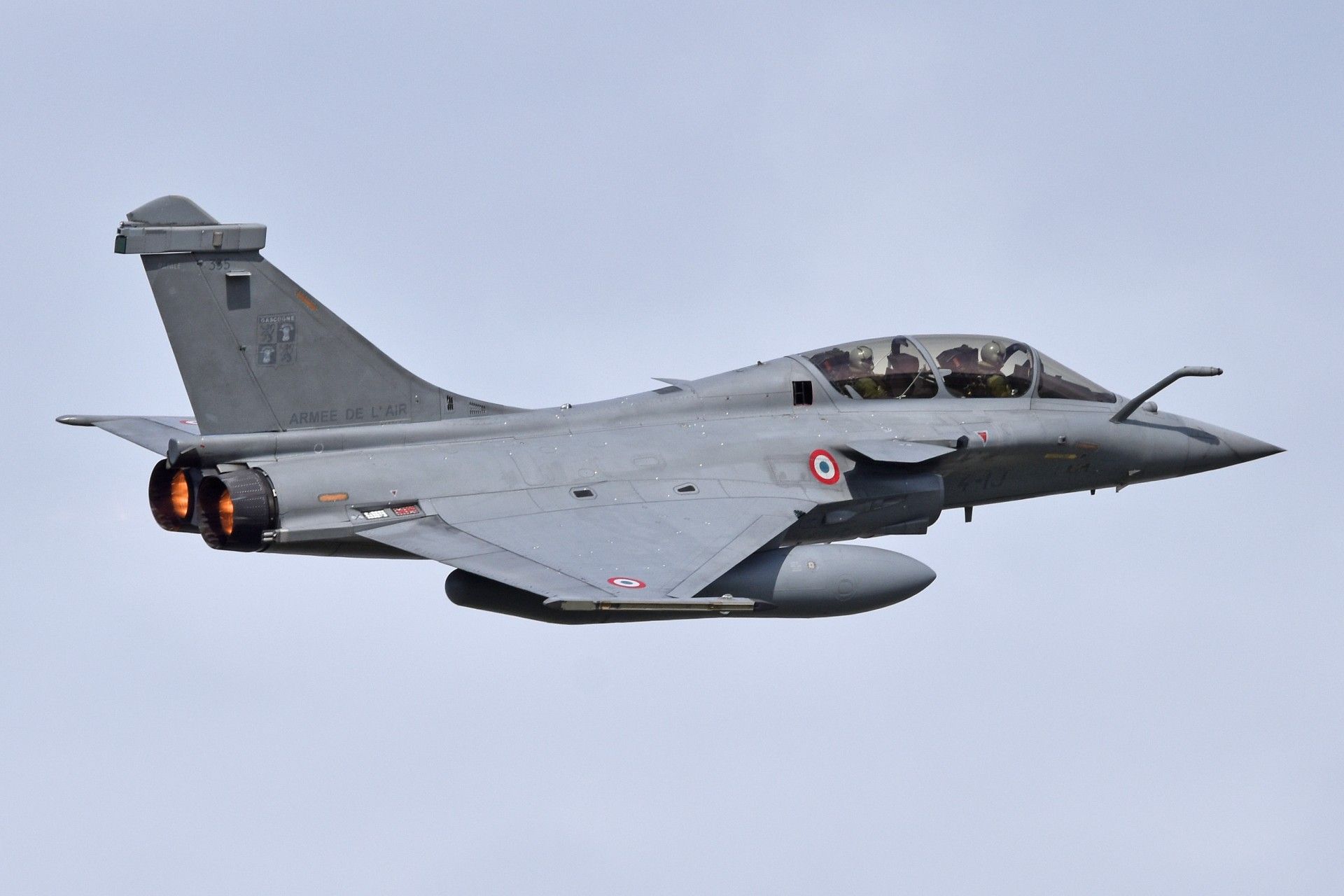
The UAE’s combat aircraft fleet is built around the F-16E/F Block 60 and Mirage 2000-9. A contract for 80 Rafale F4 aircraft, signed on 3 December 2021, marks the next stage of its modernisation. The first aircraft was unveiled on 29 January 2025, but Dassault Aviation explicitly stated that it would remain in France for flight testing. The manufacturer scheduled the first deliveries to the UAE’s armed forces for late 2026.
The unveiling did not, therefore, constitute the introduction of a new combat capability in the Emirates. Building that capability requires further aircraft deliveries, trained personnel, weapons and integration into the command structure. During the transition, sustaining the existing fleet remains as important as preparing to receive its new aircraft.
Munition supplies present a separate requirement. A notification submitted to the US Congress on 19 March 2026 covered the possible sale of 400 Advanced Medium Range Air-to-Air Missiles, or AMRAAMs, in the AIM-120C-7 or AIM-120C-8 variants, alongside equipment and support services. The document sets out the scope of a proposed transaction. It does not establish how many missiles have already been delivered or remain in Emirati stockpiles.
Working with US and French suppliers broadens the UAE’s options, but also requires it to sustain different training arrangements, spare parts inventories and weapons. Diversification increases freedom of action when it allows essential capabilities to be maintained despite disruption affecting one partner. Without adequate support infrastructure, it can add to the organisational burden.
See also 

Allied support in combat
Foreign support has a direct combat dimension in the UAE. US Central Command, known as CENTCOM, confirmed that American forces at Al Dhafra Air Base used Patriot interceptors against two incoming missile threats on 24 January 2022, alongside Emirati defensive action. The defence effort drew on the resources of both countries.
The French presence has a similar significance. In testimony before the French Senate on 5 May 2026, General Jérôme Bellanger, Chief of Staff of the French Air and Space Force, described the role of Rafale aircraft from Air Base 104 in the UAE, reinforced by aircraft from France, in countering drones and cruise missiles attacking regional partners. These French aircraft should not be confused with the Rafales ordered by Abu Dhabi.
Such support increases the assets available and can ease the burden on Emirati crews. Assessing autonomy nevertheless requires a distinction between the effectiveness of the combined force and the capabilities under the UAE authorities’ exclusive control. Continued foreign involvement also depends on partners’ decisions and competing commitments.
Industry and the return to service
Developing domestic support capacity offers a way to reduce some of these dependencies. In a statement concerning Dubai Airshow 2025, the aircraft maintenance and overhaul company AMMROC, part of Abu Dhabi Aviation Group, said its Al Ain facility provided maintenance and overhaul support for platforms including the F-16, Mirage 2000 and C-130. These capabilities directly support the continued operation of the UAE’s existing aircraft.
Bringing maintenance into the country can shorten the interval between identifying a fault and returning equipment to service. The autonomy gained depends on the work that can be carried out, access to spare parts and authorisation to perform repairs. A domestic facility may reduce downtime while remaining dependent on imported components. It does not resolve the separate question of munition supplies.
EDGE is developing its own weapons programmes, including the SKYKNIGHT air defence system. On 18 July 2025, the group announced agreements with Hungary’s 4iG Space and Defence Technologies covering, among other areas, the potential development and production of the system in Hungary. These agreements indicate the direction of industrial cooperation, but do not establish the scale of SKYKNIGHT’s operational deployment with Emirati forces.
What matters for defence is which tasks domestic companies can perform during a crisis. The number of products displayed and agreements signed does not establish how quickly losses can be replaced, equipment repaired and units kept operational.

Protecting the economy beyond interception
Gowind corvettes are among the assets strengthening the maritime component of Emirati defence. Naval Group delivered the first vessel, Bani Yas, on 21 October 2023 and the second, Al Emarat, on 27 June 2024. These multipurpose warships expand the options for surveillance and the protection of shipping. They cannot, on their own, secure the entire export chain, which also encompasses land-based installations, terminals and the vessel’s onward route.
The port of Fujairah on the Gulf of Oman is particularly important. As the International Energy Agency describes, the pipeline linking Abu Dhabi emirate’s oil production infrastructure to the port enables some crude exports to bypass the Strait of Hormuz. This alternative increases freedom of action as long as the entire route remains operational. It shifts part of the protection requirement to land-based infrastructure and the coast outside the Strait.
Pressure also extends to newer sectors of the economy. On 11 September 2026, Reuters reported, citing unnamed sources, that plans were being considered to distribute a proposed five-gigawatt data centre complex across several locations and strengthen the protection of facilities following Iranian attacks. Technology company G42 said the project was progressing as planned and that its details remained under review. Reuters did not establish that a final revised plan had been adopted.
This has implications for defence policy. Limiting the consequences of a successful strike can reduce the pressure to defend every facility at any cost. Dispersal, the ability to replace damaged capacity and the rapid restoration of services complement military protection. They also require additional investment, while new locations create protection requirements of their own.
The cost of defending an investment hub
Fujairah shifts part of the UAE’s export exposure from Hormuz to the pipeline and terminal serving its eastern coast. Maintaining that alternative requires a continuing commitment to protection and repair. Plans for large data centres add another obligation in a different sector. Decisions about economic development are consequently shaping the demands placed on the armed forces: projects approved today can require military protection for decades.
Those costs belong in the investment calculation. Concentrating activity in a major facility can bring commercial advantages while increasing the consequences of its interruption. Dispersal, reserve capacity and arrangements for rapid repairs require expenditure of their own. Abu Dhabi has to compare these options before construction fixes the location and design of a project. Otherwise, defence planners inherit vulnerabilities they have limited means to change, and additional weapons purchases create further commitments to training, maintenance and foreign suppliers.
For the Emirates, this matters because companies make investment decisions on a longer horizon than a military operation. Restoring a terminal or resuming services after an attack addresses the immediate damage. Repeated interruptions can still persuade a company to locate its next expansion elsewhere. An adversary can exploit that uncertainty without inflicting widespread destruction. The resulting loss becomes visible in future investment decisions, potentially long after the fighting has ended. A project built in another country is a loss that repairing the damaged facility does not reverse.