












- WIADOMOŚCI
- KOMENTARZ
Canada pushes ahead with proposal for new defence financing bank

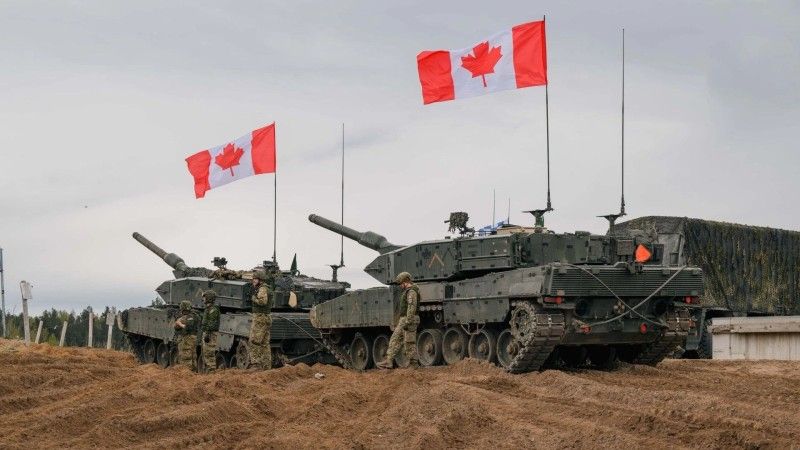
Photo. Canadian Army
The Defence, Security and Resilience Bank (DSRB) is a proposed multilateral financial institution intended to finance defence and security investments in like-minded countries. Frequently referred to in media reports as “NATO bank,” the proposed institution would strengthen the defence industrial base of participating states by facilitating access to long-term financing for strategic projects.
Canadian Prime Minister Mark Carney highlighted the DSRB during his opening remarks at CANSEC, Canada’s largest defence and security trade exhibition held in May 2026. The reference suggests that the initiative remains part of the federal government’s broader defence agenda and will receive further attention ahead of the NATO meeting in Ankara next week.
Ottawa has become the initiative’s principal political sponsor. The bank’s aim is to mobilise private capital and provide long-term financing for defence, security, and resilience projects. Lending may target governments and companies operating within the defence supply chain, including small and medium-sized enterprises (SMEs).
The proposal reflects a challenge facing many allied governments. Defence spending has risen sharply in response to growing security threats, but higher military budgets often compete with domestic priorities such as healthcare, education, and infrastructure. Supporters argue that a dedicated financial institution could help governments finance long-term investments without placing the full cost on annual public budgets.
The DSRB is expected to offer long-term loans at competitive interest rates, making large defence projects more affordable for participating countries. Supporters say such financing could help governments meet defence commitments while easing short-term fiscal pressures.
According to the project’s organisers, the institution would be structured as a multilateral development bank, similar to the World Bank or the European Investment Bank. Member states would provide both paid-in capital and callable capital, allowing the bank to raise substantially larger amounts of private financing through international capital markets.

The proposed bank would also play a role in reducing investment risk across the defence sector. By sharing credit risk with commercial lenders, it would encourage banks to finance companies throughout the defence supply chain. Access to financing remains a challenge for many SMEs despite growing demand for military equipment.
Supporters argue that expanding access to capital would strengthen production capacity, improve supply chain resilience, and accelerate investment in defence technologies. They also contend that increased defence investment could generate broader economic benefits by supporting manufacturing, innovation, and high-skilled employment.
Canada seeks to host the headquarters
Canada hosted negotiations on the DSRB Charter in Montréal in April 2026. Representatives from 18 countries attended the meeting, although the participating governments have not been publicly identified.
Several Canadian cities, including Toronto, Montréal, and Vancouver, are competing to host the bank’s headquarters. The Government of Ontario estimates that a DSRB headquarters would create 3,500 direct jobs and thousands more indirect jobs, benefiting the province’s economy. Hence, it is ready to make a significant contribution to secure the bank’s headquarters and support its future mission.
Canada’s six largest banks have expressed support for the initiative, alongside several international financial institutions, including JPMorgan, Deutsche Bank, ING Group, and Commerzbank. However, not all allies appear convinced. Media reports indicate that both the United Kingdom and Germany have been cautious about the proposal, preferring to strengthen defence financing through existing mechanisms.
Furthermore, the DSRB proposal emerged at a time when the European Union had already launched the SAFE programme, which operates on similar principles but without the additional costs and bureaucracy associated with establishing a new institution. Canada joined SAFE at the end of 2025, demonstrating that defence cooperation beyond the EU is possible. This has led critics to question whether NATO and its allies need another institution to help achieve their defence objectives.
For Ottawa, however, the DSRB seems to represent more than a new source of financing. It is also an opportunity to position Canada at the centre of an emerging architecture for allied defence finance, complementing NATO’s military role with a dedicated institution capable of mobilising private capital on a much larger scale.


