- WIADOMOŚCI
This is how the Russian attack unfolded. General Nowak reveals details of the operation


Operational Commander of the Polish Armed Forces, Brigadier General (Pilot) Dr Ireneusz Nowak, outlined the details of Russia’s air attack on Ukraine overnight. Three Russian objects entered Polish airspace.
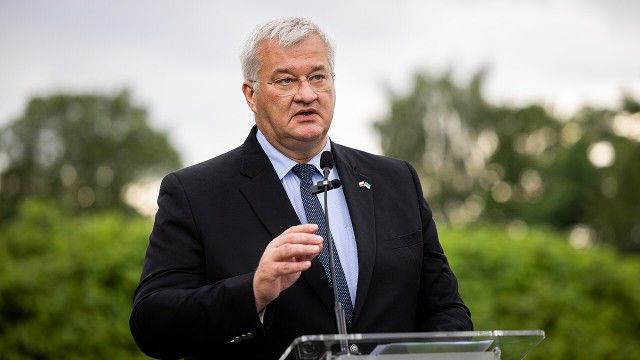
At a joint press conference with Minister of National Defence Władysław Kosiniak-Kamysz, Operational Commander of the Polish Armed Forces, Brigadier General (Pilot) Dr Ireneusz Nowak, described the scale of Russia’s attack and summarised the operation carried out by Polish and allied forces.
How did the attack unfold?
According to information provided by General Nowak, Russia carried out a massive saturation attack (launching a large number of aerial attack weapons within a short period of time to place as much strain as possible on the enemy’s air defence systems – ed.), aimed mainly at critical infrastructure in Ukraine (primarily bridges and energy infrastructure).

The Russians used a record number of seven long-range bombers in the attack: four Tu-160s and three Tu-95MSs. The launch locations were Vologda and the Black Sea area (Kalibr missiles). As we mentioned in this article, the Russians used a total of 26 Kalibr cruise missiles, 72 Kh-101 cruise missiles and 503 drones (including 202 jet-powered ones) overnight. They struck in two waves: first mainly with drones, then with Kalibrs and Kh-101s.
General Nowak also said that as many as eleven Russian objects posed a risk of entering Polish airspace in the immediate vicinity of the country’s border. Three of them violated that airspace. He attributed all the attacks solely to Russia.
How did the systems respond?
Later in the press conference, the general gave a detailed account of events overnight. He said that the air defence system uses two alert levels: Air Raid Warning Yellow and Air Raid Warning Red. The first, indicating a highly probable threat, was declared at 1:40 and remained in place until 5:49 local time.

At 5:49, the highest alert level was introduced and remained in effect until 7:00, triggering warnings to the public (air-raid sirens). Interestingly, after 7:00, Russian bombers already returning to their bases launched another salvo of cruise missiles. Polish F-16s were scrambled from the base at Krzesiny at that point.
What forces did Poland deploy?
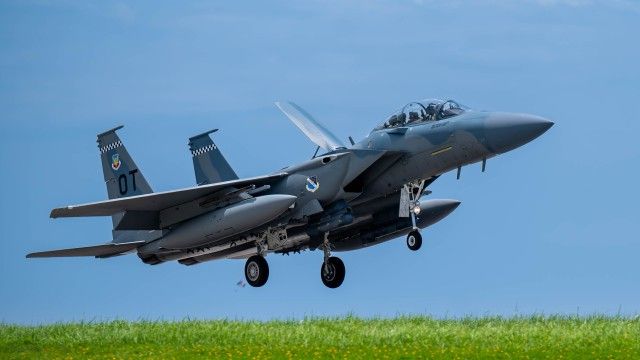
The main aircraft involved in defending Polish airspace were two Polish F-16s from the base at Łask and two Swedish Gripens operating from the base at Mińsk Mazowiecki. The Swedish pair was under the supervision of the Combined Air Operations Centre, NATO’s air operations command centre in Uedem, Germany. A pre-authorisation for the pilots to decide whether to shoot down objects (specifically, a Condition-Based Order) was issued there. “The Swedish pilots attempted to intercept what was most likely a Kh-101 missile. One of them reported that they were unable to carry out a visual or electro-optical identification of the object because of the extremely difficult weather conditions in the area,” General Nowak said.

A Saab 340 airborne early-warning aircraft belonging to the Polish Air Force also took part in the operation overnight, along with a Dutch MRTT aircraft, which refuelled Polish aircraft.
As for air defence systems, Minister Kosiniak-Kamysz said that Patriot batteries near Rzeszów-Jasionka Airport and near Świdnik had been activated. Poprad and Pilica+ ground-based systems were also activated.