- WIADOMOŚCI
The US explains the Shenzhen declaration: “This is not a concession to Russia and China”

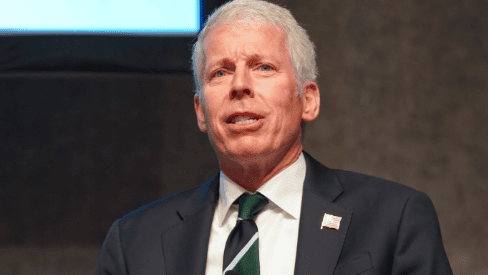
US Energy Secretary Chris Wright argued in Warsaw that the pledge to increase global fuel supplies, included in the declaration following the Shenzhen summit, did not amount to Washington making concessions to Moscow and Beijing. At the same time, he defended a plan to allow tankers from the so-called shadow fleet to trade legally after their owners change.
On 19 November, Donald Trump, Vladimir Putin and Xi Jinping met in Shenzhen. In a joint declaration issued afterwards, the three countries pledged, among other things, to increase the production and supply of petroleum products for the benefit of all countries, and reaffirmed the importance of stable energy supplies. The document did not specify volumes or timelines. Wright commented on the agreement during a visit to Warsaw, where he attended a meeting of the Partnership for Transatlantic Energy Cooperation. Speaking to Bloomberg, he stressed that energy shortages and high fuel prices harm the global economy as a whole.
See also 

“When there’s a crisis and energy starts running short, everyone loses. This is no concession by the US to China or Russia. It’s stating the obvious,” the US secretary said.
Increase in exports would be conditional
Wright said the current market situation was being affected, among other things, by production restrictions at Chinese refineries and the fact that Russia had become a net importer of diesel fuel as a result of Ukrainian attacks on Russian facilities. Referring to the Trump administration’s earlier decision to allow some Russian diesel onto markets, the secretary stressed that this was not about lifting sanctions unconditionally. An increase in Russian diesel exports would only be possible if military operations were scaled back, an energy ceasefire were agreed, or progress were made towards ending the war.
Wright separately defended plans concerning shadow fleet tankers. The US administration is considering allowing ownership of these vessels to change so that, after the appropriate procedures, they can carry only legally traded oil. The aim is to increase the availability of shipping and reduce its costs. “We’re simply taking these ships out of the hands of bad actors and putting them in the hands of good ones,” Wright said. He stressed that this was not about automatically lifting sanctions, but about bringing the vessels into legal trade.
Asked about relations with Russia and China, the secretary said both countries remained very serious competitors of the United States and, in many areas, outright adversaries. Wright also expressed his conviction that Europe had no intention of returning to dependence on Russian energy sources.