












- WIADOMOŚCI
Baltic Security in Focus: New “Baltic 2035” Report calls for deeper NATO Integration around the Baltic Sea
Warsaw. As Europe confronts its most volatile security environment in decades, a new report unveiled in the Polish capital argues that the future stability of the continent may hinge on the Baltic region.
Presented on 5 March at the Świetlica Wolności venue in Warsaw, the report „Baltic 2035” outlines an ambitious vision for a new security architecture in the Baltic Sea area and highlights the region’s growing strategic significance for Europe.
See also 

"No longer a regional theatre"
The publication is the result of several months of work by a multidisciplinary group of experts and was prepared through a collaboration between Defence Institute and the Nordic Institute Foundation, with media patronage from Defence24.
Opening the event, Gen. Jarosław Gromadziński, President of Defence Institute, and Dr Wojciech Lieder, President of the Nordic Institute Foundation, introduced the report’s core ideas. Both speakers emphasised that the Baltic Sea region has rapidly evolved from a peripheral geopolitical zone into a critical pillar of European and transatlantic security.
„The Baltic is no longer simply a regional theatre,” participants noted during the event. „It is increasingly central to the strategic balance in Europe.”

Ensuring long-term security in the Baltic
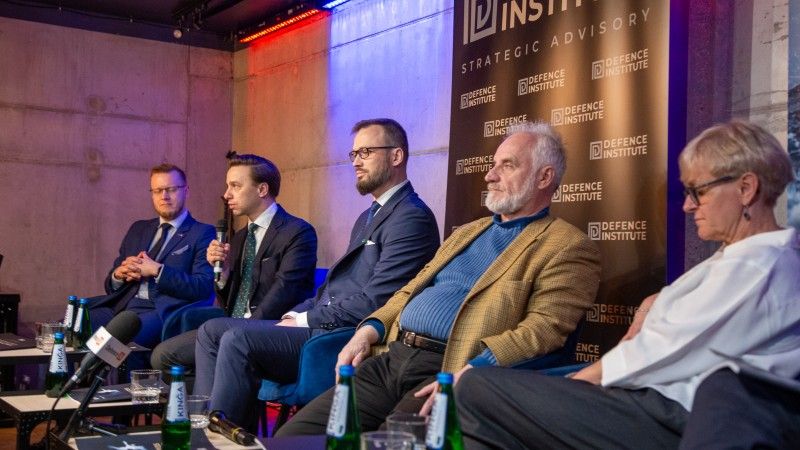
Following the presentation, a panel discussion brought together political leaders, defence officials and security analysts to explore the report’s conclusions and their implications. Among the speakers were Krzysztof Bosak, Deputy Speaker of the Polish Sejm; Maciej Samsonowicz, adviser to Deputy Prime Minister and Defence Minister Władysław Kosiniak-Kamysz; Joanna Kluzik-Rostkowska, Member of Parliament; Dr Piotr Woyke, Director of the Eastern Flank Institute; Robert Pszczel, former Director of the NATO Information Office in Moscow; and Dr Aleksander Olech, Defence Institute expert and Editor-in-Chief of Defence24.com.
The discussion underscored a shared conclusion: ensuring long-term security in the Baltic region will require far deeper economic, military and technological integration among NATO countries bordering the sea. While panellists represented different political and institutional perspectives, they broadly agreed that closer cooperation is not merely desirable but increasingly unavoidable.
In particular, participants highlighted the need to strengthen defence infrastructure, develop joint technological capabilities and deepen economic ties across the Baltic basin. Such measures, they argued, would help transform the region into a more resilient strategic hub capable of responding to emerging security challenges.
See also

The authors of „Baltic 2035” hope the report will contribute to a broader international debate on the future of security in Northern and Central Europe and encourage policymakers to view the Baltic Sea not only as a frontier of NATO, but as a cornerstone of Europe’s strategic future.
Organisers concluded the event by thanking participants and guests for what they described as a lively and thought-provoking debate on the challenges and opportunities facing the Baltic region in the coming decade.


