












- WIADOMOŚCI
- ANALIZA
Bulgaria steps back from helping Ukraine

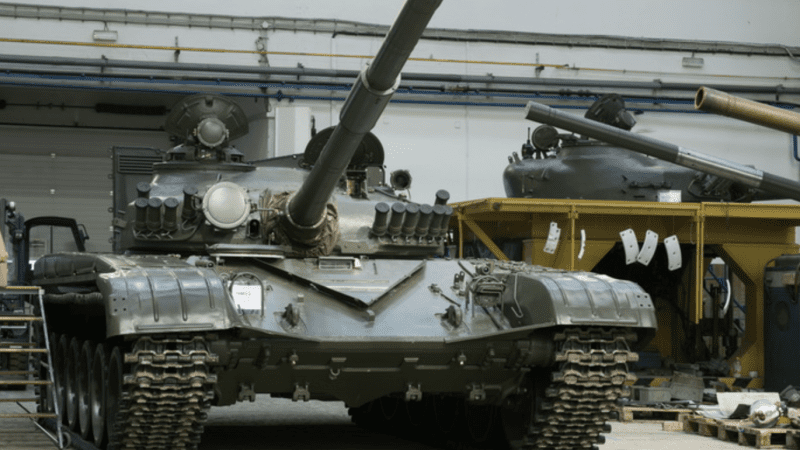
Bulgaria’s decision to stop new arms deliveries to Ukraine is not only a change in Sofia’s policy. It is another warning signal for Kyiv and for Europe. Bulgaria may remain formally loyal to NATO and the European Union, but the new government wants to separate its own rearmament from direct military support for Ukraine.
Bulgaria’s newly appointed defence minister, Dimitar Stoyanov, announced that Sofia does not plan to provide further military aid packages to Kyiv. He argued that Ukraine now needs more manpower than weapons and called for Moscow and Kyiv to return to negotiations in search of a „just peace”. This language matters because it shifts the debate from sustaining Ukraine’s military resistance to the idea that the war should now be ended primarily through diplomacy.
The decision comes after the formation of a new Bulgarian government led by Rumen Radev, whose political line has often been described as cautious towards Russia and sceptical of continued military escalation. At the same time, Bulgaria remains a member of both NATO and the European Union. This is precisely why the decision matters beyond Bulgaria itself. It is not coming from outside the Western system, but from within it.
Bulgaria has a larger defence-industrial role than the size of the country might suggest. Since the beginning of Russia’s full-scale invasion, Bulgarian ammunition and weapons have been important for Ukraine, especially because Sofia has industrial capacity in Soviet-standard calibres still widely used by the Ukrainian armed forces. Artillery ammunition, Soviet-calibre munitions, anti-tank weapons, armoured vehicles, artillery-related equipment and air-defence-related supplies have all made Bulgaria relevant for Kyiv.
See also 

For a long time, Sofia tried to avoid an open political confrontation over arms deliveries. In 2022 and 2023, Bulgarian weapons still reached Ukraine, often through intermediaries and third countries, even when the official political line was more cautious. In 2024 and 2025, Bulgaria became more open in its military support, including anti-tank missiles, armoured vehicles and artillery-related assets. The new declaration may therefore mean either a return to ambiguity or a more serious political break.
The key question is whether this is only a political declaration or the beginning of a real break in the Bulgarian supply channel. Sofia may stop official military packages, but Bulgarian ammunition and equipment can still reach Ukraine through contracts, intermediaries and European procurement mechanisms. That is why the decision should be treated seriously, but not automatically as the end of Bulgaria’s role in supporting Ukraine’s war effort.
The practical impact will depend on how far Sofia goes. One thing is to stop official donations and direct government-to-government transfers. Another is to restrict commercial arms exports, third-party deliveries, ammunition sales to European buyers or defence-industrial cooperation linked to Ukraine. The public message is strong, but implementation may be more complicated.
This also creates a problem for the 10-year defence cooperation agreement signed by Ukraine and Bulgaria in March 2026. That agreement reportedly covered defence production, drones, broader security cooperation, intelligence-related cooperation and energy issues. Sofia’s new position does not necessarily cancel the agreement, but it weakens its political credibility. Kyiv may now ask whether Bulgaria is still ready to cooperate militarily, or only in less controversial areas.

The domestic context is equally important. Bulgaria has been divided over Ukraine since 2022. Pro-Western parties supported military aid to Kyiv. Pro-Russian, nationalist and sceptical groups opposed direct arms deliveries. Many Bulgarian governments tried to manage this division by allowing indirect transfers while avoiding full political responsibility. The new government appears to be moving towards a more cautious line, shaped by voter fatigue, fear of escalation, pro-Russian sentiment in parts of the political system and pressure to focus on domestic economic problems.
There is also a clear strategic ambiguity in Sofia’s message. Bulgaria can say that it supports NATO, wants to increase its own defence spending and remains committed to European security, while at the same time refusing to arm Ukraine directly. This is politically useful at home. It avoids an openly anti-NATO position, but reduces Bulgaria’s exposure on Ukraine.
This is why the decision should not be read only through the number of weapons Bulgaria may or may not send. Its significance is political. It shows that support for Ukraine in Europe is becoming less automatic. Some governments are beginning to speak more about negotiations, national stockpiles, domestic defence needs and the human cost of the war. This language is dangerous for Kyiv because it shifts the debate from how to help Ukraine resist Russia to how to reduce support without appearing to abandon Ukraine.
The timing is also difficult. Ukraine still needs artillery shells, Soviet-standard ammunition, air defence, drones, electronic warfare systems, spare parts, armoured vehicles and battlefield mobility. Bulgaria cannot replace the United States, Germany, Poland or France politically. But it has mattered because of the compatibility of its defence industry with Ukraine’s Soviet-legacy systems. Losing political access to Bulgarian stocks or production could increase pressure on Poland, Czechia, Romania, the Baltic states and wider EU ammunition schemes.

There are several possible interpretations. This may be a real policy shift, with Sofia genuinely ending state-level military support. It may also be domestic political theatre, with indirect flows continuing quietly. It could be a bargaining tactic towards the EU and NATO, aimed at securing compensation, industrial contracts or funding for Bulgarian rearmament. It may also be a shift from donations to business: no more official arms packages, but continued commercial profit for the defence industry.
The most likely scenario may be a combination of political distancing and practical ambiguity. Bulgaria wants to reduce the domestic cost of being seen as an arms supplier to Ukraine, but it may not want to destroy the economic role of its defence sector. This model has appeared before in Bulgarian policy.


