












- WIADOMOŚCI
- KOMENTARZ
Commentary – Bulgarians voted for stabilisation, not for Russia, yet the shadow of Moscow looms

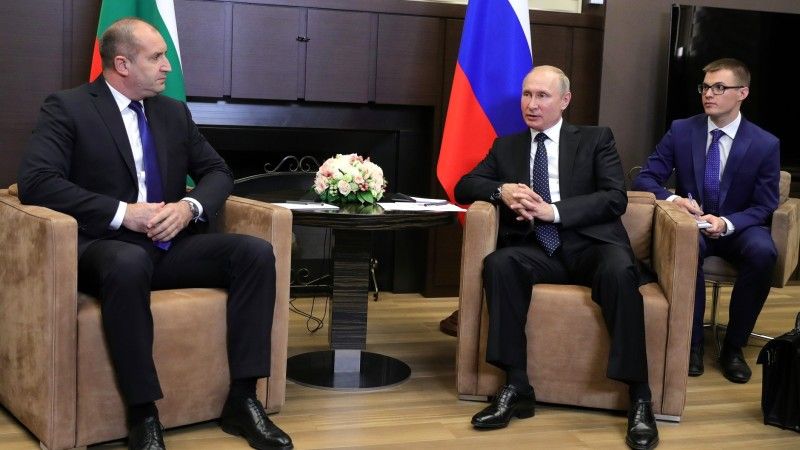
Photo. kremlin.ru / Wikipedia
Bulgarians voted for stabilisation, not for Russia. That, in my view, is the central message of the parliamentary election held on 19 April. Since 2021, the country has been trapped in a relentless cycle of snap elections, street protests and collapsing governments. Voters have grown weary of the chaos and have therefore delivered a solid majority to Rumen Radev and his left-wing coalition, „Progressive Bulgaria.”
Pro-Russian sympathies in Bulgaria run deep and have ancient roots: a shared – albeit autocephalous – Orthodox faith, the Cyrillic alphabet, a Slavic language, and a history that unites. Russia helped Bulgaria win independence in the 19th century, and during the communist era Sofia was arguably the most loyal of all Moscow’s satellites. In Bulgaria, warm feelings for Russia surprise no one. Usually it does not imply a rejection of the West, but rather an attempt to reconcile different currents. The emphasis, however, can vary. These pro-Russian traditions have endured particularly strongly within the military – and it is from the military that Rumen Radev himself emerged. There is little doubt that his stance is more pro-Russian than the Bulgarian average – perhaps considerably so.

Radev is no newcomer to the political stage. He stepped down from the presidency in January this year after serving since 2017. He is an experienced politician who understands that his country desperately needs calm and stability. The term „stabilocracy” – originally used mainly to describe political systems in the Western Balkans – applies equally well to Bulgaria. Whoever can deliver genuine stability will win the support of both Bulgarian society and the leading EU member states, and thus of the Brussels bureaucracy.
This was precisely how Boyko Borissov governed during his long dominance in the 2010s, and it is how Radev now intends to rule. His strong electoral mandate and the prospect of single-party government will greatly help him.
There are legitimate concerns that Radev may move too close to Russia. His military background and repeated public statements – against sanctions on Moscow and against what he sees as excessive Western support for Ukraine – give weight to such fears. Nevertheless, it seems more probable that he will opt for „transactional policy”, weighing every decision according to concrete national (or personal) interests, free of ideological prejudice. It is difficult to picture him as a politician who would actively block deeper European integration.

Radev – a left-wing figure – is sometimes compared to Hungary’s Viktor Orbán. Yet he does not play a comparable role on the European left to the one Orbán has played on the right, nor does he appear to harbour such ambitions. What is almost certain is that Radev’s government will combine elements of „stabilocracy” with a distinctly transactional approach.
In short, Bulgarians did not vote to pivot eastward; they voted to end the domestic political paralysis that has plagued them for five years. Whether Radev can deliver lasting stability without allowing Moscow’s shadow to lengthen remains the open – and crucial – question.


