












- WIADOMOŚCI
- KOMENTARZ
Eastern flank before the NATO summit

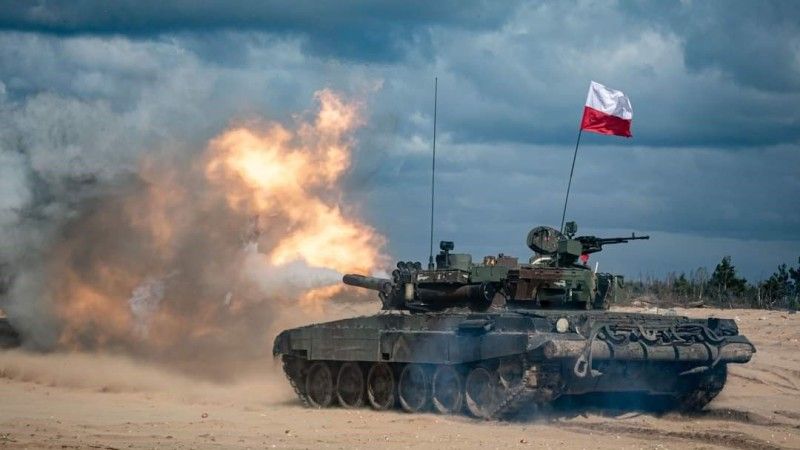
The fact that the NATO summit in Ankara will take place is already a success. The Alliance enters Türkiye with Donald Trump confirmed, Volodymyr Zelenskyy present, Indo-Pacific partners at the table and Europe under pressure to prove that it can defend more of its own continent. For Poland and the eastern flank, the question is not whether NATO can produce another declaration. The question is whether Ankara will confirm that Russia remains the main enemy and that Europe is finally ready to carry more of the conventional burden.
The confirmed presence of President Donald Trump and President Volodymyr Zelenskyy raises the political weight of the summit. Trump’s attendance matters because the United States remains the key military power in NATO, especially in long-range strike, intelligence, surveillance, logistics and command structures. Zelenskyy’s presence keeps Ukraine at the centre of allied discussions, even if Ankara will also be shaped by other theatres and political priorities.
The presence of Indo-Pacific partners will also be important. Australia, Japan and South Korea show that NATO’s strategic horizon is no longer limited to the Euro-Atlantic area. The Alliance is watching China, North Korea, the security of supply chains, maritime routes, technological competition and the link between European and Asian security. For Poland and the eastern flank, this is useful, but only if it does not dilute the main message: Russia remains the direct military threat to NATO territory.
Ankara will take place during a deeper transformation of the Alliance. Whether it is called NATO 3.0, NATO 4.0 or NATO 5.0 is less important than the substance of the change. The old model, in which Europe relied on American power while underinvesting in conventional defence, is ending. The United States expects European states to spend more, produce more and carry more of the burden for the defence of the continent.
For Poland, this direction is positive, but only if it is real. Warsaw is already among the leaders in defence spending, but Poland’s security depends also on whether Germany, France, the United Kingdom, Italy, the Nordic states and others rebuild forces, ammunition stocks, air defence, logistics and industrial capacity. A stronger Europe does not weaken Poland’s position. It strengthens deterrence on the eastern flank, provided that new spending becomes actual military capability, not accounting language.

The summit should therefore push allies towards investment in their own armed forces and defence industries. Europe needs ammunition production, drones, air-defence systems, armoured vehicles, long-range fires, cyber capabilities, military mobility and reserves. NATO cannot deter Russia with declarations about future readiness. It needs factories, stocks, trained units and command structures able to move forces quickly towards the eastern flank.
Ukraine will remain one of the central topics. Support for Kyiv is not charity and not only a political gesture. Ukraine is degrading Russian military power every day, and its survival directly affects NATO’s security. Any weakening of support would increase pressure on Poland, Romania, the Baltic states, Finland and Sweden. For the eastern flank, Ukraine is not a separate war. It is the forward line of European security.
Türkiye may also want to broaden the agenda by bringing Middle Eastern security into the summit. The presence of foreign ministers from selected Middle Eastern states will fit Ankara’s regional ambitions and the current instability around the region. This matters for NATO, but it cannot push Russia into the background. Poland and the eastern flank will expect one clear message from Ankara: the Alliance may discuss the Indo-Pacific and the Middle East, but its main enemy remains Russia.

Ankara will show what NATO is becoming. The Alliance is looking more globally, with Australia, Japan and South Korea increasingly present in its strategic thinking, while the United States signals a smaller and more selective role in Europe. This does not have to weaken NATO. It can strengthen it, if Europeans build real conventional forces and if global partners help connect the Euro-Atlantic, Indo-Pacific and industrial dimensions of security. For Poland and the eastern flank, the condition is quite clear that NATO may look wider, but it cannot look away from Russia.


