












- ANALIZA
- WIADOMOŚCI
The Europeanisation of NATO: Why Ankara 2026 could be a turning point

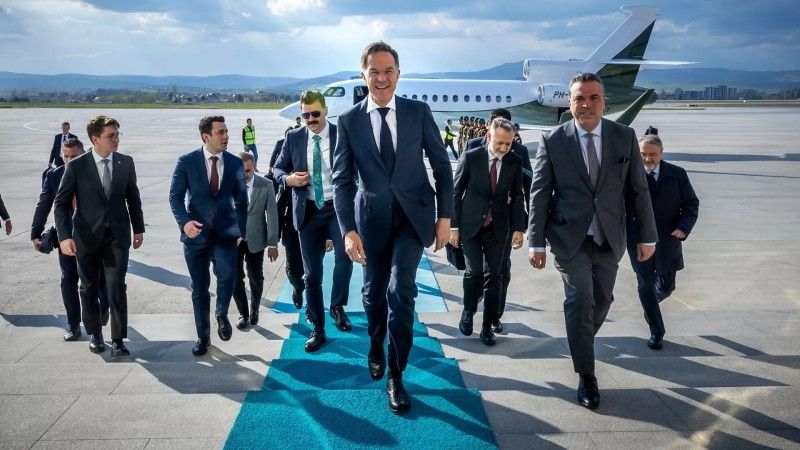
Photo. North Atlantic Treaty Organization (NATO), official website
The NATO Summit scheduled for July 2026 in Ankara could prove to be one of the most important meetings of the Alliance since the end of the Cold War. Faced with the ongoing Russian-Ukrainian war and increasingly clear signs of shifting strategic priorities, European NATO members confront the need to assume greater responsibility for the continent’s security.
NATO at a strategic turning point
One of the most important concepts currently emerging in the debate on the future of Euro-Atlantic security is the “Europeanisation of NATO”. This concept, sometimes referred to as “NATO 3.0”, envisages adapting the Alliance to new geopolitical realities by increasing the role of European states in deterrence, defence, and strategic leadership, while maintaining the transatlantic nature of the organisation. This shift is based on a process of burden-sharing, in which European allies and Canada are expected to assume a leading role in the conventional deterrence and defence of the continent, while the United States would primarily provide the nuclear umbrella and key enabling capabilities. Ankara could therefore become the venue for the official political confirmation of this process.
The "America First" doctrine and the transformation of transatlantic ties
NATO’s Europeanisation is a response to growing tensions in transatlantic relations. These tensions stem largely from both the actions of the United States itself and profound divergences in threat perceptions between Washington and European capitals. While Europe views Russia as an existential threat, the US National Defense Strategy now describes it only as a “persistent but manageable threat”, no longer perceiving it as a major military challenge. The United States is increasingly focusing on the defence of the Western Hemisphere, in line with the “America First” doctrine, as well as on issues such as security in the Indo-Pacific, economic and technological competition with China, and efforts to contain Iran’s nuclear programme.
However, it is worth noting that significant differences in threat perceptions also exist within Europe, which translate into inconsistencies in its approach to cooperation with Washington.
- Eastern and Northern European countries (including the Baltic states) prioritise deterrence against Russia and advocate for detailed operational planning in the event of a direct attack.
- Southern European states are increasingly focused on instability in the Mediterranean and the Middle East, as well as the challenge of irregular migration.
- For countries such as Türkiye, domestic and cross-border terrorism remains a key security concern.
Managing these fundamental differences – particularly the fact that the United States and Europe no longer share a common understanding of the Alliance’s primary adversary – is widely regarded as the most significant source of current tensions within NATO.
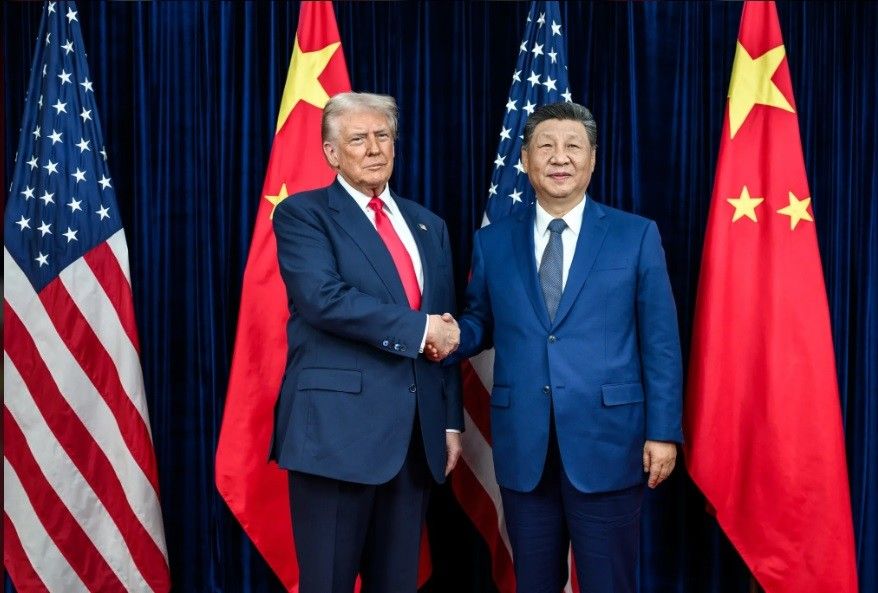
The shift in European policy is also closely linked to growing concerns about Washington’s political unpredictability, including Donald Trump’s threats to withdraw from the Alliance, the conditioning of security commitments on political objectives (for example, support for US policy in the Middle East), and unilateral decisions regarding the withdrawal of American troops from Europe, including Germany. Such uncertainty undermines the credibility of deterrence, making reliance on US security guarantees increasingly problematic from a European perspective.
This strategic shift, combined with the US administration’s transactional approach to the Alliance, is contributing to a gradual reduction of the American military presence in Europe. Among other measures, the Pentagon has announced the withdrawal of 5,000 troops from Germany, the suspension of plans to deploy 4,000 troops to Poland, the cancellation of conventional cruise missile deployments in Germany, and a permanent reduction in the number of Brigade Combat Teams (BCTs) assigned to Europe from four to three. By 2027, it is expected that the United States may be able to provide only half – or potentially even less – of the Alliance’s overall combat capabilities.

As a result, public sentiment across Europe has begun to shift. Declining trust in the United States is increasingly reflected in public opinion. Polls indicate that more than 70% of Europeans believe that, after decades of close cooperation with Washington, Europe should prioritise greater strategic autonomy or, at the very least, diversify its security partnerships as much as possible. In this context, Europeanisation is not an attempt to exclude the United States from the Alliance, but rather a pragmatic contingency plan and a means of safeguarding European security in the event that US support during a crisis proves limited, delayed, or constrained by political considerations.
Consequences of reducing the US military presence
The changes taking place in US strategy have not only political but also military dimensions.
In recent years, reports have emerged of a reduction in the US military presence in Europe, a decrease in the number of brigade combat teams, and a revision of plans for the deployment of new missile systems.
According to numerous analyses, after 2027, the United States may only be responsible for approximately half of NATO’s combat capabilities. This would constitute the largest change in the Alliance’s structure since its inception.
For European countries, this means the need to independently supplement their capabilities and create their own political and military command structures, which Washington has provided for decades. This process includes several key elements:
- increasing defence spending to a level exceeding 5% of GDP;
- Europeans assuming greater responsibility for NATO’s operational command;
- developing a European defence industry;
- increasing Europe’s share in financing military support for Ukraine;
- building its own conventional deterrent capabilities.
The E5 format as the basis for NATO’s "European pillar"?
The response to the erosion of American guarantees is the construction of a European pillar within NATO, the architecture of which is based on the emerging balance of power on the continent. The E5 format, bringing together the continent’s largest military powers – France, Germany, Great Britain, Italy, and Poland – plays a key role in shaping the new security structure.
The emergence of this initiative, however, is not a random development but a deliberate one. A growing number of European capitals are realising that the European Union’s decision-making mechanisms are too slow and inefficient, due to the need for collective approval, to respond effectively to the rapidly deteriorating security environment.
In light of these trends, speculation regarding the potential evolution of the E5 format is increasingly emerging. Some experts believe that this format could ultimately evolve into an informal European Security Council, bringing together the countries with the greatest military potential and the ability to make strategic decisions quickly. This structure would help overcome some of the procedural constraints of the European Union while creating a space for cooperation with non-EU countries, particularly the United Kingdom, Norway, Canada, and Türkiye. The creation of such a forum could significantly influence the future shape of NATO’s European pillar and strengthen Europe’s ability to respond independently to security threats.
This process has already reached an operational level, with European officers taking over command of NATO’s three regional Joint Force Commands from American officers. Preparatory discussions within the Alliance are increasingly focused on realising the vision of a “European-led and European-owned NATO”. The most significant challenge, however, remains the creation of effective political and military command structures capable of managing potential conflict escalation without having to rely on Washington’s decisions.

Operational gaps: ELSA, deep strike, and the subscription model
The war in Ukraine has demonstrated that the ability to strike targets hundreds of kilometres behind the front lines is crucial to effective warfare. However, the current capabilities of many European countries remain limited. The Ankara Summit will force them to confront the capability gaps that have emerged in European arsenals as a result of their long-term reliance on American technology.
One of the greatest weaknesses is long-range precision strike capability. Currently, European conventional systems are limited to a range of approximately 500 kilometres, leaving Russian operational and logistics bases beyond their reach. To address this challenge, the ELSA initiative (European Long-Range Strike Approach) was established, a programme focused on building European capabilities to conduct long-range precision strikes (so-called deep strikes). ELSA is intended to enable the development of a European “strike chain”, encompassing sensors, reconnaissance systems, intelligence analysis systems, and weapons capable of striking deep into enemy rear areas.
While this is a promising step toward closing this gap, the project currently suffers from an excessive focus on platforms (i.e., acquiring missiles) while neglecting system integration. Simply acquiring missiles is not the same as building a comprehensive strike system. For ELSA to truly strengthen Europe operationally, it must integrate modern sensors, intelligence fusion systems (ISR), and real-time decision-making mechanisms. Without this, cutting-edge missiles will be merely “expensive signalling devices” rather than tools capable of shaping the battlefield. To build these and other key capabilities – including naval systems, unmanned aerial vehicles, and air defence systems – European countries must drastically increase funding. The current threshold of 2% of GDP for defence has become insufficient and therefore obsolete, which is why the new benchmark is 5% of GDP.

Equally important is the reform of the military procurement process itself. The introduction of a so-called “subscription” model, based on multi-year framework agreements rather than one-off tenders, is intended to provide arms manufacturers with predictable demand and enable continuous production. Such a solution would keep the defence industry constantly prepared and enable the faster deployment of new technologies on the battlefield. Ukraine’s experience has shown that the advantage often goes not to those with the most expensive weapons systems, but to those able to produce them faster and in larger quantities.
Is a European pillar of NATO emerging?
The most important question today is not whether the Europeanisation of NATO will occur, but how quickly it will proceed.
Many indications suggest that Europe is gradually building its own security pillar within the Alliance. The development of the E5 format, the ELSA initiative, increased defence spending, and the growing role of countries like Poland and Türkiye are all part of the same process.
The greatest obstacle, however, remains the lack of unified European political leadership and mechanisms for rapid strategic decision-making.
The NATO Summit in Ankara could become the moment when European states officially accept the need to take greater responsibility for their own security. If this happens, Ankara 2026 will be remembered not only as another Alliance summit, but as the beginning of a new phase in NATO’s history—a phase in which Europe ceases to be merely a recipient of security and becomes its main co-creator.


