












- ANALIZA
- WIADOMOŚCI
Europe at geopolitical crossroads: two competing visions at stake

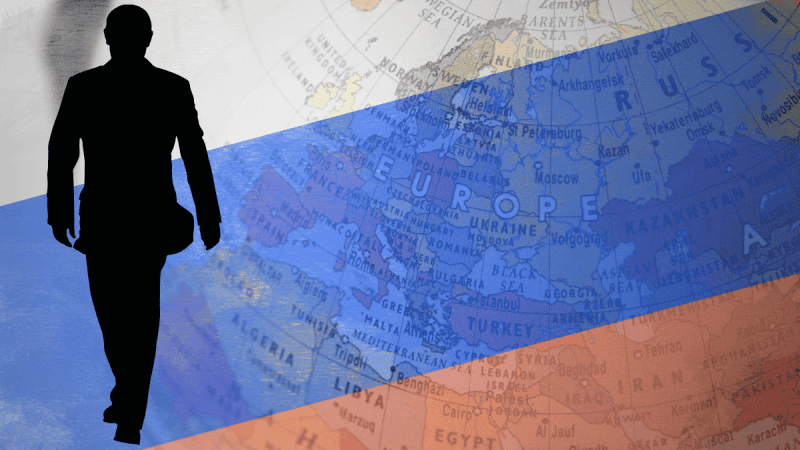
The strategic failure of Russia in Ukraine and the following geopolitical emancipation of Central and Eastern Europe have strengthened the region’s voice in shaping the continent’s future trajectory.
The strategic failure of Russia's invasion of Ukraine
The primary objective of Russia’s aggression against Ukraine was to halt the processes of its imperial disintegration that began with the collapse of the Soviet Union. Vladimir Putin, defining Russia’s policy in neo-imperial terms, sought to restore lost influence across the post-Soviet area and reassert Russia’s status as a global power.
However, in the long term, the invasion of Ukraine not only failed to achieve these goals but also accelerated the erosion of Russian influence on the international stage. Moscow’s actions strengthened internal cohesion within the European Union, drove NATO’s expansion, and intensified transatlantic cooperation, which in turn weakened Russia’s influence in Europe and beyond.
The geopolitical emancipation of Central and Eastern Europe
The Russian invasion of Ukraine marks a turning point for the whole region, clearly revising the historically entrenched division between a “civilised” Western Europe, long perceived as unified, developed, and politically strong, and a “backward” Central and Eastern Europe, long operating in the shadow of Russian influence. This is why Central and Eastern European states were often treated as peripheral within the broader European system. The conflict has significantly helped deconstruct this narrative, strengthening the strategic role of the region’s countries and demonstrating that they are able to pursue an independent foreign policy.
See also 

Growing external and internal pressures on Russia's foreign policy
Faced with the shifting international order, the Russian Federation faces a range of challenges that may soon shape its future foreign policy. First and foremost, Russia’s growing international isolation, particularly following its aggression against Ukraine and the imposition of economic sanctions by the European Union and the United States, has already forced Moscow to adjust its foreign policy priorities.
In addition, increasing social resistance to the country’s authoritarian model of governance, together with deepening economic difficulties, may generate internal pressure that could ultimately lead either to political reforms or to a redefinition of foreign policy priorities.
A tale of two geopolitical visions for Europe
At the beginning of the 21st century, two major geopolitical visions emerged in Europe, both of which may gain importance in the future, especially after the end of the war in Ukraine. The first concerns the ambitious aspirations of Germany and France to create a distinct European geostrategic pole independent of the United States, drawing on the European Union’s economic potential.
In practice, this vision would imply the emergence of two central geopolitical hubs in Europe, based in Berlin and Paris, which would shape the direction of European integration while competing for strategic dominance in the region. At the same time, the shared objective of both capitals would be to balance the United States’ dominant position.
Especially in the pre-2014 period, both Paris and Berlin appeared largely willing to accommodate Russia’s expectations regarding the restoration of its lost influence in Eastern Europe, including Belarus, Ukraine, and other former Soviet republics. Western European capitals, mindful of the potential consequences of provoking Moscow, pursued a policy of appeasement, effectively blocking further enlargement of NATO and the European Union, particularly for Ukraine.
A clear example of this approach was the decision at the 2008 Bucharest Summit, where both Germany and France opposed granting Georgia and Ukraine a Membership Action Plan in the North Atlantic Treaty Organization. Such actions were motivated by a desire to preserve regional stability by avoiding further eastward expansion of NATO, which could have been perceived by Russia as a direct threat to its geostrategic interests.
The second geopolitical vision was represented by the United Kingdom, some Central European countries, and the Baltic states, which prioritised stronger transatlantic ties and a stronger United States military presence on the European continent. In this conception, the United States would serve not only as a security guarantor against potential Russian aggression, but also as a safeguard and counterbalance to excessive French and German influence over European integration processes.
These concerns were particularly pronounced among the post-2004 EU member states, which feared German dominance in the region and across the European Union as a whole. In particular, political elites in Central and Eastern Europe were wary of a potential revival of geo-economic cooperation between Berlin and Moscow “over the heads” of their countries.
In this context, deepening energy cooperation between Germany and Russia, especially through projects such as the Nord Stream pipeline, represented a tangible threat to Central and Eastern European states, which feared that their interests could be sidelined in favour of closer economic and political ties between the two major powers.
In response to these concerns, Central and Eastern European states sought to deepen regional cooperation as a counterweight to a broader European integration trajectory perceived as dominated by Germany. This second geopolitical vision therefore rested on strengthening transatlantic ties while simultaneously deepening regional cooperation among Central and Eastern European countries.
Its supporters advocated a more decentralised model of integration, opposing efforts to centralise the European Union and transform it into a quasi-federal superstate potentially dominated by its largest Western members. Instead, they proposed a “Europe of nations” model, in which cooperation among member states would be based on subsidiarity, with respect for national sovereignty and diversity within shared political structures. For them, such a model would minimise the risk that decision-making within the Union would be dominated by a few of its most powerful member states.


