












- WIADOMOŚCI
- ANALIZA
NATO must exercise more – and closer to Russia

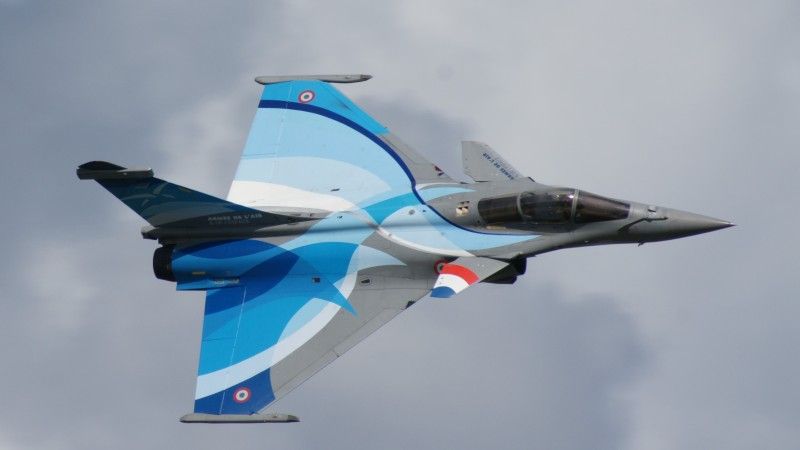
Photo. Jarosław Ciślak/defence24.pl
Large multinational exercises are becoming one of the most important elements of deterrence. They test logistics, interoperability and the ability to deploy combat aircraft over thousands of kilometres, but they also have a political function. Russia regularly uses military exercises close to NATO borders to demonstrate pressure and readiness. The Alliance should do exactly the opposite: show that allied forces can move quickly, integrate with partners and operate effectively from the Arctic to the Black Sea and the Indo-Pacific.
France has now launched Pégase 26, one of the most ambitious French air deployments of recent years. Around 300 personnel, four Rafale fighters, three A330 MRTT tankers and two A400M transport aircraft will cover more than 40,000 kilometres in 40 days. The route connects three strategic areas: the Arctic, the Indo-Pacific and the Middle East. It begins in Greenland, continues through Canada and Alaska, and then moves through Japan, South Korea, Indonesia, India, La Réunion, Qatar and Egypt.
The importance of Pégase 26 lies not only in the number of kilometres flown. France is testing whether it can deploy a combat package far from Europe, sustain it logistically, refuel it in the air and integrate it with foreign forces. Four Rafales alone do not create strategic effect. The important element is the entire system around them: tankers, transport aircraft, maintenance, command structures, communications and access to partner bases.
✈️🌏 La mission de déploiement aérien de longue portée « #PEGASE26 » menée par l’Armée de l’Air et de l’Espace est actuellement en cours !
— La France au Japon🇫🇷🇪🇺 (@ambafrancejp) September 9, 2026
Pendant 40 jours, du 8 septembre au 15 octobre, un dispositif composé de quatre Rafale F4, trois A330 MRTT et deux A400M parcourra le monde… pic.twitter.com/8YbYT6Ifvl
The Arctic phase is particularly important. French forces are using Greenland and the northern route to test operations in severe climatic conditions and to validate a new projection corridor towards Japan and the Indo-Pacific. France is also participating in Arctic Endurance with Denmark. This is a practical element of European defence in a region where Russia maintains substantial military capabilities and where the importance of air and maritime routes is increasing.
The Indo-Pacific phase is equally significant. France is not entering the region as an outside visitor. It has territories, citizens and permanently deployed forces there. Pégase 26 therefore combines French sovereign interests with cooperation with Japan, South Korea, Indonesia and India. The mission includes participation in Tarang Shakti in India, while French aircraft are also expected to strengthen cooperation with Japan, one of Paris’s most important partners in the region.

The final part of the deployment leads towards the Middle East and Egypt. French aircraft will operate through Qatar and later participate in Amun in Egypt. This means that within one deployment the same force package will move from Arctic conditions through the Indo-Pacific to the Middle East. For an air force, this is a serious test of readiness and sustainment, not simply a diplomatic tour.
This should also be viewed together with allied activity on NATO’s eastern flank. Polish, French and Belgian air forces have recently conducted joint reconnaissance flights over the Black Sea. The purpose was to improve cooperation in the air and maritime domains, build common situational awareness and demonstrate that different NATO air forces can operate together close to areas of direct Russian military activity.
Polskie, francuskie i belgijskie siły powietrzne wykonały wspólne loty rozpoznawcze nad Morzem Czarnym.
— Władysław Kosiniak-Kamysz (@KosiniakKamysz) September 9, 2026
Głównym celem było doskonalenie zdolności wspólnego działania w przestrzeni powietrznej i na morzu oraz przestrzeganie prawa międzynarodowego.
Takie wspólne misje to wyraz… pic.twitter.com/ZukT9FoGIS
These missions are especially important because they involve several allies rather than one country acting alone. Interoperability cannot be built during a crisis. It has to be practised before the crisis begins. Pilots must know procedures, aircrews must be able to coordinate refuelling and communications, headquarters must exchange information quickly, and national systems must work together. The more countries participate, the more credible this becomes.
There is also a clear signalling dimension. Russia and Belarus regularly conduct exercises close to Poland, Lithuania and other NATO states. Every such manoeuvre is closely observed in Europe and often presented by Moscow as proof of Russian readiness. NATO should not limit itself to monitoring these activities. It should conduct its own large exercises more frequently around the Baltic region, the Black Sea, the High North and the eastern flank.
This does not mean creating unnecessary escalation. It means demonstrating capability. Russia should know that NATO can rapidly move combat aircraft from France, Germany, the United Kingdom or other allied states to Poland or the Baltic states, support them with tankers and transport aircraft and immediately integrate them into local operations. The same applies to maritime forces, air defence and long-range strike capabilities.
Pégase 26 is particularly useful because it demonstrates something Europe still needs to improve: strategic mobility. It is one thing to possess modern fighters. It is another to be able to move them thousands of kilometres, keep them operational and connect them with allied forces. In a real crisis on NATO’s eastern flank, speed of deployment would be as important as the number of aircraft available.
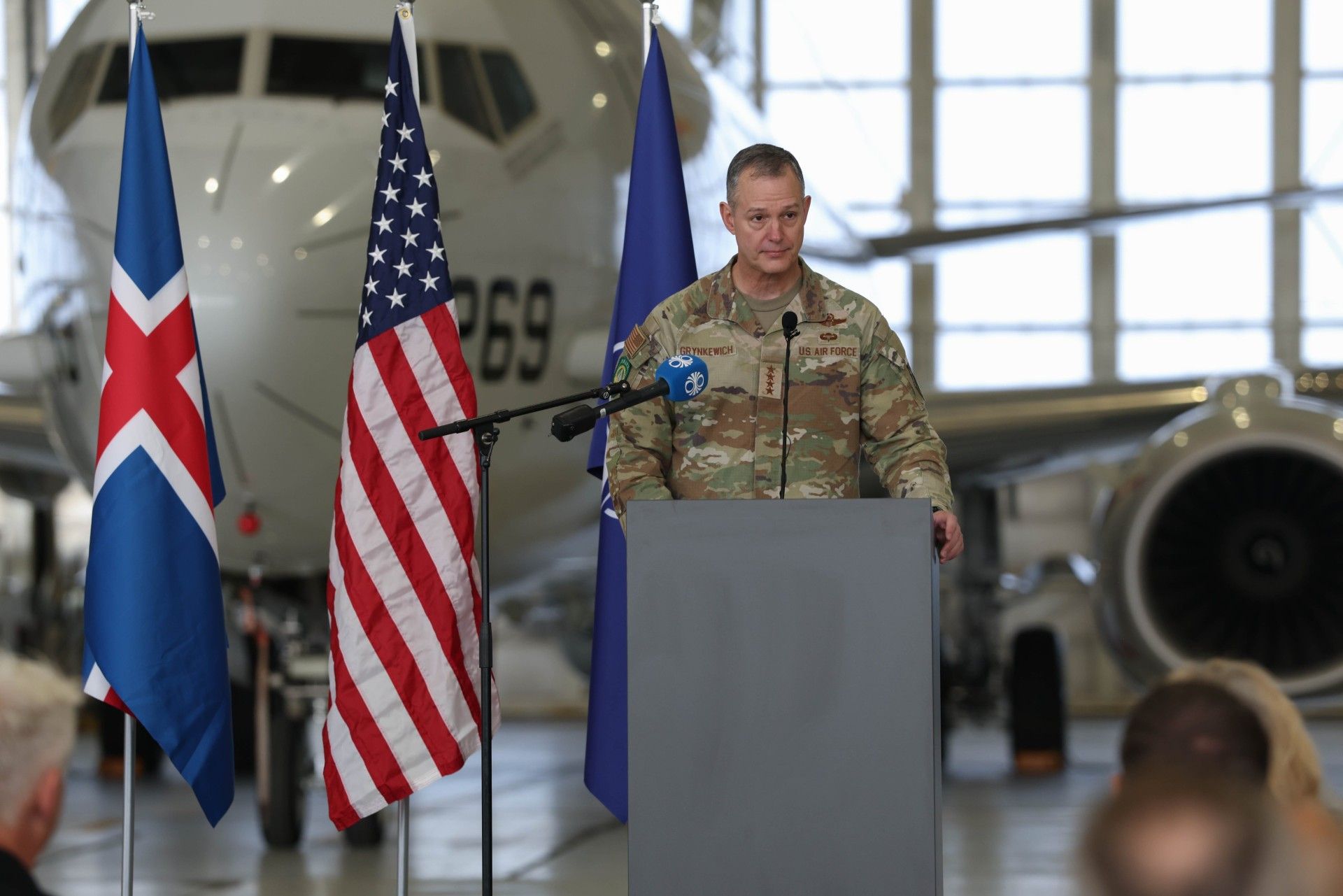
The same logic applies to the Black Sea. Joint Polish, French and Belgian flights are not only reconnaissance missions. They also demonstrate presence, information sharing and the willingness of several NATO members to operate in a strategically sensitive area. Such missions should become more regular, particularly because Russia continues to test NATO responses through military activity, electronic warfare, hybrid operations and pressure below the threshold of open conflict.
This is why exercises such as Pégase 26 should be conducted more often and with as many allies as possible. They improve real military capabilities, but they also communicate political determination. Russia should not only see NATO forces stationed on the eastern flank. It should regularly see how quickly additional allied forces can arrive, integrate and operate. Deterrence is strongest when the potential adversary sees not only our weapons, but also that we know how to use them together.


