- ANALIZA
- WIADOMOŚCI
- WAŻNE
- KOMENTARZ
Putin’s old trick: inventing a Polish plan to partition Ukraine

The latest suggestion that Poland, Hungary and Romania may eventually seize parts of western Ukraine should not be treated as a new Russian assessment or a genuine territorial scenario. It is an old Kremlin information operation, repeatedly used to create mistrust between Ukraine and the countries supporting it. Russia is once again attempting to present its own aggression as a response to the alleged imperial ambitions of others.
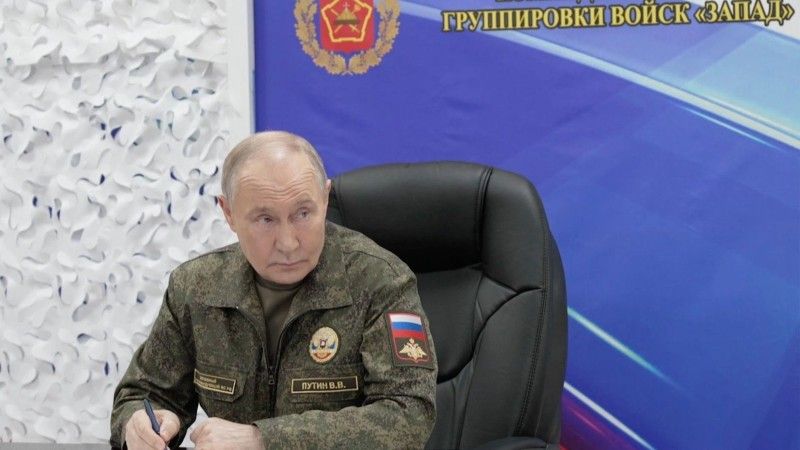
During a meeting with Russian naval personnel in St Petersburg, Vladimir Putin claimed that Ukraine would sooner or later lose its western territories. He referred to lands that had previously belonged to Poland, Hungary and Romania, suggesting that history would eventually restore them to those states. At the same time, he attempted to portray Russia as the only power capable of guaranteeing Ukraine’s territorial integrity.
This construction is deliberately paradoxical. Russia is the state occupying Ukrainian territory, attempting to annex it and conducting a war intended to deprive Kyiv of the ability to make sovereign decisions. Nevertheless, the Kremlin presents Poland and other neighbouring countries as potential aggressors. In this narrative, Moscow is not responsible for dismantling Ukraine. It is allegedly protecting Ukraine from the West.
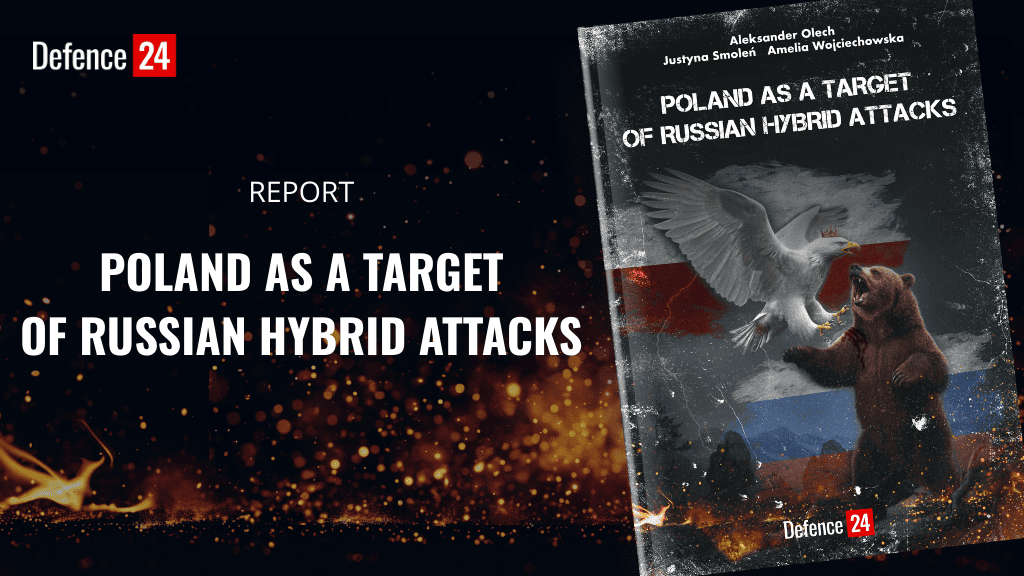
This is not a new message. The report Poland as a Target of Russian Hybrid Attacks identifies claims about supposed Polish plans to occupy western Ukraine as a recurring element of Russian and Belarusian information operations. Similar narratives were intensified in 2023 alongside content portraying Poland as hostile towards Ukrainians, aggressive towards its neighbours and dissatisfied with the existing borders.
The reverse aggressor
The method is one of the oldest tools in the Kremlin’s playbook. Russia transfers responsibility for its own actions to the countries opposing them. The aggressor becomes the alleged defender, while the states supporting the victim are presented as the real threat. Polish military assistance is therefore described as preparation for occupation, the presence of Polish volunteers becomes evidence of an undeclared intervention, and political cooperation between Warsaw and Kyiv is recast as a plan to subordinate Ukraine.
Such a message does not need to convince the majority of Poles or Ukrainians. Its purpose is to introduce doubt. A small group may begin to ask whether Poland really expects something in return for its support. Others may suggest that Warsaw is prolonging the war to weaken Ukraine and later exploit it. In Poland, the same operation can be reversed by claiming that Ukrainians are ungrateful, hostile or planning to revise historical disputes at Poland’s expense.
The historical dimension is particularly important. Moscow understands that Polish-Ukrainian relations contain unresolved and emotionally charged issues. The history of Volhynia, the former Polish eastern territories and the place of Lviv in Polish historical memory can all be used to generate conflict. The Kremlin does not need to invent every disagreement. It selects real historical wounds, removes them from their wider context and then combines them with false claims about current territorial ambitions.
The inclusion of Hungary and Romania serves the same purpose. Each country has its own historical relationship with territories now belonging to Ukraine and its own domestic political debate. By naming several neighbours, Putin is trying to create the impression that Ukraine is surrounded by states waiting for an opportunity to divide it. Russia can then present itself as a permanent power, while European support appears temporary, conditional and dishonest.

The objective is not territory but division
The Polish Ministry of Foreign Affairs was right to reject the suggestion unequivocally and to reaffirm that Poland recognises Ukraine’s sovereignty and territorial integrity within its internationally recognised borders. Warsaw has no territorial claims against Ukraine. However, it is also important to understand that the Kremlin’s objective is not to start a serious debate about borders. It is to provoke emotional reactions and force Poland and Ukraine to defend themselves against a scenario created in Moscow.
The report on Russian hybrid attacks shows that information operations are not isolated from other hostile activities. They form part of a wider campaign involving sabotage, cyberattacks, espionage, migration pressure, reconnaissance of military infrastructure and attempts to exploit existing social divisions. Taken separately, individual incidents may appear limited. Taken together, they reveal a consistent strategy aimed at weakening state institutions, exhausting security services and undermining allied cohesion.
Poland is a particularly important target because it remains a major logistics hub for military and humanitarian assistance to Ukraine. For the Kremlin, weakening Polish-Ukrainian relations would bring direct operational benefits. Less political trust means more difficult military cooperation. More hostility towards Ukrainians in Poland means greater pressure on the government to limit assistance. More suspicion towards Poland in Ukraine makes cooperation between the services and armed forces more complicated.
The Russian objective is therefore not necessarily to persuade anyone that Polish troops will enter Lviv tomorrow. The objective is to make this claim permanently present in the information space. It can then be reactivated during an election campaign, a dispute over agricultural imports, a historical anniversary, a criminal case involving a Ukrainian citizen or another disagreement between Warsaw and Kyiv.

One narrative, several audiences
The same statement is directed towards several audiences simultaneously. For Russian society, it justifies the war by portraying Russia as the defender of a state supposedly threatened by its Western neighbours. For Ukrainians, it is intended to generate suspicion towards Poland and other partners. For Poles, it revives historical sentiment and encourages the belief that support for Ukraine is either too costly or connected to unspoken territorial expectations.
The message is also directed at Western European audiences. It suggests that Central and Eastern Europe is driven by old national conflicts and cannot be trusted to build a stable regional order. Russia can then argue that only negotiations between the major powers are capable of deciding Ukraine’s future, while Poland, Romania, Hungary and Ukraine should remain objects rather than participants in the security architecture.
This approach corresponds with the wider Russian objective of creating divisions inside individual states and between NATO members, while simultaneously reducing support for Kyiv. The report stresses that Moscow’s hybrid activities are long-term and planned. Their purpose is not necessarily to provoke an immediate crisis, but to test resilience, increase political costs and gradually push governments towards concessions.

The Polish-Ukrainian relationship is the target
A particularly dangerous element is the use of Ukrainian citizens in Russian-organised sabotage and espionage operations. The report shows that Russian services deliberately recruit Ukrainians, often for financial reasons, and then exploit their nationality in the information space. The act is carried out on behalf of Moscow, but headlines focus on the fact that the detained person held a Ukrainian passport. This allows Russia to conduct an operation and simultaneously blame Ukraine for its consequences.
The same logic applies to the narrative about territorial partition. Russia creates a false Polish threat and then waits for Polish and Ukrainian commentators to argue with one another about history. The initial claim may be absurd, but the discussion it produces can be real and damaging. Russian disinformation is effective not only when people accept a lie in full, but also when they repeat it, become emotional and allow it to determine the public debate.
For this reason, Poland and Ukraine need closer information cooperation, not only diplomatic declarations issued after each new provocation. Both governments should expose the recurring pattern, explain its objectives and coordinate communication before the narrative spreads widely. The report also identifies shortcomings in bilateral information-sharing and stresses that stronger cooperation is needed in countering sabotage, diversion and Russian recruitment networks.

Do not debate the Kremlin's invented map
The correct response is not to enter a long discussion about which territories belonged to which state several generations ago. This is precisely the terrain chosen by the Kremlin. Historical research and remembrance remain necessary, but they cannot be allowed to legitimise a Russian information operation concerning the present borders of a sovereign country. The response should be quite simple that Poland has no territorial claims against Ukraine; and Russia is the state occupying Ukrainian territory. The Kremlin’s statements are intended to provoke antagonism between Kyiv and its allies and to distract attention from Moscow’s responsibility for the war.
At the same time, merely denying each statement is not enough. Europe must move from reactive communication to actively exposing the methods, networks and strategic objectives behind Russian operations. Transparency itself becomes a form of defence because it deprives Moscow of the ability to present every incident as separate, accidental or misunderstood. For now, we are lacking media/accounts that are genuinely presenting the narrative that should be followed. Everything is about and for politics.
Ultimately, Putin’s remarks are not about the historical borders of Poland, Hungary or Romania. They are about the present cohesion of the coalition supporting Ukraine. This is an old Russian trick: invent the territorial ambitions of neighbouring states, present Russia as the only guarantor of stability and wait for historical emotions to weaken political cooperation. Russia wants Poles and Ukrainians to distrust one another, to argue about the past and to forget who is currently changing European borders by force. Every division between Warsaw and Kyiv is a success for Moscow, while every coordinated response makes this old Russian operation less effective.
This article is intended to remind you of that.