












- WIADOMOŚCI
Ratcliffe moves between Moscow, Cairo and Zelenskyy

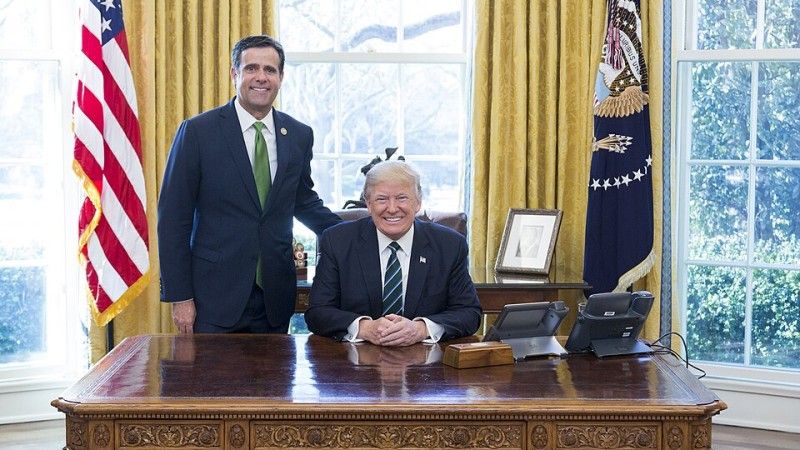
Photo. Office of Congressman John Ratcliffe / Wikimedia Commons
CIA Director John Ratcliffe is increasingly appearing in some of the most sensitive diplomatic and security files handled by Washington. In less than a month, he has travelled to Moscow, met Egyptian President Abdel Fattah el-Sisi in Cairo and now spoken directly with Volodymyr Zelenskyy at Shannon Airport in Ireland. This is not traditional diplomacy. It shows how the United States can use its intelligence leadership as an additional channel in conflicts where political negotiations alone are insufficient.
The meeting with Zelenskyy was informal and took place while their aircraft were being refuelled. No details were released, but the timing is important because Zelenskyy was travelling to New York for the UN General Assembly and talks with President Donald Trump, while Ratcliffe was returning from Egypt. Less than a month earlier, the CIA director had been in Moscow for discussions with senior Russian intelligence officials, including SVR chief Sergei Naryshkin. Reuters reported that Ukraine was among the subjects discussed.
Cairo is the second part of this picture. Ratcliffe met President el-Sisi on 20 September together with Egyptian intelligence chief Hassan Rashad. According to the Egyptian presidency, the talks covered strategic US-Egyptian relations and regional security; Egyptian reporting also pointed to Iran, Gaza, Sudan, Somalia, the Horn of Africa and maritime security. Egypt remains one of the few states capable of talking simultaneously to Washington and several actors involved in the Middle East’s most difficult crises.
Ratcliffe should therefore not be described as a formal peace envoy. His role is different and now is becoming a high-level intelligence channel used to test positions, exchange warnings, assess intentions and maintain contact where normal diplomatic formats may be too slow or too public. Moscow, Cairo and the meeting with Zelenskyy all fit this pattern, even though the substance of the conversations remains largely classified.
There is also a broader demonstration of American power here. The United States is able to combine presidential diplomacy, special envoys, military pressure and intelligence channels at the same time. Ratcliffe can speak to Russian intelligence in Moscow, discuss Middle Eastern crises with the Egyptian president and then meet the Ukrainian president during a refuelling stop before the UN General Assembly. That is not only diplomacy, but it demonstrates the reach of the American state and the number of channels Washington can activate simultaneously.

The key question is whether these contacts produce political results. Ratcliffe can test Russian intentions, exchange assessments with Ukraine and work through Egypt on the Middle East, but intelligence channels cannot replace political decisions in Washington, Moscow or Kyiv. What they can do is reduce uncertainty – and in several current conflicts, that may be precisely why Ratcliffe is increasingly being sent to the most difficult places.
The next stop for Ratcliffe would be the Kingdom of Saudi Arabia, in the context of Houthi strikes, followed by a country in Central and Eastern Europe, in order to assess whether the threat from Russia is indeed as extensive as reported.


