- WIADOMOŚCI
- ANALIZA
- OPINIA
- KOMENTARZ
The mechanics of control: How Russia manages its ballots

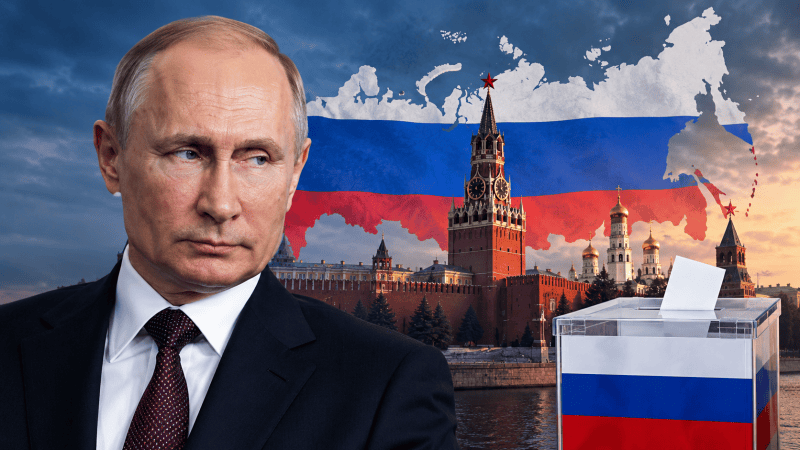
The Russian authorities call elections to one of the houses of parliament. However, in virtually every aspect—apart from the facade-like activities—it is difficult to argue that these were real, competitive, and democratic elections. One must therefore consider why the Kremlin authorities cultivate this kind of exercise in a state that long ago ceased to accept democratic principles.
In Russia, so-called “elections” were conducted—or rather, an electoral process was carried out—for the State Duma, one of the two houses of parliament (the other being the Federation Council). By local standards and in line with the Kremlin’s assumptions, the authorities blocked any opposition activity to prevent even the slightest signs of discontent. This included eliminating any parties not fully under Kremlin control (the latest example being the Supreme Court’s denial of the Yabloko party’s ability to participate). Indeed, only the “victorious” party of power—United Russia—and licensed opposition parties or, as in many non-democratic states, so-called allied parties were allowed to take part.
Guaranteed turnout and guaranteed success for the authorities
Ultimately, it was announced, among other things, that the turnout for the three-day electoral event was almost 57%, compared to 51.72% in 2021. Over 111 million Russians were officially eligible to vote. Voting was carried out through traditional methods as well as i-voting (the Vybory 2.0 system). Putin’s “United Russia” reportedly secured over 57.54% (which also represents progress), while the second-placed Communist Party of the Russian Federation received 13.81%, the Liberal Democratic Party of Russia (LDPR) 8.93%, and New People 7.97%.

Of course, any data publicly released by Russian state agencies must be treated as elements of pure propaganda messaging. First and foremost, Russia long ago ceased to function as a democratic state, and scholars may debate whether it is now a fully totalitarian state or a severe form of authoritarianism. Yet this does not change the diagnosis that the so-called elections are largely facade-like, though it must also be added that Vladimir Putin’s regime has a genuine base of support within society. The motivations for this state of affairs vary, ranging from effective propaganda to the genuine views of a significant portion of the electorate.
However, given today’s Russian standards, any public opinion research must be approached with great caution, firstly, because the state is inherently difficult to measure due to the vastness of its territory, its internal structures, and the size of the population itself. Secondly, after years of increasing systemic oppression, even respondents’ honesty raises valid doubts.
Without a shadow of a doubt, election transparency does not exist in Russia; the elections lack real competitiveness, and any deviations from the set goals are neutralised through administrative and repressive influence. This ranges from pressure exerted on voters through workplaces and the power apparatus to actions by Russian security services, led by the Federal Security Service (FSB) and Rosgvardia. The ruling elite once before in history—in the context of presidential elections—triggered relatively large-scale street demonstrations by Russian standards.

Therefore, every subsequent electoral process is carefully controlled through the preventive suppression of various forms of resistance. It should be remembered that during the period of Russian aggression against Ukraine, the security apparatus in Russia possesses additional tools, drawing on all new anti-terrorist regulations and laws protecting the reputation of the armed forces.
A system ready for large-scale fraud
Given this architecture of the so-called election system, one can safely assume that the results and all other statistics were essentially prepared in advance at a strategic level. Meanwhile, the i-voting system, heavily promoted by the ruling elite, could stabilise any problems with voter behaviour according to the Kremlin’s plans, firstly, because it allows voting to be easily manipulated, and secondly, because it enables the detection of any dissenting votes. Furthermore, smaller crowds at traditional polling stations also mean a lower chance of any anomalies occurring relative to the regime’s plans.
Nor can one overlook that, even under current conditions, materials repeatedly leak from electoral commissions, illustrating the scale of possible violations of electoral regulations.
See also 

One must ask why non-democratic states frequently resort to electoral processes in their political activity. Several key tasks assigned to such “elections” can be highlighted here. The first is mobilising the state and the power apparatus. Emotions surrounding the ruling elite are activated or periodically stimulated. At the same time, the apparatus and the new nomenklatura are tested on their ability to meet the central authorities’ pre-imposed expectations for efficient electoral processes within their areas of responsibility.
In the case of Russia, which has been conducting a costly aggression against Ukraine for years, this is potentially vital for a regime that can no longer fully conceal significant personnel losses—a factor that is particularly relevant at a time when part of the fighting has spilled over into targets inside Russia through Ukrainian missile and drone strikes.
The second reason is the regime’s attempt to measure actual sentiment in the country, regardless of official results. Even minor manifestations of disobedience, turnout deficits in regions, and other issues in relations with authority represent valuable input in non-democratic states for “political engineers” (referring to Russian models) and security service analyses. What is presented officially is one thing, while studies using more realistic data on Russian attitudes are another. It is especially important given that there is a real chance of increased state aggressiveness in the event of an escalation of fighting in Ukraine or its expansion to other states.

Propaganda beyond just success
The third element is, naturally, a purely propaganda dimension aimed both at domestic society and beyond state borders. Note that Russian propaganda can now feed audiences narrative claims of full public acceptance of the Kremlin’s policies—not only regarding the aggression against Ukraine, but also a broader spectrum of actions in the military and security domains that interest us most. Psychological pressure is also exerted on potential opposition attitudes by demonstrating the regime’s triumph and the political impotence of its opponents.
This also aims to eliminate any potential seeds of systemic discontent by excluding parties capable of opposing the authorities, even to a minimal degree, or serving as a visible alternative. The administrative and repressive coercion of voting also contains, in many cases, an element of breaking the psychological resolve of individuals who disagree with the regime’s policies but who ultimately vote for the party of power or its allies due to a system of various political and economic pressures. The absence of mass demonstrations following the so-called elections further reinforces submissive and defeatist attitudes toward reality.
In this context, one of the greatest challenges in assessing Russia—its foreign policy, military-intelligence activity, and domestic policy—is the difficulty of applying models of rationality known from other states and societies. A striking example of this divergence between external assessments and internal realities was the issue of potential social tension in Russia resulting from crossing successive casualty thresholds during the aggression against Ukraine, as well as the equally popular theses predicting a rapid internal implosion within individual regions due to the war.
In both cases, people were surprised that no major problems emerged with recruiting personnel for combat, and that Russia itself was not falling apart into smaller pieces like the USSR. In both instances—including in Poland since 2022—we saw a series of opinions, commentaries, and even analyses claiming that both processes were not only visible but would also unfold rapidly and unconditionally.

The Russians also use the so-called elections strategically to demonstrate on other fronts that Western accusations are groundless, thereby strengthening narratives about the devotion of Russians to their government’s policies and highlighting the authorities’ mandate to pursue further aggressive actions in foreign policy. Through this formula, on the one hand, they intimidate other states by emphasising the lack of resistance and the unchanging recognition of the Kremlin authorities.
On the other hand, Russia’s image is softened by presenting pictures of a stable state, regardless of its entanglement in a prolonged and costly aggression against Ukraine. We must remember that perceptions of Russia differ between Europe and South America, Asia, or Africa.
A mandate for aggression on a new scale
The fourth element is the widely discussed effort to secure a political mandate to escalate aggression against Ukraine. This primarily refers to the capacity to resort to new formats for procuring soldiers, including the unpopular measure of open partial mobilisation. One must also consider that the authorities have now secured a window for other aggressive actions, as they no longer need to fear resistance being channeled through domestic electoral processes.

The fifth element is the attachment of non-democratic states to local or nationwide spectacles—forms of emotional expiation that link leaders (dictators), oligarchic groups, or junta members to society. This differs from classical propaganda engineering in that it addresses specific individual needs. It centres on adoring leaders, a certain splendour, and the desire to reaffirm one’s position in the system continuously. This can apply to so-called elections, but also to official inspection visits, meetings with the public and its representatives, or mass displays of devotion.
The sixth element relates to the construction of the state, where electoral processes serve to manifest commitment to the state structure—ranging from signalling an existing, cohesive relationship between nominal Moscow and every part of the Federation, to indicating that occupied and illegally annexed territories are already integrated into the country’s political system, leaving no room for doubt regarding any weakening of Kremlin control over the state viewed through the lens of territory, population, and institutional apparatus.
The final and seventh thread to highlight is satisfying the aspirations of a segment of the Kremlin regime’s political clients by granting them sinecures in parliament. A non-democratic political system with a strong leader-centric structure must also include a mechanism for channeling political careers, even if only symbolically.
Elections in Russia are not just a facade; they are a tool
In summary, at first glance, Russian elections are a farce or, in a less harsh assessment, a certain manifestation of the regime’s domestic and foreign policy. Therefore, the significance of such processes cannot be ignored even in non-democratic states, which, contrary to appearances, can actually relish conducting so-called elections when certain criteria are met—even while keeping in mind the total lack of de facto agency of various representative bodies. This accurately reflects the functioning of the Russian Federal Assembly—composed of the State Duma and the Federation Council—which constitutes a legislative space in that state de iure only.
See also

Furthermore, Russians still approach the results with a degree of caution. Saddam Hussein, figuratively seeing an impending war with the US in 2002, conducted what was grandly called a “presidential referendum” (again referencing a traditional tool of democracy) and secured 100% support. Russian authorities tend toward more dispersed targets: on the one hand, demonstrating overwhelming support for Putin and United Russia, but without matching the levels of endorsement seen in the aforementioned Iraq or Russia’s current strategic partner, the Democratic People’s Republic of Korea (North Korea).