












- WIADOMOŚCI
- ANALIZA
Türkiye, United Arab Emirates and Saudi Arabia in East and the Horn of Africa

 Add as preferred on Google

There has been an increased interest demonstrated through military presence by the United Arab Emirates, Saudi Arabia, and Türkiye in the East and Horn of Africa. This presence comes with its own baggage as these countries use it to achieve different objectives. The three countries already have different interests, including construction within the region; however, it’s the military bases and ports that raise eyebrows.
A recent data visualisation by the New York Times showed how the United Arab Emirates had turned airstrips into military bases in Somaliland and Puntland. Meanwhile, Türkiye laid a foundation for a naval base in Somalia in November 2026. This points to how external interests are showing up in the region.
These investments come against a backdrop of instability and conflicts within the region, particularly in Sudan, Somalia, South Sudan, Eritrea, and Ethiopia. These countries are experiencing both political and security challenges. As such, these investments can be seen as support for struggling economies, the strengthening of military capacity, as well as the extension of influence and control.
The establishment of military bases in Somaliland and Puntland has led to speculation that they could be used to launch attacks in Sudan and Ethiopia, according to an investigation by the New York Times.
This comes at a time of accusations that the UAE supports the Rapid Support Forces in the Sudanese conflict. The UAE’s support involves supplying weapons to the RSF, while the RSF provides gold to the UAE. Through an arms deal brokered with Pakistan, Saudi Arabia sought to support the SAF with arms.
Despite the interests that are driving these countries into the region, the region itself is likely to be shaped by the protection of their interests. Sometimes, these interests can have unintended consequences, like creating battlegrounds for superior powers.
The region has often struggled with independent decision-making when it comes to its security and has depended on external actors for mitigation, yet the success and long-term sustainability of these measures remain questionable. Whether the challenges are political or security-related, external interference has done little to solve them and has often left a vacuum.
The increased interest of these powers in the region is as political as it is economic. It is political because of the desire for political alignment by governments in power seeking control and authority over their populations, and economic for those powers coming in, driven by a need to access ports, minerals, and other resources.
As these interests take shape, a few issues remain; for instance, the impact of these activities is not as critically examined as it ought to be.
This is because empowered military might is usually biased towards one side, thus limiting mutual conflict resolution. In most cases, the governments of the day tend to benefit from it, while in cases where conflict is advanced, different countries pick different actors depending on their interests.
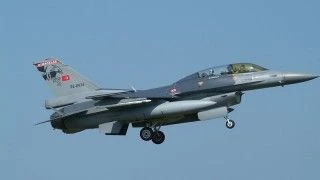
For example, in Sudan, Saudi Arabia’s support for the SAF and the UAE’s support for the RSF have exacerbated the conflict. This leads to the loss of life and a worsening conflict, while limiting internal solutions, which would often provide more enduring outcomes.
External support comes against a backdrop of external interests. This support is provided in the form of military assistance in exchange for minerals, access to ports, and military strength. These conflicts present the region as a new battleground for influence, control, and military investment. For the region, they are contributing to pre-existing tensions.
For example, Somaliland, located in the north-eastern part of Somalia, which declared itself independent in 1991 but has received no international recognition, has in recent times been called friendly territory by the UAE, which has gone as far as signing territorial agreements for its ports as well as for those in Puntland.
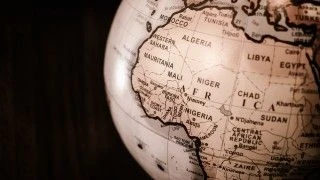
Somaliland has also signed port agreements with Ethiopia, a move that worsened existing tensions between Somalia and its neighbours. Furthermore, these agreements have worsened relations between Somalia and the UAE.
The example of Somaliland and Puntland highlights how external support escalates existing tensions, which sets the perfect environment for a full-blown regional conflict given the current volatility. Simmering internal and external tensions create an environment for prolonged conflicts.
The possibility of a regional conflict would be costly both in humanitarian and stability terms. Eritrea and Ethiopia are slowly getting closer to a conflict. This is increasingly evident following the cutting of ties between the two in October.
Sudan has been involved in an internal conflict that has drawn in regional powers, while Somalia has been struggling with its own security challenges on top of demands from Somaliland and Puntland for independence.
Furthermore, the Ethiopian government has previously accused Eritrea, Sudan, and Egypt of supporting forces opposing it. In November 2026, the Sudanese Armed Forces said that an attempted drone attack on Khartoum was launched from Ethiopia.
This summarises the tensions within the region. These tensions have been utilised by stronger powers to advance their interests, which often exacerbate them by encouraging military solutions over internal solutions. Often described as support, external support rarely advances the long-term interests of these countries, which leaves the question: in whose interest is this support? Access to the Red Sea has become a key factor in these conflicts as countries work to control access; minerals, like gold with high value, add another area of interest, as seen with the UAE and the RSF in Sudan.

External support, as seen in the case of Libya, leaves more chaos and upheaval than resolution despite promises of support. NATO launched airstrikes in support of armed groups that sought to end Col. Gaddafi’s rule, yet when the chaos persisted, they retreated.
In March 2011, countries including France and the UK argued for a NATO intervention. An important detail that is often overlooked is the energy supplies for NATO members. Following this intervention, the country suffered multiple civil wars that lasted until 2020. To date, the country still struggles with insecurity among other political and stability challenges.
The above examples point to how external interests take precedence over the internal interests of a country. Support for either side of a conflict provides different advantages, from a market for weapons to the advancement of strategic goals.
Despite evidence from numerous investigative bodies, the supply of arms or military support to these governments never ceases unless interests dwindle. This has been evident with the accusations against the UAE’s support for the RSF in Sudan, yet decisive action has not been taken.
Over time, military support for governments has proved to be a cause for concern because of its role in deepening humanitarian crises and exacerbating conflict rather than resolving it. As such, the interests of Türkiye, Saudi Arabia, and the UAE in a volatile region trigger apprehension rather than comfort. Furthermore, as difficult as it is, the continent needs to make more attempts at resolving conflicts independently. It needs to strengthen its structures and address internal issues, starting with leadership and the peaceful transfer of power, or by identifying forms of leadership that work for its people.
It should also seek to create structures that are independent of incumbent governments—institutions that can outlast the administration in power. This would go a long way in supporting credible partnerships rather than personalised interests that focus on specific leaders.
Military structures should be institutionalised and not personalised to ensure sustainability, continuity, stability, and national ownership.


