












- WIADOMOŚCI
- ANALIZA
South Korea’s controversial military education reform

 Add as preferred on Google
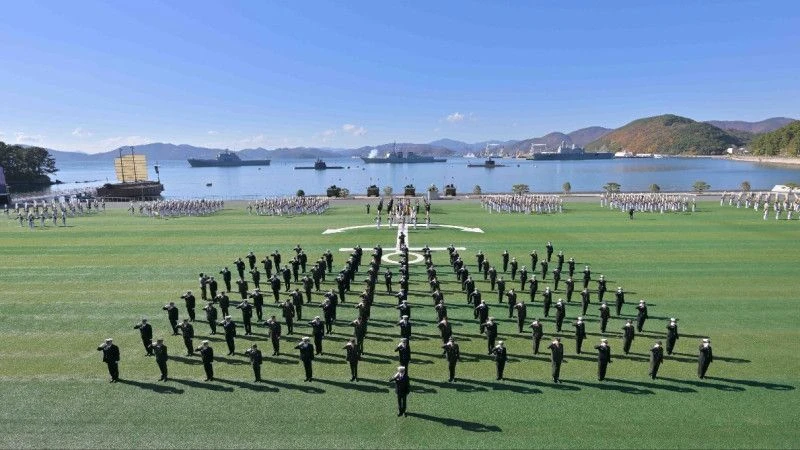
Photo. @ROKNAVY_ / X.com
South Korea plans to integrate its military academies. While the reform aims to strengthen joint military capabilities, it has also raised concerns over political motivations.
South Korea is preparing a major overhaul of its military education system. On November 18, the government announced a revised plan to establish a unified military academy for the joint education and training of future officers of the Army, Navy and Air Force. The proposal, however, has faced considerable opposition from cadets, alumni associations and other military stakeholders, forcing the government to reconsider its original approach.
While the official objective is to prepare future officers for increasingly complex and technologically advanced warfare, the reform has also become entangled in domestic political debates over the historical role of the military in South Korean politics.
From three military academies to a unified institution
The original proposal, presented in July 2026, envisaged merging the three existing service academies into a single institution and closing their current campuses. Following strong opposition, the government revised its plans, opting instead for a model that combines joint military education with specialised training at separate campuses.
Under the so-called „1-2-1 model”, cadets will spend their first and fourth years at the joint military academy, to be established at the Jaundae military complex in Daejeon. During their second and third years, they will receive specialised education and training at their respective service academies.
While the Naval Academy and Air Force Academy will remain in their current locations in Jinhae (South Gyeongsang Province) and Cheongju (North Chungcheong Province), respectively, the Korea Military Academy, which trains Army officers, will be relocated from Seoul to the south, closer to the city of Sejong. Its exact location has yet to be determined.
The new admission system will apply to cadets entering in 2029, although all the new facilities are not expected to open until 2032. Candidates will continue to apply for a specific military branch but will be allowed to switch branches after completing their first year.
Importantly, unlike the existing academies, which operate under their respective armed services, the unified institution will be placed directly under the Ministry of National Defense, giving the ministry greater control over military education, institutional management and budgetary decisions.
Why reform military education?
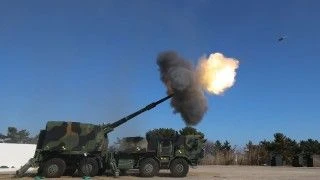
The government’s main argument is that contemporary warfare increasingly requires close coordination between different branches of the ROK Armed Forces. The growing importance of unmanned systems, artificial intelligence, cyber capabilities and multi-domain operations means that future military leaders must understand not only the capabilities of their own service but also how to integrate them with those of others.
Joint education from the beginning of an officer’s career could help overcome institutional divisions, foster mutual understanding and facilitate cooperation between the services.
However, critics argue that the government initially focused on institutional integration before determining what a common military curriculum should actually include, and raise the question of whether institutional integration is necessary to achieve greater operational cooperation.
Political dimension of the reform
The controversy cannot be understood without recalling South Korea’s political history. Graduates of the Korea Military Academy played prominent roles in the military coups and authoritarian governments that shaped the country’s politics before democratisation in 1987.
These historical concerns resurfaced following former President Yoon Suk Yeol’s short-lived declaration of martial law on December 3, 2024, and the involvement of senior military officers in its implementation.
In August 2026, President Lee Jae Myung explicitly referred to the historical involvement of Korea Military Academy graduates in military coups, questioning whether they had ever been held accountable.
Such remarks reinforced suspicions among Army academy alumni that the integration initiative was motivated not only by considerations of strengthening the capabilities and improving the quality of military education, but also by an attempt to diminish the institution’s influence within the ROK Armed Forces.
The decision to relocate the Army academy from Seoul, while allowing the Naval and Air Force academies to remain in their current locations, has further intensified these concerns.
Opposition to the reform is not limited to alumni. The Ministry of National Defense conducted a survey among cadets from all three military academies, receiving responses from 88.6% of them.
20.2% of answers emphasised the need to preserve the distinctive characteristics of each military branch, while 17.9% called for maintaining the existing three separate academies. Another 17.3% stressed the need to verify the validity of the reform’s objectives, and 13.2% called for greater consideration of diverse opinions.
The results show that concerns are not only about institutional integration itself but also about the policymaking process behind this idea.
On November 27, the Ministry of National Defense announced the establishment of an interministerial task force to oversee the implementation of the reform.
The challenge facing the South Korean government is therefore twofold: modernising military education to meet the requirements of future warfare while ensuring that the process is not perceived as a politically motivated attempt to weaken particular military institutions.
Given the controversies surrounding the reform, further adjustments to its scope or implementation timeline cannot be ruled out. Ultimately, the success of the reform will depend not only on the political and institutional dynamics within South Korea’s defence establishment but also on whether the new military education system proves more effective and better suited to the challenges of 21st-century warfare.


