


- WIADOMOŚCI
- ANALIZA
Ukraine and South Korea: Crisis following breach of secret agreement

During the 81st session of the United Nations General Assembly on 23 September 2026, Ukrainian President Volodymyr Zelenskyy revealed that two North Korean prisoners of war captured by the Ukrainian army had been transferred to South Korea, triggering a crisis in relations between Seoul and Kyiv. South Korean authorities accused Ukraine of disclosing confidential arrangements, regarding this not only as a breach of a secret agreement but also as an action detrimental to South Korea’s national interests, particularly in the context of growing tensions on the Korean Peninsula.
In early October, Seoul recalled its ambassador from Kyiv for consultations and subsequently decided to reduce the number of diplomatic personnel at its embassy. The crisis is escalating as Kyiv continues to downplay the matter, while its rather general apology has been deemed insufficient by South Korea. Furthermore, a new dispute has emerged following allegations from Kyiv that South Korean vessels recently exported petroleum products to Russian ports in the Far East, allegations which Seoul denies. Although the crisis does not mean a rupture of diplomatic relations between the two countries, it will undoubtedly affect their future relations, significantly undermining mutual trust.

Secret agreement on the transfer of North Korean prisoners of war
North Korea’s involvement in the war in Ukraine follows the signing of the Treaty on Comprehensive Strategic Partnership between Kim Jong-un and Vladimir Putin in June 2024. The North Korean military contingent operating on the Ukrainian front numbers approximately 12,000 soldiers drawn from elite units, including the Storm Corps (Pungpae-budae). South Korea’s National Intelligence Service (NIS) had anticipated the possibility that North Korean soldiers might be captured by the Ukrainian army. A secret agreement allowing their transfer to South Korea was most likely concluded between January 2025 and September 2026. It is difficult to believe that the heads of state were not informed of such an arrangement, particularly given its implications for South Korea’s broader national security interests.
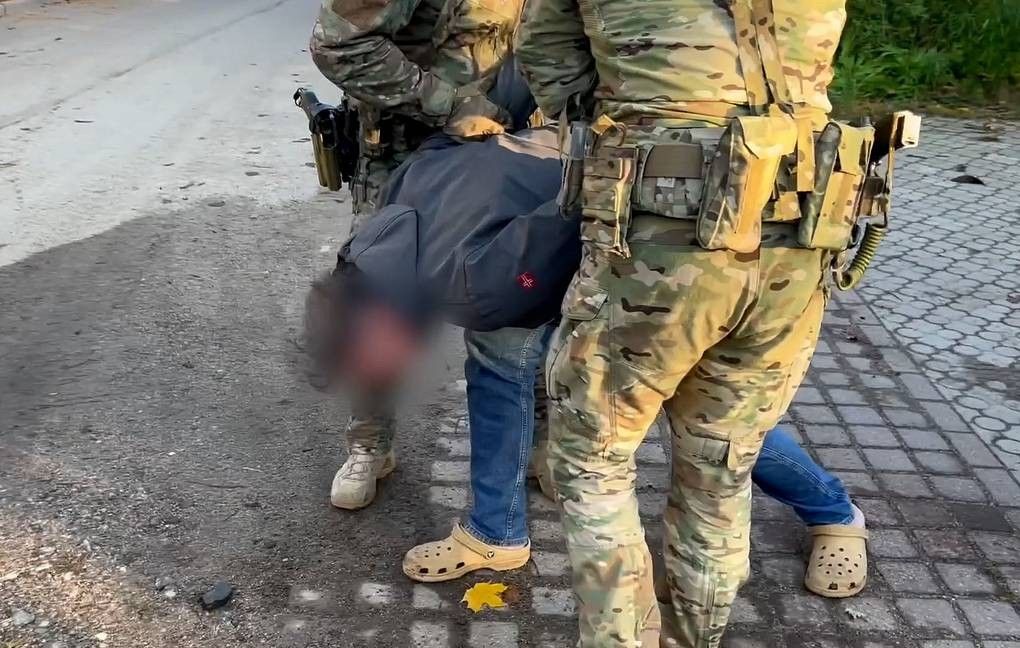
The North Korean prisoners of war were captured in January 2025 during fighting in Russia’s Kursk region. The Ukrainian decision to publish their images can be considered unfortunate, although it was probably intended as a propaganda measure highlighting the internationalisation of the conflict. Both men served within North Korea’s military intelligence structures, the Reconnaissance General Bureau (RGB), which reports directly to Kim Jong-un and is responsible for special operations. Both were interrogated by the Security Service of Ukraine (SBU), most likely in cooperation with South Korea’s NIS.
From the outset, returning to North Korea was virtually impossible for them. Under the rules prevailing in their country, surrendering to the enemy, particularly for members of such an exceptional unit, is tantamount to treason and carries the death penalty. This principle was not introduced by Kim Jong-un. As early as the 1960s, when North Korea conducted subversive and terrorist operations in South Korea, including the failed attack on the presidential residence in January 1968, commandos carrying out such missions either died at the hands of their opponents or committed suicide, although there were certain exceptions.
It can be assumed that the publication of their images by the Ukrainian army was itself sufficient to trigger reprisals against their families and relatives. Given the nature of North Korea’s social system, such punishment could extend across several future generations. The only logical solution would therefore have been to maintain strict secrecy, allowing the soldiers to be classified as missing in action. However, under the circumstances that had already arisen, their transfer to South Korea became the only realistic option. They arrived there in mid-September 2026.

The heart of the crisis
On 23 September 2026, Ukrainian President Volodymyr Zelenskyy informed the United Nations General Assembly during his address that Ukraine had safely transported and handed over two North Korean prisoners of war to South Korea. What appeared to be a careless remark became the catalyst for a diplomatic dispute and a crisis in South Korean-Ukrainian relations. From Kyiv’s perspective, the disclosure was intended not only to demonstrate the internationalisation of the war in Ukraine but also to confirm that it had fulfilled its obligations under the agreement. This, in turn, could have helped win over South Korean public opinion and encouraged the government in Seoul to adopt a more flexible position on supplying lethal weapons.
South Korea, however, will not provide such weapons under any circumstances. Under its Foreign Trade Act, the government is obliged to restrict exports of strategic goods to active conflict zones. Moreover, Seoul’s policy, guided primarily by national interests and pragmatism, is based on avoiding the role of a direct supplier of lethal weapons to countries engaged in war.
South Korea’s reaction to the Ukrainian president’s remarks was fundamentally different from what Kyiv had expected.
First, from a humanitarian and moral perspective, revealing information about the transfer of North Korean prisoners of war endangered not only the individuals themselves but also their families, who almost certainly became victims of severe reprisals following the incident.

Second, South Korea maintains that Ukraine violated a confidentiality agreement which Kyiv itself had sought. This was confirmed by Seong Ghi-hong, the South Korean presidential secretary for public relations. Kyiv had been concerned about criticism from its own public over its decision to forgo the possibility of exchanging the North Korean soldiers for Ukrainian prisoners held by Russia. Seoul fully understood the sensitivity of this issue.
Third, Ukrainian officials subsequently began denying the existence of a secret agreement concerning the transfer of North Korean prisoners, describing the entire affair as a “misunderstanding”. This angered President Lee Jae-myung, who stated on his messaging platform on 2 October that denying the existence of the agreement had effectively made him out to be a liar. In this context, Ukrainian Foreign Minister Andrii Sybiha’s remarks about differing interpretations of confidentiality sounded rather ambiguous.
Fourth, President Zelenskyy’s speech at the United Nations gave the issue an international dimension. This could be interpreted as an attempt to exert pressure on Seoul to change its policy regarding the supply of lethal weapons to Ukraine.
Fifth, Ukraine’s attempts to minimise the incident and portray it as a “misunderstanding”, reflected in an apology sent to the South Korean president on 6 October, were deemed insufficient by Seoul. This position was communicated directly to Ukraine’s chargé d’affaires, Andrii Vashkin.
Sixth, the entire affair must be viewed within the much broader context of rising tensions on the Korean Peninsula. A central principle of President Lee Jae-myung’s foreign policy has been a pragmatic approach towards North Korea. Under current circumstances, this involves certain conciliatory gestures by Seoul intended to moderate Pyongyang’s provocative behaviour. At the United Nations, President Lee emphasised the need for peaceful coexistence between the two Korean states and respect for other countries’ political systems, which he hoped would help restore cross-border trust with North Korea.
The acceptance of North Korean soldiers by South Korea undoubtedly undermines any prospect of initiating dialogue with Pyongyang in the near future, as North Korea will interpret the move as a provocation by Seoul. Furthermore, a meeting between Donald Trump and Kim Jong-un could take place during the APEC summit scheduled for 18–19 November 2026 in Shenzhen, China. This would place the South Korean delegation in an extremely uncomfortable position if Pyongyang excluded it from the talks. Such a development would represent a clear attempt to marginalise South Korea, even on matters directly affecting its own security.
Seventh, North Korea’s mining of the Demilitarised Zone, together with its tests on 20 September and 3 October of hypersonic missiles capable of carrying nuclear warheads, coincided with the Ukrainian-South Korean diplomatic crisis. Meanwhile, public remarks by Kyrylo Budanov, head of the Ukrainian president’s office, about tensions on the Korean Peninsula increasing by the day appear to make resolving the dispute even more difficult.
In Seoul, these comments were interpreted as suggesting that an imminent confrontation between the two Korean states was approaching. This creates an unfavourable atmosphere for South Korea, implying that Seoul might respond symmetrically to North Korean provocations and consequently allow itself to be drawn into a spiral of escalation.
Escalation of the dispute with Ukraine
In early October, a new dimension of the crisis emerged when Vladyslav Vlasiuk, the Ukrainian president’s commissioner for sanctions policy, stated that South Korean exports of petroleum products to Russia, including diesel, aviation fuel and petrol, had enabled Moscow to compensate for refinery losses caused by Ukrainian drone attacks. In effect, this would suggest a violation of sanctions imposed on Russia.

On 7 October, Seoul categorically rejected these allegations, arguing that although South Korea had exported 176,000 tonnes of petroleum products in July and August 2026, only three of the seven vessels involved were included on sanctions lists maintained by the European Union, the United Kingdom and Canada, which are not legally binding on South Korea. Furthermore, diesel, aviation fuel and other refined petroleum products are not included among goods subject to South Korean export restrictions to Russia.
However, the matter is considerably more complicated. There is no evidence that South Korea itself commercially exported petroleum products to Russia. Such transactions should instead be attributed to intermediaries over whom South Korea has no control. Consequently, there was no deliberate circumvention of sanctions by the South Korean state, but rather actions undertaken by intermediaries. This prompted measures aimed at taking legal steps concerning the recipients and conducting a thorough investigation into the matter.
Regardless of these circumstances, Ukraine’s accusations are viewed as further escalating an already tense diplomatic dispute.

South Korean ambassador recalled from Kyiv for consultations
On 8 October, South Korea recalled its ambassador from Kyiv for consultations. On 20 October, Seoul decided to reduce the number of diplomatic personnel at its embassy. This does not constitute a severance of diplomatic relations, but it is a significant expression of dissatisfaction, signalling a serious crisis between the two countries and serving both as a protest and a warning.
Ambassador Park Ki-chang arrived in Seoul on 10 October, although he may return to Kyiv if the dispute is resolved.
The last comparable incident occurred in 2008 during a South Korean-Japanese dispute over Dokdo Island. Since Ukraine’s embassy in Seoul has also remained without an ambassador following the end of Dmytro Ponomarenko’s mission in September 2025, diplomatic relations between the two countries have effectively been reduced to the level of chargés d’affaires, who serve as acting heads of mission and whose official responsibilities are largely administrative.
However, while Ukraine’s situation reflects an unusually prolonged process of appointing a new ambassador, Seoul’s decision sends an unmistakable political message.
Pyongyang's silence
Kim Jong-un’s pragmatism is demonstrated above all by his silence regarding the transfer of North Korean prisoners of war. Any official statement on the matter would place Pyongyang in an extremely uncomfortable position, forcing it to acknowledge soldiers who had chosen the South Korean alternative. The propaganda implications would therefore be overwhelmingly negative.
North Korean authorities are fully aware that the prisoners may reveal extensive information, including the training systems of special forces units, their morale, methods of conducting operations on the modern battlefield, the scale and techniques of indoctrination, command structures and, above all, the operational reach and methods of the Reconnaissance General Bureau.
Although Pyongyang is currently unable to prevent such disclosures, there remains a considerable likelihood that it may attempt retaliatory action in the future, including efforts to locate the former prisoners on South Korean territory, with potentially severe consequences.
What Seoul expects from Kyiv
The South Korean government has clearly defined its expectations of Ukraine. First, Kyiv should acknowledge the existence of the secret agreement. Second, it should offer a comprehensive and satisfactory apology. Third, it should introduce measures to prevent similar incidents in the future.
Meeting these conditions would allow relations between the two countries to return to normal and enable the South Korean ambassador to return to Ukraine.
Questions nevertheless remain about the future of economic relations between South Korea and Ukraine. Approximately 25 per cent of South Korean society expresses a positive view of continuing humanitarian assistance to war-torn Ukraine. This issue does not generate controversy within government circles.

The more difficult questions concern economic relations and future projects to rebuild Ukraine’s infrastructure. South Korea possesses considerable financial and technological advantages. At present, however, such initiatives are being implemented only on a limited scale, primarily at local level. Despite figures suggesting potential investment programmes worth approximately $2.4 billion, South Korea’s actual participation in Ukraine’s reconstruction and the expansion of bilateral trade remains largely hypothetical.
It is doubtful that a country with South Korea’s economic potential and pragmatic approach would be willing to invest in a state experiencing political and economic instability. The first prerequisite would be the establishment of a lasting and guaranteed peace in Ukraine, something which, under present circumstances, remains largely theoretical.
Finally, there is little reason to expect South Korea ever to meet Kyiv’s demands for the export of lethal weapons, as doing so would contradict Seoul’s national interests. Resolving the diplomatic crisis will not change South Korea’s position on these matters, but it would undoubtedly help restore bilateral relations that have been seriously damaged.
Author: Prof. Piotr Ostaszewski, SGH Warsaw School of Economics, Ambassador of the Republic of Poland to the Republic of Korea (2017–2024)


