












- WIADOMOŚCI
- ANALIZA
- KOMENTARZ
Romania battles drones. Is it doing better than Poland?

 Add as preferred on Google
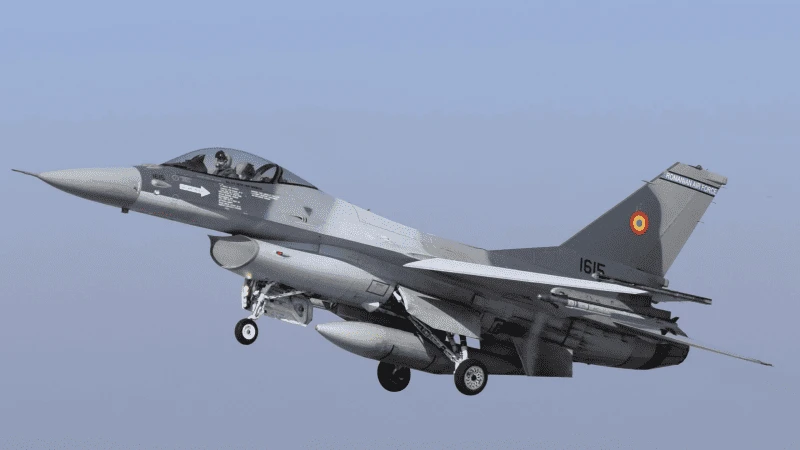
Poland is not the only NATO member state whose territory is being struck by the „outgrowths” of Russian military technology. As is well known, similar incidents have affected the Baltic States, Finland, and Bulgaria. However, the Romanians are perhaps in a situation most similar to Poland’s. How does their situation differ from ours, and how are they dealing with it? We have investigated.
Romania is, after Poland, the most populous state on NATO’s eastern flank, and its territory is only slightly smaller than Poland’s (240,000 km2 compared to 312,000 km2). The country possesses 67 F-16AM/BM combat aircraft, a fleet slightly larger than Poland’s, albeit of an older standard. Like Poland, Romania is also a member of NATO, provides its territory for the transfer of aid to Ukraine, and participates in that aid itself. The difference lies in the absence of a land border with Russia, which can only threaten the Romanians via the Black Sea. However, the proximity of Ukraine means that Russian aerial attack assets also intrude into Romanian territory.
First incidents
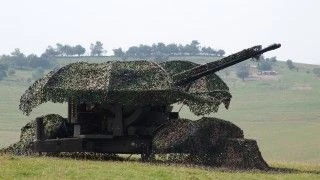
Until this year, incursions into Romanian airspace were relatively minor and harmless. In February 2022, an errant Ukrainian Su-27 landed in Romania, returning to its home country some time later, escorted by Romanian F-16s. In March, a large Cold War-era Tu-141 reconnaissance drone flew over Romania and Hungary. The machine eventually crashed in Croatia. It remains unclear who owned it. However, at the time, the drone’s intrusion was such an unusual phenomenon that the whole matter was treated more as a curiosity than a precursor to drone warfare. Also in March 2022, a Russian Orlan-10 tactical reconnaissance drone crashed in Romania. The machine had evidently „broken away” from its operators (likely from Russian forces fighting near Mykolaiv and Kherson) and fell 70 km inside the Romanian border. Once again, there was a complete lack of preparation, surprise, and a sense of the exotic; for a long time, there were even speculations as to whether the drone belonged to a private owner within the country.
The problem did not recur for over a year. It was only in September 2023 that a Russian drone crashed in a field near the village of Plauru, on the border with Ukraine. Over time, debris from other Russian drones was also found in the vicinity. These, however, were likely the results of bombardments of targets in nearby Ukraine.
Escalation in early 2026
It can be assumed that everything that happened before 2026 was the result of technical defects and mistakes, as well as the fact that Romanian territory is located near Ukrainian ports. However, this was about to change…
On 25 February, a Russian drone of an unknown type entered Romanian airspace, remained there for 20 minutes, and then returned to Ukraine. Further such incidents took place in March and April, which may have been intended to test NATO’s reactions and capabilities in Romania.
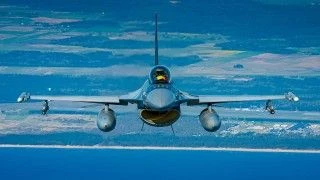
Ultimately, a reaction followed. On 25 April, as many as five Russian suicide drones were detected very close to Romanian airspace (but formally over Ukraine). Air defences were placed on high alert, and a Quick Reaction Alert (QRA) pair of two British Eurofighters was scrambled. Their pilots received permission to open fire; however, no violation of airspace occurred. Shortly thereafter, a Russian drone crashed in the Romanian city of Galați near the border, striking a high-voltage pylon and damaging a building. Debris from a second drone was later discovered in an uninhabited area elsewhere. On 3 May, another drone fell near a town 20 km deep into Romanian territory. As it turned out, it did not have a warhead.
How the Galați incident prompted NATO to toughen its response
An even more dramatic situation occurred on the night of 29 May. A piston-engined Russian Geran-2 entered Romanian airspace before 2:00 am, in response to which two Romanian F-16s and an IAR 330 helicopter were scrambled. However, contact was lost as the flying bomb approached Galați, and a few minutes later, an explosion occurred on a residential high-rise in the city. Two people were injured (a woman and a child), their flat was destroyed, and several others were damaged. Falling fragments of the building damaged cars. A fragment of the drone with the inscription „Geran-2” was found.
It could be said that at this stage, the Allied defence of Romania had failed. Drones fell in Romania despite the readiness of the air defence and the scrambling of fighter jets. As in Poland, however, the drones fell near the border, though they apparently vanished from radar screens before it was later discovered they had indeed penetrated Allied airspace.
See also 
However, the civilian casualties meant that Romania and the NATO forces on its territory gained experience and shifted to a more aggressive approach.
A hot summer
On 24 July, a Geran-2 was detected over Ukraine as an object approaching the village of Sulina. A QRA pair of Italian Eurofighters was scrambled from the 57th Air Base, along with two Romanian F-16s and an IAR 330 helicopter from the 86th Air Base. Meanwhile, the drone crossed the border and flew for 80 minutes deep into Romanian territory. NATO fighters tracked it but waited until it was over safe (empty) territory before opening fire. The first missile from the Italian Eurofighter missed, and the target was only destroyed by a Romanian F-16 using an AIM-9X Sidewinder. The interception costs were therefore high. The Geran fell in a field near the village of Padina, halfway between the border and Bucharest.
On 26 July, a group of drones was detected in the Snake Island area; one of them entered Romanian airspace and was shot down by an F-16 after 11 minutes. Here, the decision was easy to make, as the entire event took place over water, thus without the risk of collateral casualties. On that day, a second drone was also shot down over water, five minutes after entering Romanian airspace. On 27 July, another Russian drone violated the airspace but returned to Ukraine before it could be eliminated. Thus, in two days, there were three shoot-downs – one over land and two over water.
On 2 August, Romanian F-16s pursued a drone flying along the Danube, but it eventually turned back towards Ukraine and was shot down by Ukrainian defences there. On 16 August, a Geran-2 flew over Moldova and violated the airspace. It was shot down by Spanish F-18s and crashed in a field 24 km deep into Romanian territory. On 20 August, two Spanish F-18s and an IAR 330 took off to intercept another drone, which, however, crashed on its own in a field near the village of Tulcea, close to the border with Ukraine.
On 24 August, a drone flying from Moldova crashed near farm buildings several dozen kilometres deep into Romanian territory. A pair of F-16s and an IAR 330 searched for it, but the target disappeared from radar. The drone did not have a warhead.
On 8 September, the first recorded Geran-4 jet drone appeared over Romania, coming from Moldova. Two Spanish F-18s set out to meet it. Eighteen kilometres deep into Romanian territory, the target disappeared from radar and then reappeared over Moldova, where it crashed. It is suspected that the drone’s presence was related to the planned departure from Romania of Ukrainian President Volodymyr Zelenskyy.
On 24 September, a drone entered Romanian airspace; two Romanian F-16s were scrambled, but the target crashed on its own before the interception took place. At the same time, at least four drones were over Moldova, and the Romanian-Moldovan border was patrolled by two Spanish fighters.
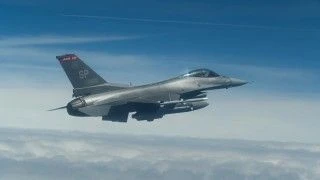
On 17 October, two Geran-4 jet drones entered Romanian airspace from the Snake Island area. Dealing with them was brief. Only two minutes after the intrusion, they were handled by a pair of Romanian F-16s, which had been sent to patrol the border earlier. Both targets were shot down within 4 minutes.
On 31 October, two Gerber decoy drones intruded from Moldova. One turned back, the other disappeared (likely crashed in inaccessible terrain). This „minor incident” caused the closure of three airports and the dispatch of two F-16s along with an IAR 330 helicopter.
Conclusions
As can be seen, Romania has similar experiences to Poland, although there are several clear differences. The first is that there have been more airspace violations so far. The second is that a significant portion of them occurred over maritime areas. In these situations, Romanian fighters very easily receive permission to open fire and eliminate targets without problems. It seems that elimination is carried out as quickly as possible before the threat reaches land. Interceptions are performed using expensive short-range air-to-air missiles. The cost of a Sidewinder is roughly 10 times the cost of a piston-engined Geran and several times higher than that of the jet version.
In cases where a drone flies directly over land territory, the decision to shoot it down is no longer so easy. NATO fighters consider where the shoot-down will occur, and decisions are made cautiously. On several occasions, the target fell before the drone was shot down, particularly in the border zone. These are cases analogous to those in Poland, where there were attempts to spark controversy over them. As can be seen, such incidents are not unique to Poland but are a kind of standard in the current situation.
Romania has not yet been „honoured” with the launch of a cruise missile into its territory, which poses a much greater threat (5-10 times larger warhead) and is a much more difficult target to destroy due to its high speed, terrain-following flight profile, and partial stealth features. Meanwhile, in Poland, we know of a Kh-55 missile with concrete instead of a warhead that fell deep within the country in 2022 (the famous „missile near Bydgoszcz”), a Kh-101 missile that fell in August, and three missiles that fell in November „en route” to the Nowa Dęba training ground.
It appears, therefore, that both sides possess both similar and unique experiences regarding the defence of their territory.


