












- ANALIZA
- WIADOMOŚCI
United States eases sanctions on Russian diesel

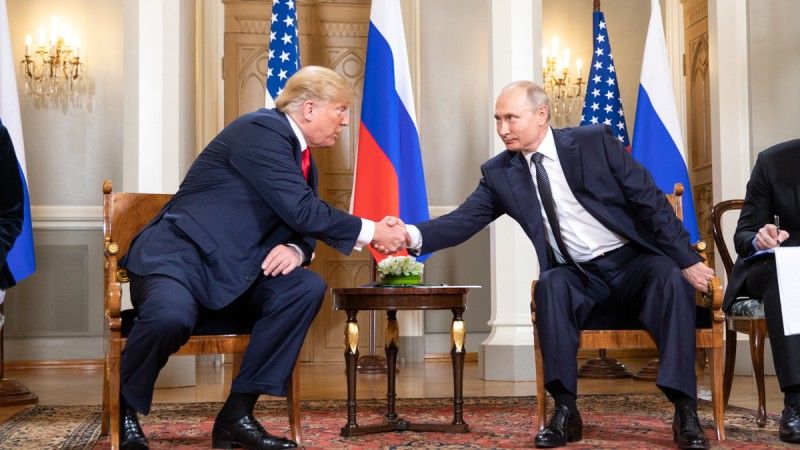
Photo. The White House from Washington, DC / Wikimedia Commons
This week, Donald Trump announced a temporary lift of sanctions on Russian diesel, allowing Moscow to supply diesel fuel to global markets.
According to the president’s statement published on the Truth Social platform, Russia will immediately supply more than 300,000 tons of diesel, followed by another 500,000 tons in November, 1 million tons shortly thereafter, and an additional 3 million tons depending on refinery conditions. Potentially, the United States could be among the buyers.
Shortly after Trump’s announcement, the Treasury Department issued a general license allowing the sale, delivery, offloading, and importation of Russian diesel, including imports into the United States, through April 2027. It is worth noting that, until this decision, a ban on imports of Russian energy resources had been in force. The restrictions were introduced by Joe Biden, shortly after Russia’s full-scale aggression against Ukraine.

Trump administration's efforts to lower fuel prices
Without a doubt, this decision is linked to the current administration’s efforts to reduce diesel prices, which is particularly important ahead of the midterm elections. According to the American Automobile Association, diesel prices averaged $6.27 per gallon on Friday, down 10 cents from the previous week but still $2.60 higher than a year ago.
As is already known, Donald Trump has undertaken a number of measures aimed at decreasing diesel prices. Recently, he pressured European allies to further utilize their strategic oil reserves. Moreover, he deferred federal taxes on fuel and authorized supplies designated for agricultural use to be used in interstate trucking. This week, he also promised not to renew attacks on Iran until after the midterm elections.
A shift in US policy toward Russia?
Once again, the American administration has taken a significant step toward the Russian Federation. Only three weeks ago, Donald Trump signed a bill allowing him to impose sanctions, including tariffs of up to 100 percent, on countries cooperating with Russia. Nevertheless, this week’s decision suggests that the current administration is more willing to pursue business deals with the Kremlin than to increase economic pressure.
Therefore, it is possible to argue that an engagement-focused approach is gradually prevailing over a sanctions-based strategy.
Reactions from Ukraine and US politicians
Trump’s statement raised concerns among leading Democratic congressmen as well as Ukrainian decision-makers. As President Volodymyr Zelensky stated: “Any easing of sanctions against Russia without a clear and lasting de-escalation agreement is an obvious sign of weakness.”
So far, there has been no official statement from the Russian government. However, Kirill Dmitriev wrote on social media that “Russia–US energy and economic cooperation will continue and benefit global markets and the world.”

Questions regarding Russian supply capacity
Russia has recently restricted diesel exports as Ukraine has intensified attacks on Russian refineries. Consequently, it remains unclear how Moscow will be able to supply the volumes promised by Trump while a significant portion of its refining capacity remains out of operation.
Energy experts quickly expressed skepticism that the announcement would substantially reduce diesel prices. Gregory Brew, a senior analyst at Eurasia Group, noted that Russia’s immediate commitment amounts to less than 2 percent of total US diesel output, which stands at approximately 3.6 million barrels per day. Consequently, American consumers may not notice any significant short-term price reductions.
Political implications
Even if Russia ultimately fails to deliver the announced quantities of diesel, the political consequences of such gestures may prove far more significant. This decision presents additional challenges not only for Ukraine but also for its Western allies. Through his engagement-focused policy, Donald Trump has effectively offered Vladimir Putin one of the most symbolic gifts for his birthday, which he celebrated this week.


