












- ANALIZA
- WIADOMOŚCI
Does Poland need Türkiye? ASELSAN and AMZ-KUTNO chart a new course for defence cooperation

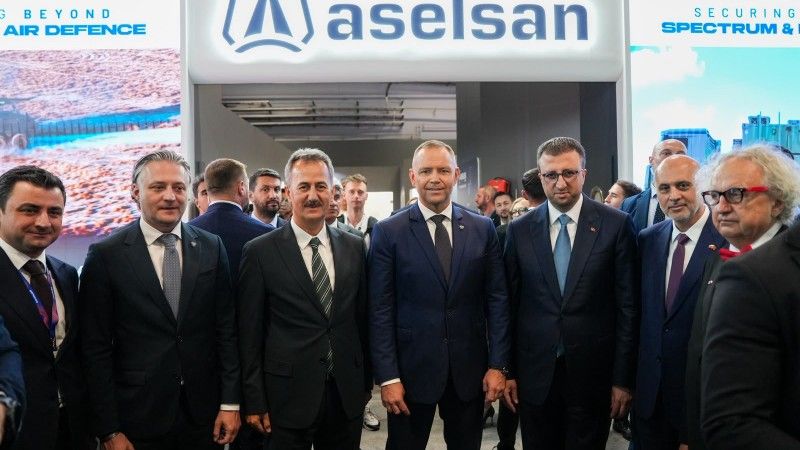
Photo. The official X account of Türkiye’s technology giant, ASELSAN.
Amidst growing regional threats, Polish-Turkish defence cooperation is taking on increasing strategic importance. A prime example of this is the agreement signed by the Turkish giant ASELSAN and the Polish manufacturer AMZ-KUTNO during the MSPO 2026 International Defence Industry Exhibition. Turkish ARSUS sensors and surveillance systems will be integrated into LOTR Kleszcz vehicles, representing an excellent example of combining modern electronics with a Polish armoured platform.
ARSUS and Kleszcz: A partnership model, not just an order
Cooperation on the Kleszcz Light Armoured Reconnaissance Carrier (LOTR) programme—based on the BÓBR 3 chassis manufactured by AMZ-KUTNO—exemplifies the practical side of this integration. Following an initial agreement worth €16.6 million (USD 19.3 million) in 2024, a contract for the delivery of another 24 ARSUS systems to the Polish Armed Forces was signed at the MSPO 2026 International Defence Industry Exhibition, with deliveries scheduled for 2028–2029. The framework agreement for the Kleszcz vehicles envisages the gradual equipping of Polish Army reconnaissance units with these platforms. ASELSAN’s integrated ARSUS 100 system serves as the project’s “observational brain.”
The system is distinguished by its multi-sensor reconnaissance capabilities. It combines a radar, an optoelectronic sensor head, and an inertial navigation system into a single, compact unit, enabling long-range object detection as well as precise identification and recognition—by day or night and in adverse weather conditions. Furthermore, the system offers Track-While-Scan (TWS) functionality, simultaneous automatic tracking and classification of multiple targets, and full 360-degree coverage. It is mounted on an extendable mast installed on 4×4 light armoured reconnaissance vehicles. Moreover, thanks to integration with command and control (C2) systems, the coordinates of detected targets are transmitted automatically and in real time via radio to the command centre.
MSPO 2026’da Polonyalı AMZ Kutno ile ilave ARSUS Keşif ve Gözetleme Sistemleri konusunda ortak proje için sözleşme imzaladık.
— ASELSAN (@aselsan) September 8, 2026
İleri teknoloji çözümlerimiz, yerel ofisimiz, devam eden projelerimiz ve yerel sanayi kuruluşlarıyla geliştirdiğimiz iş birliklerimizi geliştirerek… pic.twitter.com/GzxJ8XGtEv
A shift in the nature of cooperation
The dynamic development of Polish-Turkish defence relations was initiated by Poland’s 2021 acquisition of Bayraktar TB2 unmanned aerial vehicles. At that time, cooperation was based on a classic “seller-buyer” transactional model, wherein Poland procured a ready-made, complete system from Türkiye.
The situation is different today, as best illustrated by the ARSUS 100 reconnaissance and surveillance system programme, which represents a completely new model of cooperation. Advanced Turkish sensor and electronic technologies are being directly integrated into a Polish armoured platform manufactured by AMZ-KUTNO. Consequently, the most significant shift in defence relations between Warsaw and Ankara lies not merely in the scale of system imports, but in the way Turkish defence companies are entering the Polish industrial ecosystem to create hybrid solutions. The key question, however, is whether the partnership between AMZ-KUTNO and ASELSAN will serve as a blueprint for future Polish programmes—involving the integration of Turkish electronics, radars, optoelectronics, or active protection systems with domestic chassis and platforms—or if it will prove to be merely a short-lived trend.
See also 

ASELSAN gains prominence over Baykar
Although the Turkish defence sector is still primarily associated in Poland with Baykar and its drones, ASELSAN is beginning to play a pivotal role in the structural modernisation of the Polish military. The company is a powerhouse in radar technology, optoelectronics, electronic warfare (EW), command and control (C2) systems, air defence, and anti-drone solutions.
Developments in 2026 demonstrate the company’s growing importance. In June, a Polish delegation led by President Karol Nawrocki visited ASELSAN’s manufacturing facilities in Ankara. They were accompanied by Haluk Görgün—the President of the Defence Industry Agency (SSB)—and ASELSAN CEO Ahmet Akyol. During the visit, electronic warfare and air defence technologies, as well as serial production capabilities, were showcased, with discussions continuing at the company’s stand during the MSPO 2026 International Defence Industry Exhibition.
#MSPO2026’da Polonya Cumhurbaşkanı Karol Nawrocki ile Başbakan Yardımcısı ve Milli Savunma Bakanı Władysław Kosiniak-Kamysz’ı ağırlamaktan onur duyduk.
— ASELSAN (@aselsan) September 9, 2026
Farklı operasyonel ihtiyaçlara yönelik, entegre ve sahada kendini kanıtlamış teknolojilerimizi MSPO'da ziyaretçilerle… pic.twitter.com/pfE7SYEF6B
However, the ARSUS programme represents only one element of ASELSAN’s expanding presence in the Polish market. Of far greater significance is the contract signed on December 19, 2025, between the Armaments Agency and the Turkish company for the delivery of an Automated Reconnaissance and Jamming System, designed to bolster the electronic warfare capabilities of the Polish Armed Forces.
Shifting cooperation into the realm of electronic warfare marks an entry into one of the most sensitive and critical domains of the modern battlefield. Lessons learned from armed conflicts clearly demonstrate that detecting an adversary’s radio emissions, jamming their sensors, and protecting one’s own communications are just as vital to unit survival as armour or firepower.
It is also worth noting that while the Bayraktar opened the door for Türkiye to the Polish market, ASELSAN—which already has a local office in Poland and collaborates with over 20 Polish suppliers—is establishing a lasting industrial presence in the country.

Other Turkish companies at MSPO 2026
In addition to ASELSAN, numerous other enterprises from the Turkish defence sector showcased their offerings at MSPO 2026, including:
- STM: The company presented a broad portfolio of naval platforms and unmanned systems. Its stand featured models of theİstif-class frigate, the STM MPAC combat vessel, and the STM500 small submarine, as well as the NETA 300 autonomous underwater vehicle and the YAKTU unmanned surface vessel. In the aerial segment, the KARGU, TOGAN Mini, TUNGA-X, and KUZGUN unmanned systems were showcased.
- CTech: The company presented satellite and line-of-sight (LOS) communication solutions for land, naval, and aerial platforms. It debuted the SkyARX E-Ku antenna, introduced the UfukLink Mini Pro system, and showcased the jam-resistant SecureARX modem.
- CANiK: Showcased its products, including the new M3 FALCON system (which made its debut).
- ROKETSAN
- MKE (Makine ve Kimya Endüstrisi)
- Meteksan
- Sinerji
Does Poland need Türkiye?
Defence cooperation between Warsaw and Ankara plays a significant role, particularly in the context of strengthening capabilities and interoperability within NATO. Both partners view each other as key allies within the Alliance. Moreover, regular visits and discussions—including the visit by a Polish delegation led by Karol Nawrocki to ASELSAN’s technology facilities in Ankara and participation in the MSPO 2026 International Defence Industry Exhibition—confirm a commitment to further deepening industrial coordination and addressing the challenges of the modern battlefield.
The parties are also bound by a memorandum of understanding on cooperation from December 2025, covering the exchange of intelligence, joint exercises, and the coordination of activities ahead of the 2026 NATO Summit in Ankara—matters that were the subject of further talks held in Warsaw in June 2026 between Secretary of Defence Industries Haluk Görgün and Deputy Prime Minister and Minister of National Defence Władysław Kosiniak-Kamysz.
Although Poland’s technical modernisation programme (with a 2026 defence budget reaching approximately PLN 200 billion / USD 53.8 billion, or 4.8% of GDP) relies primarily on suppliers from the USA and South Korea, Türkiye offers unique and complementary capabilities in niche areas. These include electronic warfare (EW) systems and reconnaissance radars, counter-unmanned aerial vehicle (C-UAS) systems (such as the DRONEDEF architecture), as well as advanced optoelectronic sensors and unmanned maritime platforms.
It is worth noting that Türkiye does not compete in the supply of heavy armoured platforms or frontline combat aircraft. Instead, it aligns with the strategy of diversifying technology partners. Warsaw’s goal is not to replace Washington or Seoul, but to complement their offerings with niche, specialised technologies.


