












- ANALIZA
- WIADOMOŚCI
France buries FCAS and moves alone on Rafale’s successor

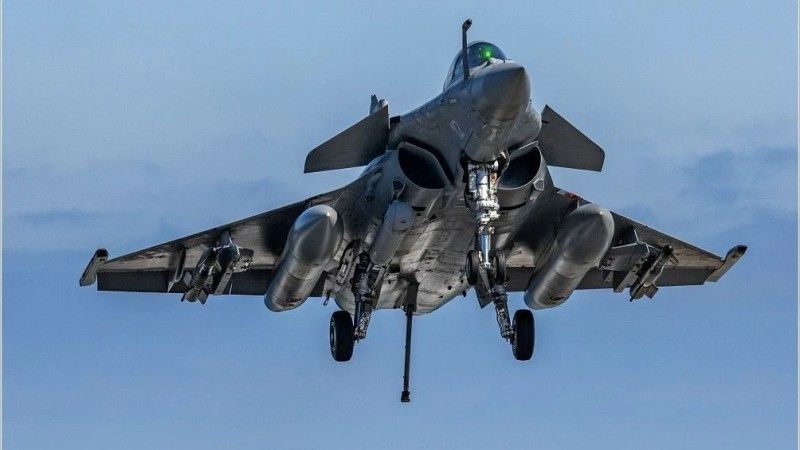
France is no longer waiting for Germany. After the collapse of the Franco-German track around the future combat aircraft, Paris is preparing its own path towards a sixth-generation fighter. The key date is not 2029 because a new aircraft will be ready then, but because France wants to launch the development of the operational aircraft in 2029, after a new demonstrator phase beginning in 2027.
This is the most important point in the new French calendar. The successor to the Rafale is not around the corner, and 2029 does not mean entry into service. Paris is trying to protect the original timeline after the breakdown of the NGF track inside FCAS. The objective remains a first operational capability in the early 2040s, but France has decided that it cannot allow another European negotiation to delay the aircraft that will eventually sit at the centre of its combat aviation.
The shift began earlier than the latest French reports suggest. Defence Minister Catherine Vautrin said that already in July 2026 France decided to launch national work on the critical path of what was previously called the NGF. This means Paris did not wait for a new European format after the Franco-German failure. It moved to secure the most important technologies, industrial work and schedule under national control.

This does not mean that France wants to isolate itself completely. The new model is different: France defines the aircraft first and may later accept partners who fit its operational requirements. That is a major change from the old FCAS logic, where France, Germany and Spain were supposed to define the future fighter together. The new approach is closer to the Rafale model, where French requirements are first, and partnerships are later.
The reason is quite simple: France has two non-negotiable requirements that cannot be diluted. The future aircraft must be able to carry the ASN4G nuclear missile and operate from the future aircraft carrier France Libre. Germany did not need a carrier fighter or a national nuclear strike platform. This gap was not a technical detail. It was one of the reasons why the Franco-German fighter project became increasingly difficult to sustain.
Rafale will not disappear in 2040, and that is the part often missed in headlines. France is simultaneously preparing Rafale F5, a major mid-life upgrade linked to new sensors, connectivity, combat cloud, UCAS cooperation and ASN4G. In 2029, the same year France plans to launch the development of the operational sixth-generation fighter, it is also expected to order another batch of 45 Rafales. The future aircraft will therefore enter a force structure in which Rafale remains active for decades.

The true story is not that France has found an easy replacement for FCAS. It has not. And again, Paris is taking back control of the fighter question. The technology base exists – and is quite extensive. Dassault, Safran, Thales and MBDA give France a national ecosystem that few European states possess.
France is now trying to finance Rafale F5, UCAS, ASN4G, the future carrier and a sixth-generation fighter at the same time. Some partners may still come later (but Paris must be open to sharing technology with India or the United Arab Emirates). But this time, they will join a French-defined programme, not rewrite it from the beginning.


