












- WIADOMOŚCI
- ANALIZA
Spain invests €62m in French military satellites

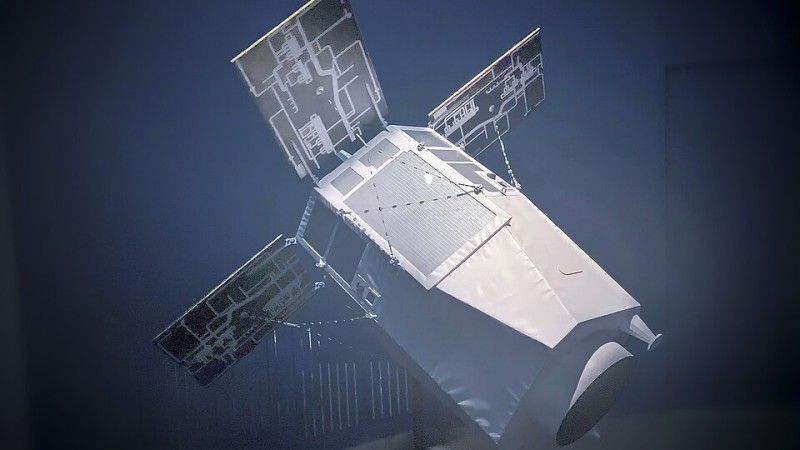
Photo. Ryse93 / Wikimedia Commons
Spain’s decision to retain access to the French CSO constellation until 2033 is not simply an extension of an existing agreement. It shows that France is becoming one of the most important European providers of military space intelligence, while Madrid still needs time to build genuinely sovereign capabilities of its own.
CSO (Composante Spatiale Optique) is a French military satellite reconnaissance system used to obtain high-resolution optical and infrared imagery for intelligence, surveillance and operational planning. As OpexNews stated, the Spanish government has approved €62 million to activate the optional period of its agreement with France. Together with image-tasking rights, maintenance of the Spanish ground segment and Madrid’s continued participation in the CSO mission, the total value of the cooperation will reach €90 million between 2027 and 2033. This remains a relatively modest amount compared with the overall cost of the programme, estimated at more than €1.3 billion.
The cooperation is not new. Spain has relied on French military satellites since the launch of Helios I in 1995, followed by Helios II and later the CSO constellation. Madrid currently receives 2.5% of the satellites’ tasking time, which is sufficient to support military intelligence and strategic surveillance. It does not give Spain full autonomy, but it ensures continued access to capabilities that it cannot yet provide independently.
The importance of CSO lies not only in the quality of the imagery. Two satellites positioned at an altitude of around 800 kilometres provide broader reconnaissance, while the third operates closer to Earth and supports more detailed identification. Infrared sensors allow activity to be detected during both day and night. In military terms, this means that France is able to provide not only observation, but also information useful for identifying targets and supporting operational planning.
On the one hand, Spain is trying to reduce its dependence on foreign systems. It has joined NATO’s wider satellite-surveillance initiative, purchased imagery rights from the American company Vantor and is developing PAZ II through Hisdesat. On the other hand, none of these projects can currently replace CSO. Extending cooperation with France is therefore not a resignation from autonomy, but an attempt to gain time without losing access to space-based intelligence.
The war in Ukraine has also demonstrated the growing importance of French capabilities. Kyiv cannot abandon American intelligence support because US satellite and early-warning resources remain significantly larger. Nevertheless, French systems have gained importance, particularly when uncertainty has appeared around the scale and continuity of American assistance. France cannot replace the United States, but it has shown that it possesses independent capabilities able to support real military operations.
Spain is not the only country moving closer to France in this domain. Poland is also developing military space cooperation with French industry, both in observation and secure communications. Each of these projects is different, but together they demonstrate that France is gradually building a wider position in the European military space sector.
It must be underlined that contracts of this type are about more than money. A state that supplies satellite imagery and access to intelligence also gains political influence and becomes part of another country’s security architecture. The value of the Spanish agreement may be limited compared with major aircraft or naval contracts, but its strategic significance is much greater.
Finally, France is gaining a real advantage in the military space domain. Ukraine increasingly recognises the usefulness of French intelligence, Poland is building capabilities with French partners, and Spain has decided that it cannot yet afford to lose access to CSO. If Paris continues to invest, it may become the main European provider of military space capabilities. It will not replace the United States, but it can become increasingly difficult to replace in Europe.


