












- PILNE
- WIADOMOŚCI
Washington establishes Bureau of Emerging Threats

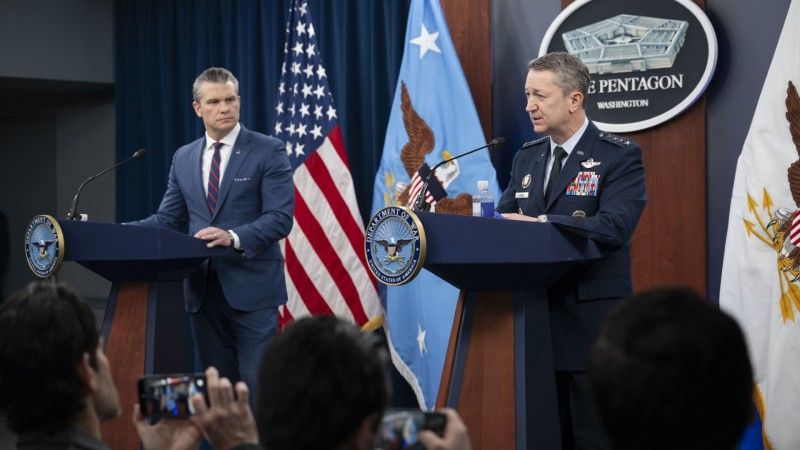
Photo. defense.gov
The U.S. Department of State has established a new unit responsible for countering emerging threats – the Bureau of Emerging Threats. The newly created unit’s mandate encompasses cyberattacks, critical infrastructure security, military applications of artificial intelligence and space domain operations.
The establishment of the Bureau of Emerging Threats represents an institutional response to the growing hybridisation of warfare. The Bureau will concentrate on three pillars: cyberattacks targeting critical infrastructure, threats in the space domain, and military applications of artificial intelligence and quantum technologies.
Leading the Bureau is Anny Vu, who previously served as chargé d’affaires at the U.S. Embassy in China. As she announced, the team will utilise „all instruments of foreign policy” to protect American interests. Department spokesperson Tommy Pigott emphasised the dual nature of the unit’s mission. On one hand, it involves responding to current threats, whilst on the other, preparing for future challenges associated with the development of AI and quantum computing.

Responding to hybrid threats and technological races
The Bureau’s creation fits within the broader context of growing hybrid threats. States such as Iran, China, Russia, and North Korea, as well as terrorist organisations, have for years pursued strategies of operating below the threshold of open conflict, combining cyberattacks, information operations, and economic pressure.
The establishment of the new unit also reflects the broader context of increased cyber activity from Iran. According to CrowdStrike, following the commencement of U.S. and Israeli military operations against Iran in late February 2026, a significant increase in pro-government hacker group activity was observed.
This trend also points to Washington’s growing concern over the pace of AI and quantum technology development in China. Beijing openly declares ambitions to achieve superiority in both areas by 2030, with implications that transcend the purely economic sphere and extend into the military domain.

Institutional consolidation of responsibilities
Until now, cybersecurity competencies were dispersed amongst the Department of Homeland Security (CISA), NSA, Cyber Command, and various intelligence agencies. The establishment of the Bureau within the State Department structure signals an attempt to give these activities a greater political dimension, rather than a solely technical one.
We approach the world in which cyberattacks are no longer solely a technical problemm but an element of broader struggle for influence – they are becoming an element of broader struggle for influence, where the response may also include diplomatic pressure, sanctions, or allied action encompassing both defensive and offensive operations.
For Poland, it will be crucial to observe how the new structure influences such areas as the coordination of NATO cyber defence activities, technology transfer policy to allies, and the U.S. stance
Authors: dr Aleksander Olech, Karolina Kisiel


