











- WIADOMOŚCI
Mystery surrounds the Russian mission. A supply ship is already heading to the ISS

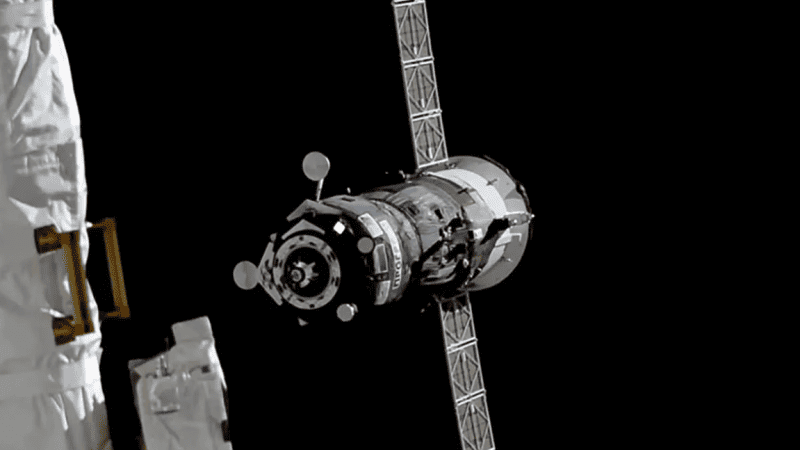
Russia has carried out another resupply mission to the International Space Station (ISS). This time, attention is drawn not only to the cargo being delivered, but also to the limited information available about preparations for the mission.
The uncrewed Progress MS-36 cargo spacecraft, designated Progress 97 by NASA, launched on 24 November 2026 from the Baikonur Cosmodrome in Kazakhstan aboard a Soyuz-2.1b rocket. The capsule successfully reached orbit and began its journey towards the International Space Station. Docking with the ISS is scheduled for 26 November.
Russia's new 'TeleDroid' heading to space — TASS Progress MS-36 cargo ship launched to the ISS, with an experimental AI-equipped robot aboard It's designed to assist astronauts during work outside the station, reducing the dangers of spacewalks https://t.co/hIYOk6optB
— RTRussia (@RT_Russia_) November 24, 2026
Valuable cargo for the cosmonauts
The Russian spacecraft is carrying around 2.5 tonnes of supplies. The cargo includes fuel to replenish the station’s reserves, drinking water, food, oxygen, medical and hygiene supplies, and equipment needed to maintain the ISS and conduct scientific experiments. The delivery also includes fresh fruit and vegetables, as well as gifts for the cosmonauts living in orbit.
See also 
An important part of the cargo is made up of components for the Teledroid project. This Russian humanoid robot is being developed to assist cosmonauts during work outside the station. Its design is intended to allow selected tasks to be performed remotely using tools employed during spacewalks.
The Progress MS-36 freighter will remain docked with the ISS for around six months. Once its mission is complete, it will be detached from the station and sent into a controlled atmospheric re-entry, where it will be destroyed over the Pacific Ocean along with the used equipment and waste removed from the station.
Progress is one of several cargo spacecraft currently used to resupply the ISS regularly. Alongside Russian Progress craft, cargo missions are flown by the American Dragon, Japan’s HTV-X, and the American Cygnus. With the exception of Dragon, these are single-use capsules which are sent into a controlled atmospheric re-entry at the end of their missions.

Mission secrecy
The way preparations for the mission were communicated is noteworthy. NASA did not publicly confirm the launch date during a press conference on International Space Station operations. When asked about the planned flight of the Russian spacecraft, a representative of the American agency referred journalists directly to Roscosmos.
This was an unusual departure from previous practice. NASA regularly reported on Russian resupply missions and provided live coverage of their progress. This time, Roscosmos did not communicate the launch preparations widely, and information about the planned flight appeared publicly only shortly before it took place.
The lack of transparency may be linked to Russia’s wider policy on reporting space operations amid the ongoing war with Ukraine. Similar restrictions have affected other Russian launches in recent months, particularly those involving the deployment of further satellites for the Rassvet (“Dawn”) system, which is intended to provide broadband internet access.

In 2026, reports emerged of Ukrainian attempts to strike the Russian Plesetsk Cosmodrome. In April, Roscosmos head Dmitry Bakanov said that a drone attack had been attempted during preparations for the launch of the first batch of satellites in the Rassvet constellation. According to his account, Russian forces repelled the threat, and the mission went ahead successfully.
Another incident was reported on 23 August, when Ukrainian drones were said to have reached the area around the cosmodrome. The following day, Russia launched a rocket carrying a military satellite from the site.